

Eventsperformed

The experience of the body as heritage.
Educational Action
Date: Saturday and Sunday, August 16th and 17th
Time: 2 PM
Location: Workshop 1
Suitable for all ages.
Free activity and No prior registration is required.
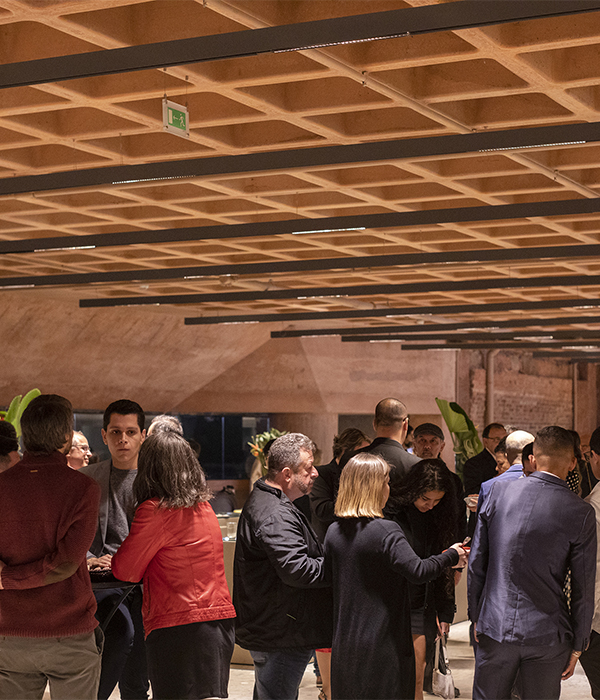
The monument-building and its surroundings, for over a century, have provided different auditory, olfactory, and tactile experiences to those who pass by, playing an important role in the construction of memories. The Ipiranga Museum invites everyone to participate in an experience that explores these different sensorial aspects in its spaces and their transformations over time. During the visit, we will explore the relationship of our bodies and senses in their insertion into these multisensory landscapes and how we can understand them as part of the national heritage.
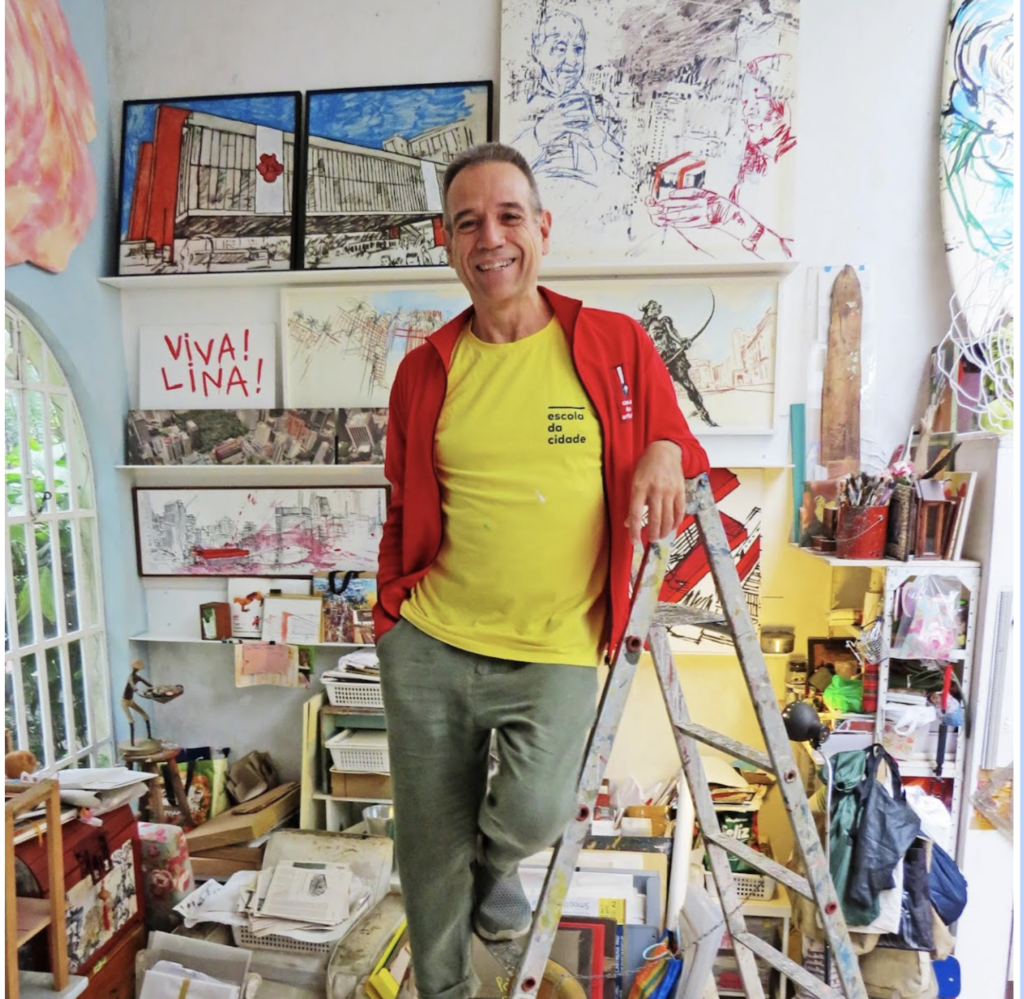
Paulo von Poser, 2021 (credit: Fernando Messala).
Multisensory Drawings: Bodies of Memory, with Paulo von Poser
Free workshop
Date: Saturday, August 16th
Time: 9:30 AM to 1:30 PM
Location: Workshop 2
Job openings: 25
Registration is closed.
Suitable for all ages.
The workshop “"Multisensory drawings: bodies of memory"” It invites participants to explore drawing as an action that engages multiple senses — tactile, bodily, and auditory.
Led by visual artist, performer, professor, and art director Paulo von Poser, the activity is part of the 2025 Heritage Journey program, promoted by the City of São Paulo, whose theme is "Times in Meanings".
The program begins with participants visiting the exhibitions at the Ipiranga Museum in pairs, encouraging attentive observation and dialogue. Following this, the group meets in Studio 2 of the institution to create memory collages and drawings. The meeting concludes with a roundtable discussion where impressions and experiences from the workshop are shared.
Coordination
Professor Dr. Ana Paula Nascimento
Professor at the Paulista Museum of the University of São Paulo
About Paulo von Poser
Visual artist, architect, designer, ceramist, illustrator, performer, and teacher at Escola da Cidade since 2007.
His journey in the visual arts began in 1976, with the production of portraits and landscapes. A graduate in architecture and urbanism from the Faculty of Architecture and Urbanism and Design of the University of São Paulo (FAUUSP) in 1982, von Poser has consolidated a diverse career that intertwines his artistic practice with teaching and civic engagement.
Music at the Museum presents the Baccarelli String Quartet.
Free event
Date: Saturday, July 26
Time: 4pm (ticket collection at 3pm), with a 15-minute entry tolerance)
LocalAuditorium of the Ipiranga Museum
Job openings: 200
Event accessible in Libras (Brazilian Sign Language)
Suitable for all ages.
Free registration closed.
In yet another edition of the project Music in the Museum, The Ipiranga Museum will host the talented artist on July 26th at 4 PM. Baccarelli String Quartet for an accessible and inspiring musical experience.
The repertoire unites great European masters with Brazilian compositions full of lyricism and national identity. Pieces by Heitor Villa-Lobos will be performed, including works from... Bachianas Brasileiras, including the famous Aria: Cantilena and the charming Country Train, which translate soundscapes of Brazil. The presentation also includes the quartet The Hunt, The program includes works by Mozart, full of vivacity and sophistication, as well as waltzes by Shostakovich, Tchaikovsky, and Johann Strauss II, which complete the program with lightness and elegance.
To participate, simply register at link until July 20th.
About the Baccarelli String Quartet
The Quartet is part of a Baccarelli initiative dedicated to promoting chamber music, providing an in-depth study of the works, with an emphasis on technical refinement, dynamics, and balance between the instruments.
In chamber music, musicians interact closely and have the opportunity to alternate between accompaniment and solo roles. The repertoire explored by the group spans the worlds of concert music and popular music, maintaining a high standard of excellence.
The Baccarelli chamber groups have performed in important cultural venues such as MASP, Centro Cultural São Paulo, various SESC units, and have also given numerous concerts for the Heliópolis community at the Baccarelli headquarters.
Regarding Baccarelli
With over 28 years of experience, Baccarelli is one of Brazil's leading non-profit social organizations, promoting education, culture, and social inclusion. Based in Heliópolis, it provides free education to approximately 1,600 students annually and also manages 12 CEU (Unified Educational Centers) units and the Open School Project in 10 EMEFs (Municipal Elementary Schools), expanding access to culture and education in 23 areas of the city of São Paulo.
Excellence in education is the main pillar of the institution, providing children, young people, adults, and the elderly not only with personal development but also with real opportunities for professional advancement. Among the institution's highlights are the Heliópolis Symphony Orchestra, the first in the world formed in a favela, under the artistic direction of the renowned conductor Isaac Karabtchevsky, and the Heliópolis Youth Choir, both recognized nationally and internationally.
To learn more, visit: https://baccarelli.org.br
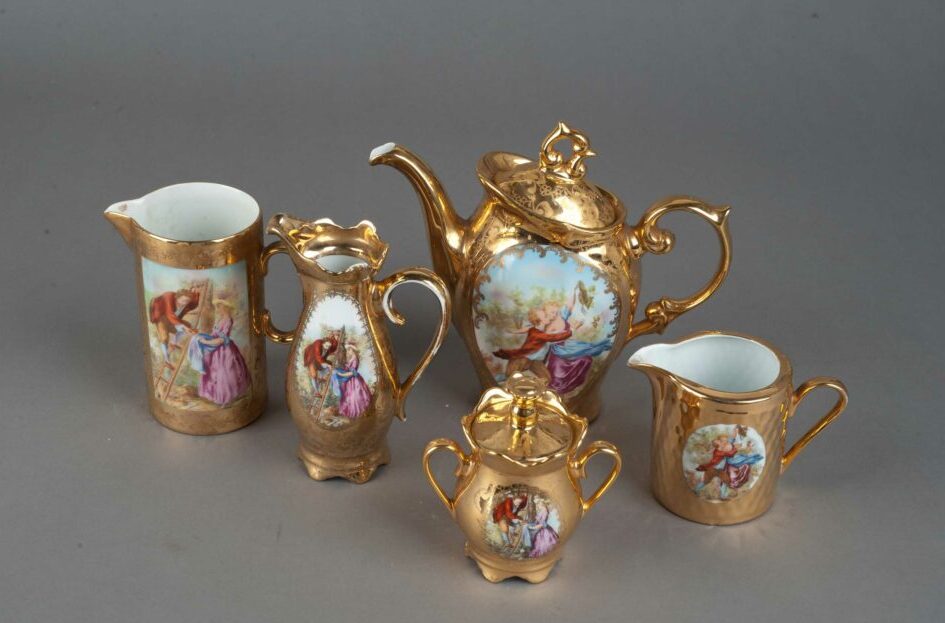
Tea and coffee set with different scenes of noblemen., No date.
Collection of the Paulista Museum-USP
Social interactions in the domestic space of São Paulo between the 19th and 20th centuries.
In-person lecture
Date: July 19th (Saturday)
Time: from 2 PM to 6 PM
Workload: 4h
Job openings: 200
Location: Auditorium of the Ipiranga Museum
Accessibility: sign language interpreter
Free registration: from June 30th to July 16th in this link [DEADLINE EXTENDED]
Throughout the 19th and 20th centuries, the urban transformations of São Paulo not only modified the city's landscape but also profoundly redefined the practices of social interaction within São Paulo homes. In the lecture "Sociabilities in the São Paulo Domestic Space between the 19th and 20th Centuries," historians Rafaela Basso and Laura Stocco Felicio present an overview of how urban changes influenced new forms of sociability in the domestic environment.
The first part of the presentation, led by Rafaela Basso, delves into the hospitality practices among the São Paulo elites of the first half of the 19th century, with particular attention to the sharing of meals as a social ritual. The city's growth and the arrival of new inhabitants favored the consolidation of an urban elite that incorporated European customs, valuing the "arts of hospitality" as a form of social distinction.
Through diverse sources, including the three-dimensional collection of the Museu Paulista, inventories, travelogues, and press reports, the research reveals a society with sophisticated consumption practices, deconstructing the image of poverty and monotony that for a long time characterized studies on 19th-century São Paulo.
In the second part, Laura Stocco Felicio examines the changes in forms of domestic sociability at the beginning of the 20th century. Using advertisements, women's magazines, and manuals from the period, she investigates how urban and technological modernization redefined the domestic environment as a space for conviviality and social distinction. The "modern kitchen" emerges as a symbol of comfort, hygiene, and rationality, while simultaneously making women's work invisible and reinforcing an idealized family identity.
This activity is the result of research carried out by historians at the Museu Paulista of USP (University of São Paulo) and highlights the richness of the institution's collection for studies on history and material culture.
This event is part of the "Encounter with Research" cycle, an initiative of the Museu Paulista of USP that promotes monthly meetings throughout 2025, always on Saturdays, bringing the public closer to studies carried out using its collections.
Course: Meeting with Teachers: Ipiranga Museum and its educational possibilities
In-person course
Date and time: July 17, 2025, from 1:30 PM to 5:30 PM
Location: Auditorium of the Ipiranga Museum
Job openings: 80 participants
Target audience: Teachers from Early Childhood Education, Elementary School, High School, and Adult Education, in both public and private schools.
Free registration: from June 30th to July 15th link [Deadline Extended]
Accessibility: sign language interpreter
The Museu Paulista of USP invites teachers from public and private schools to the course. Meeting with Teachers: The Ipiranga Museum and its educational possibilities, which will take place on July 17, 2025, from 1:30 PM to 5:30 PM, in the auditorium of the Ipiranga Museum.
The meeting aims to present the new exhibitions at the Ipiranga Museum, one of the venues of the Paulista Museum, and discuss their pedagogical potential at different educational levels, from Early Childhood Education to Youth and Adult Education (EJA). Throughout the afternoon, there will be formative sessions with content presentations, as well as guided tours of the long-term and temporary exhibitions, reflecting on strategies for integrating the museum space into school practices.
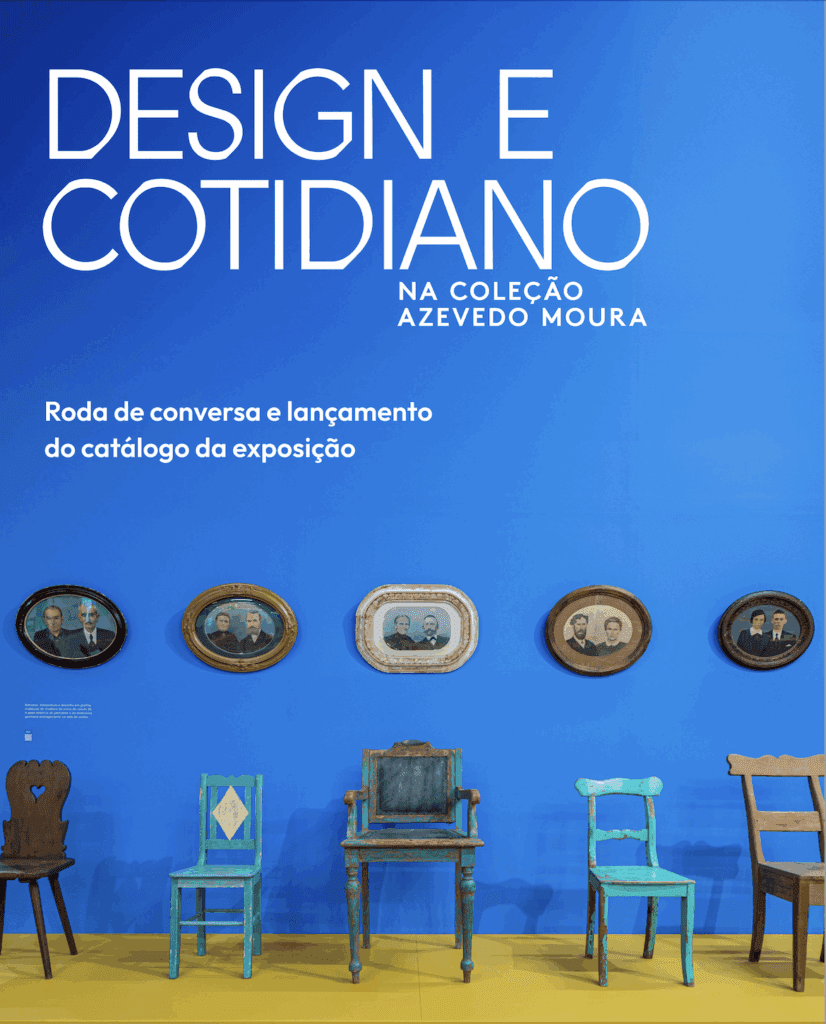
Roundtable discussion and launch of the catalog “Design and Everyday Life in the Azevedo Moura Collection”
Date: July 12th (Saturday)
Time: 3pm (registration at 2:30pm), with a 15-minute entry tolerance)
LocalAuditorium of the Ipiranga Museum
Free registration: up to 9/7 in this link
Job openings: 200
Event accessible in Libras (Brazilian Sign Language)
Suitable for all ages.
On July 12th, at 3 PM, the Ipiranga Museum invites the public to the launch of the exhibition catalog. Design and everyday life in the Azevedo Moura collection.
The event will feature a roundtable discussion with curators Adélia Borges, Vânia Carvalho, and David Ribeiro; the collection organizers, Tina and Calito Azevedo Moura; architect and designer Ana Luisa Cuervo Lo Pumo; and Denise Peixoto, supervisor of the Technical-Scientific Section of Education, Museography, and Cultural Action at the Ipiranga Museum, who is leading the accessibility project for the exhibition.
Finally, there will be an autograph session with the curators, and each participant will receive a free copy of the catalog. Guests will also be able to participate in a special tour of the exhibition.
Participants
Adélia Borges
Curator of the exhibition, critic and design historian. For her contribution to the research and dissemination of Brazilian and Global South design, she received an honorary doctorate from the São Paulo State University (Unesp) in 2021. Her research guides various productions, such as exhibitions, books, reports, documentaries, courses and lectures, in Brazil and abroad.
Vânia Carneiro de Carvalho
Institutional curator of the exhibition and professor at the Museu Paulista/USP, where she has worked since 1990 as a curator in the area of history and material culture, with an emphasis on collection studies, gender, and domestic space. She coordinates the GEMA research group – Domestic space, body and materialities.
David Ribeiro
Institutional curator of the exhibition and professor at the Museu Paulista/USP since 2024, where he works as a curator in the area of identity memories and traumatic memories. He is the editor of the journal Anais do Museu Paulista: história e cultura material and author of “For an anti-racist cultural policy: the indigenous, quilombola and Afro-diasporic journeys in the face of colonial and slave-owning continuities (1988–2020)”, published in 2023 by Intermeios publishing house.
Carlos Reiniger de Azevedo Moura – Calito
Collector of works of art and objects related to German and Italian immigration in Rio Grande do Sul. An architect, he was a university professor at UFRGS (Federal University of Rio Grande do Sul) and UnB (University of Brasília), working as an instructor in teaching and design. He completed a specialization course at Bowcentrum in Rotterdam, Netherlands, and a teaching internship at the AA School of Architecture in the United Kingdom.
Maria Cristina Cuervo de Azevedo Moura – Tina
Together with Calito, she organizes the Azevedo Moura Collection. An architect, she has worked since 1974 in the areas of interior architecture, exhibition design, and furniture design, winning awards in national and international competitions. She provides design consulting for craft projects in various states of Brazil.
Ana Luisa Cuervo Lo Pumo – Lui
Architect and designer. Works in the areas of interior architecture, exhibition design, and furniture design. Also works as a design consultant for craft projects in Brazil and abroad. Has won awards in several design competitions, such as those of the Museu da Casa Brasileira and the Salão Design Móvel Sul.
Denise Peixoto
Supervisor of the Technical-Scientific Section of Education, Museography and Cultural Action at the Museu Paulista of USP. Holds a bachelor's degree and teaching certification in History from the University of São Paulo, specializations in Environmental Education and Teaching Methodology from the Universidade Estadual Paulista Júlio de Mesquita Filho (Unesp), and a master's degree in Archaeology with an emphasis on Education from the Museum of Archaeology and Ethnology of USP.
Holiday Week at the Ipiranga Museum
Educational activities
Dates: July 8-13, 2025
Location: Ipiranga Museum – USP
Between July 8th and 13th, the Ipiranga Museum is hosting a special holiday program with activities for the whole family. Featuring games, workshops, and guided tours, the program aims to stimulate curiosity, critical thinking, and sensitivity in audiences of all ages through fun and educational experiences. Spaces are limited, and participation is free, although some activities require a museum ticket.
Check out the full schedule:
GAMES ROOM
July 8th to 13th, from 10:30 AM to 12:00 PM and from 1:00 PM to 4:30 PM
Free
In Studio 1, next to the ticket office.
Suitable for all ages.
No registration is required.
GUIDED TOURS
Museums aren't just for adults!
Date and time: July 8-12, at 10:30 AM, in Portuguese | July 9, at 10:30 AM, in Libras (Brazilian Sign Language)
Age range: Ages 4 to 6 (accompanied by guardians)
Job openings: 10 children per time slot
Duration: 1 hour
Meeting point: Lobby, next to the Staircase
Free activity upon ticket collection.
This visit proposes a series of activities using objects and a museum exploration guide. The intention is to encourage children to learn about the collections and exhibitions through playful resources and fun approaches that question the universe of things constructed by adults.
This kit consists of a backpack and objects such as a miniature color palette, a blender, and a plush toucan. These objects are used in a journey through the exhibitions. To understand the museum, A History of Brazil, Worlds of Work e Homes and Things. Throughout the tour, children are invited to observe items from the collection, color drawings, and participate in activities related to them.
Professions at the museum
Date and time: July 9, 11 and 13, at 2:30 PM
Age range: Ages 7 to 12 (accompanied by guardians)
Job openings: 10 children per time slot
Duration: 1 hour
Meeting point: Lobby, next to the Staircase
Free activity upon ticket collection.
In this activity, families are invited to explore the museum in search of clues about different jobs and occupations from its collections. After the visit, they put their creativity into practice to assemble a large collective panel with the professions they felt were missing. The proposal stimulates curiosity, a critical look at the exhibits, and respect for the diversity of knowledge.
Collecting everyday life
Date and time: From July 8th to 13th, at 11:30 AM and 2:30 PM, in Portuguese | July 10th, at 3:00 PM, in Libras (Brazilian Sign Language)
Age range: free
Job openings: 20 people
Duration: 1 hour
Meeting point: Reception area, next to the ticket office.
Free
This visit to the temporary exhibition proposes a reflection on the act of collecting and the processes that build a collection, considering the role of the collector, the criteria for choosing objects, and the discourses that guide these decisions. The cultural practices that originate the artifacts are also discussed, focusing on design as an expression of material culture. More than just observing objects, the tour invites a critical analysis of the ways in which we attribute value, preserve, and represent daily life through collections.
Guided tours of the permanent exhibitions
Date and time: From July 8th to 13th, at 11:00 AM, 11:30 AM, 1:00 PM and 2:00 PM
Age range: free
Job openings: 20 people
Duration: 1 hour
Meeting point: Lobby, next to the Staircase
Free activity upon ticket collection.
Visits to the Museum's main long-term exhibitions, guided by educators.
WORKSHOPS
Hands that remember, objects that tell stories.
Date and time:
– July 8, 9, 10 and 12, at 2 pm, in Portuguese
– July 11th and 13th, at 11 AM, in Portuguese
July 10th, at 11 AM, in Libras [UPDATED DATE]
Age range: from age 6 (accompanied by a guardian)
Job openings: 10 children per time slot
Duration: 1 hour and 30 minutes
Meeting point: Reception area, next to the ticket office.
Free activity upon ticket collection.
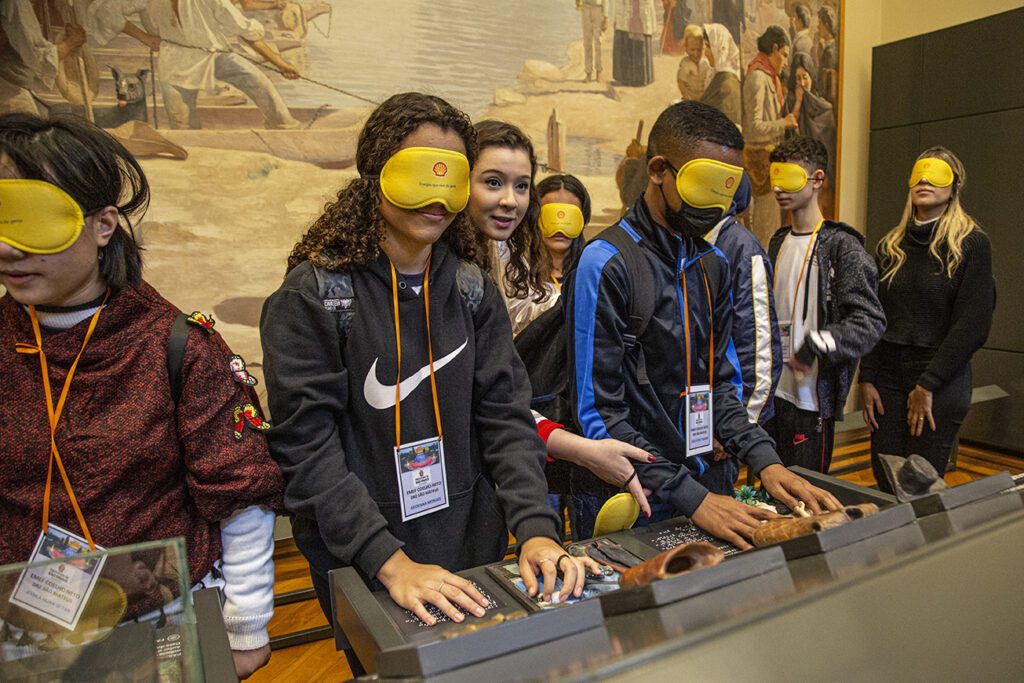
Starting with a visit to the temporary exhibition, we will explore the objects using our senses, especially touch. Then, we invite the children to represent these objects through drawings based on their memory of touch. The proposal encourages the investigation of objects as documents that tell us stories, stimulating a playful and sensitive analysis of their functions, meanings, and the role they occupy within the museum's collection.
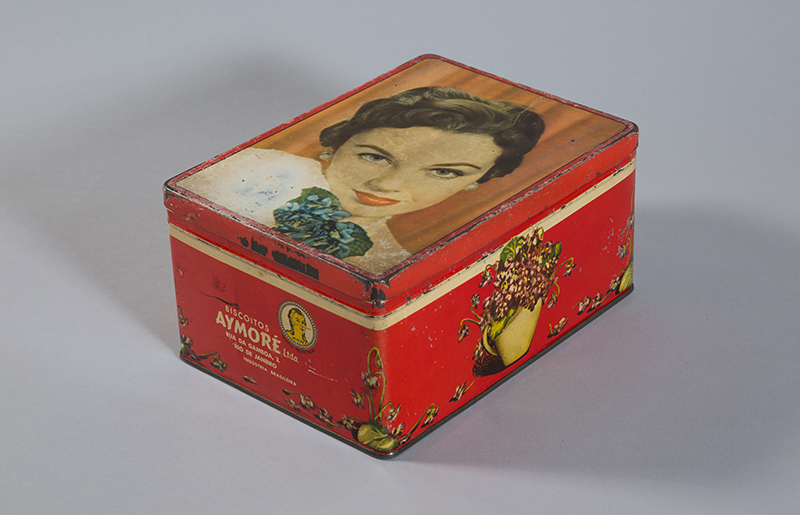
A tin of biscuits from Aymoré, a brand that originated in 1924 in the city of Contagem-MG, and continues production to this day.
Aymoré tin can, undated. Collection of the Paulista Museum-USP.
Lecture: The Canned Cornucopia: The History of Canned Food in Brazil
In-person lecture
Date: June 28 (Saturday)
Time: from 2 PM to 6 PM
Workload: 4h
Job openings: 200
Location: Auditorium of the Ipiranga Museum
Accessibility: sign language interpreter
Free registration: until 24/6 in this link [EXTENDED]
Over the centuries, cans have become much more than simple containers: they are objects that tell stories about industrialization, consumption, and food culture. (In the lecture...) The canned cornucopia: the history of canned food in Brazil., In this article, historian and professor Frederico de Oliveira Toscano presents an overview of the presence of canned goods in the daily lives of Brazilians.
Starting in 18th-century Europe, passing through World War II and the modernization processes in Brazil, the lecture analyzes how cans helped shape the Brazilian diet. Beyond preserving food, these objects also preserve memories and affections.
This activity is the result of research developed by Toscano during his post-doctoral studies at the Museu Paulista of USP and highlights the relevance of the institution's collection for studies on the history of food, material culture, and social transformations.
This event is part of the "Encounter with Research" cycle, an initiative of the Museu Paulista of USP that promotes monthly meetings throughout 2025, always on Saturdays, bringing the public closer to studies carried out using its collections.
Optional subjects – 2025.1
Job openings: 5 people per subject
Target audience: undergraduate students who are not enrolled at USP
Location: Classroom at the Ipiranga Museum
Registration: Send your registration request to the email address apoioacadmp@usp.br
Images and Accounts: Travelers and the Construction of Narratives
Starting from the premise of the shift in understanding of the world from the Enlightenment (18th century) and the strong commitment to cataloging animate and inanimate beings, this discipline focuses on some of the accounts and images produced by foreign artist-scientist-travelers who explored part of the province/state of São Paulo throughout the 19th century. It will contrast this with representations produced by some local members and how these same elements are interpreted, how such images and texts were appropriated for a specific historical construction, especially by Afonso d'Escragnolle Taunay, when he was director of the Museu Paulista (1917-1945).
Presenter: Professor Ana Paula Nascimento
Class schedule: 27/2 to 12/6 (Every Thursday from 2 PM to 6 PM)
Full menu: click here
Introduction to the Study of Material Culture
The aim is to present the theoretical and methodological paradigms that guide reflection on the place of materiality in social relations within the human sciences. Despite the significant increase in In research related to material culture, it is necessary to identify the specificities of material sources through epistemological discussions and analytical exercises, avoiding illustrative, peripheral, and superficial treatment. Logocentric bias, still recurrent in this type of documentation. The aim is to offer students a broad, yet selective, overview of experiences with material sources, so that, through them, the student feels... empowered and encouraged to undertake their own research. The proposed starting point is the morphological analysis of material sources and, from there, new questions that can lead them to a better articulation of... Immediate evidence from the documentation, along with its implications for the roles such documents played in historically defined contexts.
Presenter: Professor Vânia Carneiro de Carvalho
class periodFebruary 25th to July 8th (Every Tuesday from 2 PM to 6 PM)
Full menu: click here
Preservation of Cultural Heritage in Brazil: Concepts, Public Policies, Strategies
To provide students with basic knowledge about strategies for preserving cultural heritage in Brazil, relating to both material and immaterial or intangible manifestations, as well as the conceptual transformations that have guided public preservation policies, especially the listing of sites as protected heritage and the creation of museums; to address the historical processes of constructing public policies for the preservation of Brazilian cultural heritage at the federal, state, and municipal levels, verifying the variations in selective criteria and inventory regarding manifestations of cultural heritage; to explain the ideological contours of public policies for the preservation of cultural heritage and their relationship with the affirmation of collective identities in Brazil.
Presenter: Professor David William Aparecido Ribeiro
Class schedule: 25/2 to 8/7 (Every Tuesday from 2 PM to 6 PM)
Full menu: click here
Course: Preventive Conservation of Collections – Module 1: The Impact of the Building and its Surroundings
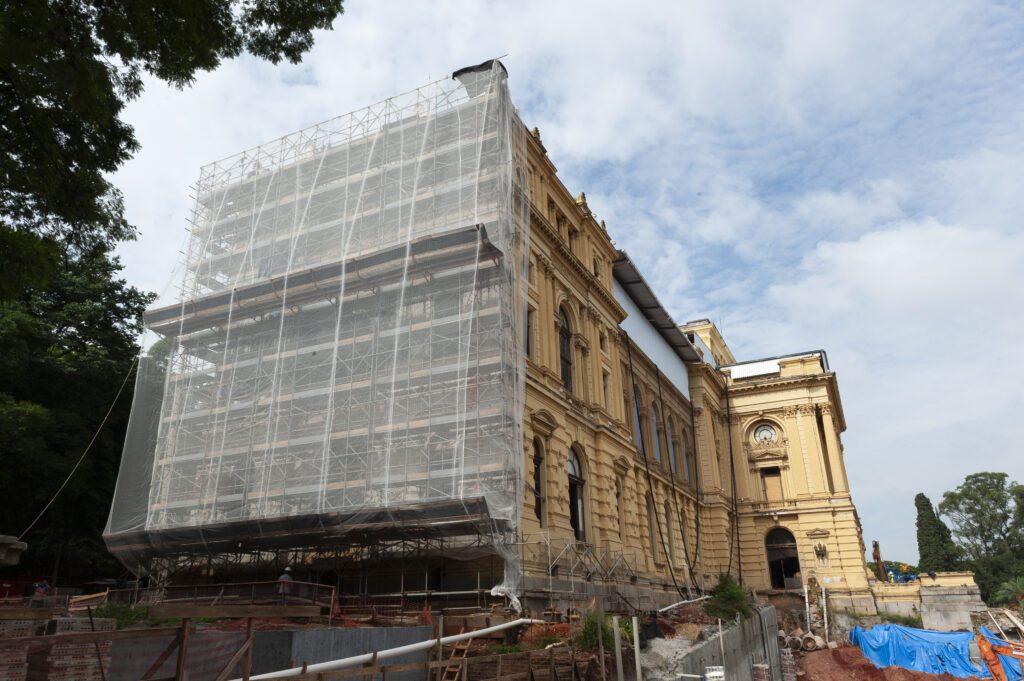
Protecting the collections of institutions such as museums, archives, libraries, and memory centers is a challenge that requires specific knowledge. Therefore, the Museu Paulista of USP presents the fourth edition of the course “Preventive Conservation of Collections – Module 1: The Impact of the Building and its Surroundings”.
Between May and July 2025, researchers and conservation professionals will be able to learn from professors and specialists in the field the methods for protecting and maintaining collections in good condition. The course is intended for professionals with at least three years of experience in libraries, museums, archives, and cultural institutions.
The hybrid methodology combines online classes and in-person meetings, including technical visits. Participants will apply the knowledge directly at the institution where they work, developing a practical diagnosis.
The course addresses challenges such as environmental quality, post-occupancy evaluation, preventive conservation, risk management, and air conditioning systems. The instructors are professors and specialists from the University of São Paulo and the Federal Institute of Education, Science and Technology of São Paulo.
Online and in-person course
Period: Thursdays and Fridays between May 5th and July 4th, from 8:30 AM to 12:00 PM
Workload: 36 hours
Registration: until 22/04, in this link
Job openings25 (selected based on analysis of candidates' resumes and letters of interest)
Target audience: Professionals and researchers who work in or conduct research related to cultural collections.
Investment: R$ 200.00 (two hundred reais)
- Up to 4 (four) free places, subject to analysis of the justification presented;
- 50% discount for postgraduate students and USP employees, upon presentation of proof.
Requirements:
- To have completed a degree;
- Be available to participate in classes, appointments, and scheduled activities;
- To have worked in or conducted research with archives or related fields for at least 3 years;
- Working directly with the USP collection;
- To work or conduct research at a USP unit;
- To work or conduct research with collections at another cultural institution.
PROGRAMME
- Lessons 1, 2 and 3: Post-Occupancy Evaluation (POE) and environmental quality applied to heritage – Prof. Juliana Saft
- Lessons 4, 5 and 6: Post-Occupancy Evaluation (POE) Instruments Applied to Real Estate – Prof. Sheila Walbe Ornstein
- Lessons 7, 8 and 9: Preventive conservation of collections – Ina Hergert
- Lessons 10, 11 and 12: Risk management tools and instruments applied to assets – Prof. Rosaria Ono
- Lessons 13, 14 and 15: HVAC (Heating, Ventilation and Air Conditioning) Systems for Archives – Prof. Alberto Hernandez
- Lesson 16: On-site technical visit / Practical activity (June 10th)
- Lesson 17: Remote support (June 18th)
- Lesson 18: Remote support (June 26th)
- Lesson 19: Presentation of the work – part 1 – hybrid (04/07)
- Lesson 20: Presentation of the work – part 2 – hybrid with an in-person visit at the end (04/07)
A certificate will be offered to those who participate in 75% of the activities and submit the final work.
Course: Maps and Texts in the Construction of History
In-person course
Dates: March 25th to June 10th (Tuesdays)
Time: 8:30 AM to 12:30 PM
Location: Auditorium of the Ipiranga Museum
Workload: 48h
Certificate: Issued to participants with at least 75% attendance.
Registration fee: R$ 50.00 (payment via bank slip)
Exemption: Public school teachers and USP graduate students can request free tuition until March 17th by sending an email with proof of affiliation to apoioacadmp@usp.br.
Job openings: 200
Registration: From February 24th to March 19th, in link. [EXTENDED]
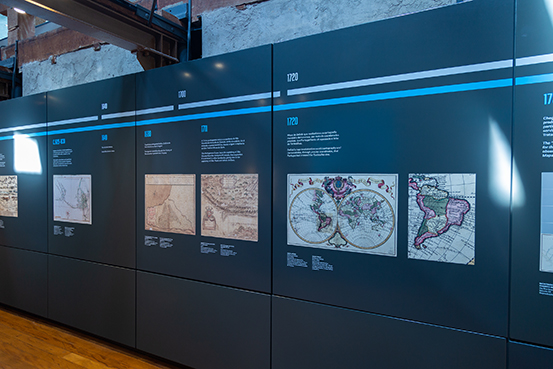
Maps tell stories. Texts describe territories. When combined, they reveal routes, boundaries, and transformations that helped shape Brazil. (Extension course) Maps and texts in the construction of History It explores this relationship between cartographic records and written sources, allowing for a deeper understanding of territorial occupation and division throughout the centuries.
Using concrete research examples, the classes cover topics ranging from coastal navigation and hereditary captaincies to incursions into the interior and the occupation of the Amazon. Historical maps, travel itineraries, and documentary accounts are used to reconstruct the paths that shaped the country. After all, texts without maps are blind, and maps without texts are mute.
Taught by Jorge Pimentel Cintra, the course is aimed at university graduates and offers an immersive experience at the intersection of history, geography, and material culture.
PROGRAM
Block A
- Toponymy and occupation of the Brazilian coast: maps and itineraries
- Comparison of the Descriptive Treatise of Brazil with maps of the time, in particular the Route of all signs.
- The Hereditary Captaincies in the genesis of the boundaries of the current Brazilian states.
- The maps of Luís Teixeira and Bartolomeu Velho and the land grant charters of the Captaincies, in the delimitation of the territory. Overview of the formation of state territories, particularly that of Rio de Janeiro.
- A reconstruction of Manuel Preto's attacks on the missions in Guairá.
- A historical fact that illustrates the penetration into the interior. The map of Céspedes Xeria, the map from the Government of São Paulo, and the documents from the Archives of the Indies. The presence of Tupi in place names.
- Exploration and occupation of the Amazon
- Explorers, travel itineraries, and old maps of the Amazon, up to 1750. Missions and villages.
- Cartography, texts and images of Dutch Brazil
- Dutch Brazil: MarcGrave's maps, Franz Prost's illuminations, and the first accounts: O Castrioto Lusitano and O valeroso Lucideno.
- Accounts and maps of the monsoons and the occupation of the western region of Brazil.
- The river routes to Cuiabá and their extension to Vila Bela and Mato Grosso. The land routes. The cartography of these routes.
Block B
- Methodologies for determining detailed paths: from São Paulo to Itu.
- Combining travelers' accounts and old maps to reconstruct the routes of ancient paths. Peabiru: what is known and what is imagined. The ancient and modern paths of Itu.
- The roads from São Paulo to Santos, accounts of Independence, and the journey of Dom Pedro.
- To illustrate with this concrete example the interaction between ancient maps and historical accounts in determining this layout.
- The roads and maps of Minas Gerais. The Fernão Dias route.
- Working with original documents: the beginnings of the penetration of what is now the territory of Minas Gerais. Exploration of the territory by Fernão Dias: the establishment of settlements and the roads from São Paulo to Minas.
- History, oral tradition, legend and romance: a study on Pedro Taques
- Comparison of Pedro Taques' writings with earlier manuscript sources (AHU and others) and writings by later authors: Azevedo Marques, Carvalho Franco, and Taunay. Creation of novels, films, and epic poems. Selecting two characters as examples: Pedro Leme, the Crooked, and Fernão Dias.
- Reconstructing the boundaries of land grants, municipalities, states, and countries, based on descriptions.
- Attempts to reconstruct the boundaries of land grants, common lands, and municipalities. Issues of state and national borders.
- Maps and texts in determining the location of historical events.
- Based on the research that determined the location of the proclamation of Brazil's Independence, this study analyzes the map and text search heuristics that allowed this determination, with the help of digital cartography programs.
Accessible audiobooks: inclusion in the exhibitions of the Ipiranga Museum.
Online event
Date: June 9, 2025
Time: from 6pm to 7pm
Live stream on YouTube from the Ipiranga Museum.
With simultaneous translation in Libras (Brazilian Sign Language).
Free registration until June 8th: https://forms.gle/NHj5H9Lq5WhQQYZE8
Access is also about knowing. With a commitment to expanding access to cultural content for all audiences, the Ipiranga Museum is carrying out this activity. Accessible audiobooks: inclusion in the exhibitions of the Ipiranga Museum.. The initiative discusses the inclusion of audio description features in the catalogs of temporary exhibitions. Sitting, Storing, and Sleeping: The Brazilian House Museum and the Paulista Museum in Dialogue e Where There's Smoke: Art and the Climate Emergency.
The aim of this initiative is to introduce the public to the process of creating audiobooks and to highlight the importance of accessibility in museum practices. Through a live discussion with professionals involved in the project, the event invites the public to reflect on how different forms of cultural mediation contribute to strengthening a more inclusive and democratic museum experience.
The live stream will feature the participation of Vinicius Caetano, educator at the Ipiranga Museum and of Rafael Publio, partner at Santa Causa, the company responsible for producing audiobooks with audio description. The discussion panel will be moderated by Denise Peixoto, supervisor of Education, Museography and Cultural Action at the Museum.
During the meeting, the accessibility measures of the Museum's current temporary exhibition will also be presented., Design and Everyday Life in the Azevedo Moura Collection, This reinforces the continuity of accessibility initiatives in the institution's curatorial projects. The new exhibition opened on the 27th and will remain on display until September 28th.
This is a special opportunity to learn about the accessibility resources available in the Museum's exhibitions and to get a behind-the-scenes look at how we are building a more accessible, diverse, and inclusive cultural institution.
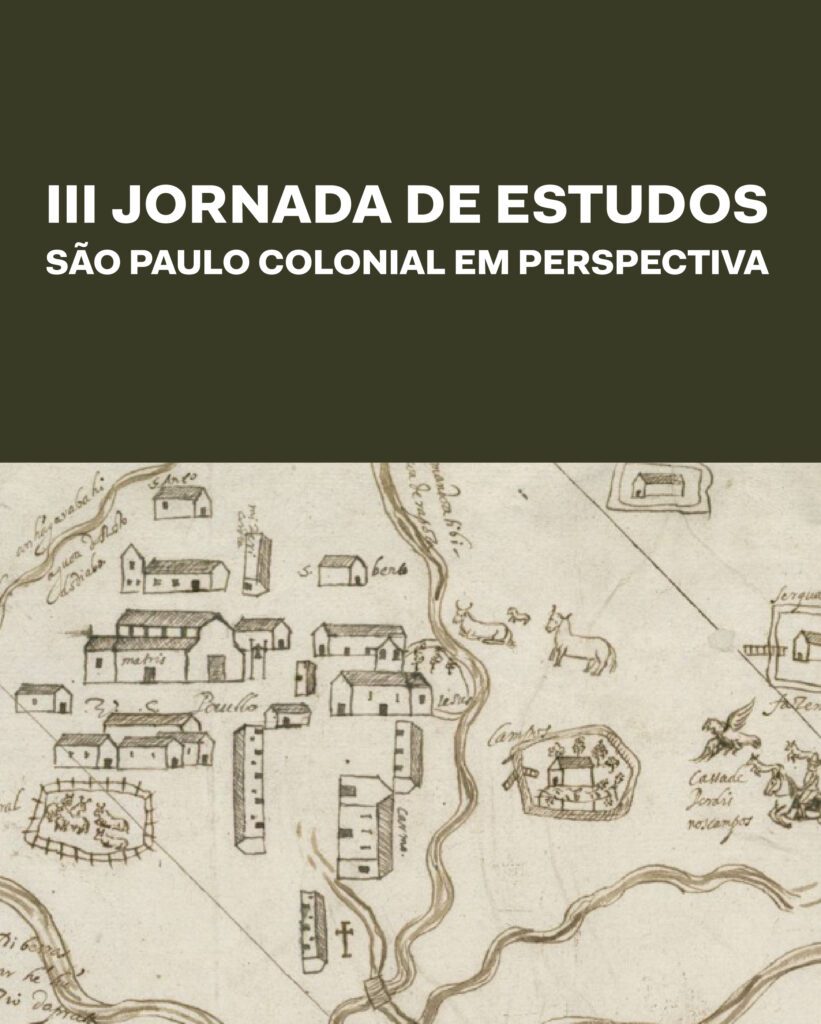
III Study Conference: Colonial São Paulo in Perspective
Dates: June 4th, 5th and 6th
Time: 9am to 6pm
Location: Auditorium of the Ipiranga Museum
Accessibility: Sign Language Interpreter
Participants will receive a USP certificate.
Free registration: From 8/5 to 25/05 in this link.
Between June 4th and 6th, the Ipiranga Museum will host the III Study Conference: Colonial São Paulo in Perspective, organized by professors Maria Aparecida de Menezes Borrego (USP), José Carlos Vilardaga (Unifesp) and Alberto Luiz Schneider (PUC-SP), in the Museum's auditorium.
The event brings together researchers dedicated to the study of the former captaincies of São Paulo and São Vicente, with the aim of sharing and debating the results of their most recent investigations. Grounded in historiographical transformations marked by theoretical, thematic, and regional pluralism, the Conference consolidates itself as a space for academic articulation among scholars from different institutions, in addition to fostering new research agendas on the colonial history of São Paulo.
In this edition, the event will feature 27 speakers distributed across six roundtables, with the following thematic areas: indigenous and African protagonism, circulation of knowledge and artifacts, socioeconomic and environmental dynamics, sources and archives, representations and memories, and editorial launches.
The program also includes a guided tour of the Museum's exhibitions related to the event's theme, as well as a special presentation of... The USP Philharmonic and the Academic and Youth Choirs of OSESP will perform works by colonial composers from São Paulo and composers and poets from the BRICS countries. The event will conclude with the launch of recent publications and an autograph session.
Check out the full schedule:
Day 1 – 04/06 (Wednesday)
9am
Accreditation
9:30 AM – 10:00 AM
Opening
10:00 AM – 12:30 PM
Guided tour of the exhibitions at the Ipiranga Museum.
2 PM – 3 PM
USP Philharmonic and Academic and Youth Choirs of OSESP
3:30 PM – 4:30 PM
Opening lecture: Intermediaries in colonial São Paulo, with Alida Metcalf (Rice University).
Day 2 – 05/06 (Thursday)
9am
Accreditation
9:30 AM – 11:30 AM
Table 1 – Indigenous and African roles
Moderator: David Ribeiro (USP)
- Indigenous presence in the formation of Piratininga and some of its surroundings: “traces” of invisible protagonisms – Casé Angatu (UESC)
- Guardians of Tupiniquim Knowledge: An Interdisciplinary Study on Women's Agency and the Materiality of São Paulo – Marianne Sallum (Unifesp)
- Multiethnic Amerindian revolts on the São Paulo plateau (1650s) – Gustavo Velloso (USP)
- Consultations and answers: slaves in government communications from the Captaincy of São Paulo in the 18th century – Ricardo Alexandre Ferreira (Unesp)
1 PM – 3 PM
Table 2 – Circulation of knowledge and artifacts
Moderator: José Rogério Beier (USP)
- Mysticism and Enlightenment in the Fields of Piratininga: the Morgado of Mateus and the founding of the Monastery of Light – Amilcar Torrão Filho (PUC-SP)
- Shared production of knowledge: asymmetries, power relations and the knowledge of local populations (18th century) – Gisele Cristina Conceição (USP)
- The trade in artifacts of written culture in colonial São Paulo – Jean Gomes de Souza (USP)
- The Mineralogical Journey in the Province of São Paulo: Edition and Nation-Building Project (France, 1820s) – Breno Leal Ferreira (ETEC-SP)
3:30 PM – 6:00 PM
Table 3 – Socioeconomic and environmental dynamics
Moderator: José Carlos Vilardaga (Unifesp)
- The Secretariat of the Third Order of Saint Francis of São Paulo: Writing, Bureaucracy, and Socioeconomic Dynamics in the 18th Century – Phablo Fachin (USP)
- Free people, freedmen and enslaved people: the dynamics of the construction of an artisan village – colonial Itu – Anicleide Zequini (USP)
- Crosses, wayside crosses and chapels of Santa Cruz in rural and urban areas (1750-1850) – Francisco de Carvalho Dias de Andrade (USP)
- Historical maps: sources for economic and ecological history – Denise Moura (Unesp)
- Animals and the environment as everyday agents in colonial travels in São Paulo – Nelson Aprobato Filho (USP)
Day 3 – 06/06 (Friday)
9am
Accreditation
9:30 AM – 11:30 AM
Table 4 – Sources and files
Moderator: Francisco de Carvalho Dias de Andrade (USP)
- Knowledge for governing, strategies for demanding: the paths of information in the sources of the Overseas Council (São Paulo, 2nd half of the 18th century) – Andréa Slemian (Unifesp)
- Pastoral visits in colonial São Paulo: possibilities for analysis based on the Curia Archives – Aldair Rodrigues (Unicamp)
- Food under public scrutiny: documentation from the São Paulo city council and a study of practices related to health and food – Rafaela Basso (Unicamp)
- From colonial history to the formation of archives at the Memory Center – Unicamp: the contribution of historian José Roberto do Amaral Lapa – Juliana Gesuelli Meirelles (PUC-Campinas)
1pm-3pm
Table 5 – Representations and memories
Moderator: Alberto Luiz Schneider (PUC-SP)
- Four maps to write the history of the captaincy of São Paulo in the 18th century – José Rogério Beier (USP)
- Representations of travelers in paintings at the Museu Paulista: 1940s – Ana Paula Nascimento (USP)
- Memories of a Verona in São Paulo: the contemporary representation of the conflict between the Pires and Camargo families – Fabrízio Franco (Unifesp)
- Erected Memories: Uses of the Past in the Construction of São Paulo Identity – Raphael Fernando Amaral (USP)
3:30 PM – 4:30 PM
Table 6 – Publishing Releases
Moderator: Maria Aparecida de Menezes Borrego (USP)
- Violence in the colony: crimes of sacrilege in the bishopric of São Paulo, 1745-1800. São Paulo: Editora E-manuscrito, 2024 – Walter Mesquita Barroso (PUC-SP)
- Concubinage: bastardy tinged by color (São Paulo, 17th century). Jundiaí: Paco, 2025 – Marília Tofanetto Alves (Unesp).
- Material and memorial dimensions of São Paulo's colonial past.. São Paulo: Museu Paulista da USP, 2025 (EPUB- Portal de Livros Abertos da USP) – Maria Aparecida de Menezes Borrego (USP)
- The challenges of translation and its relevance today. Family and Frontier in Colonial Brazil, by Alida Metcalf – Igor Renato Machado Lima
4:30 PM – 5:30 PM
Closing lecture: São Paulo in the construction of the (memory) of Brazil's Independence, with Cecília Helena de Salles Oliveira (USP)
5:30 PM – 6:00 PM
Autograph session
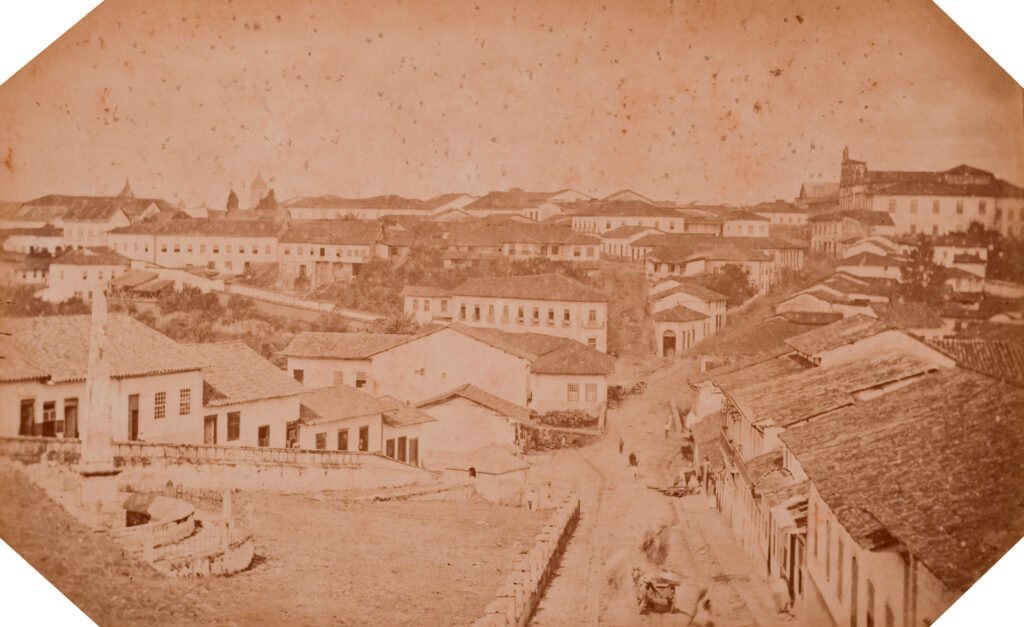
Militão Augusto de Azevedo
City of São Paulo. (View taken from Paredão do Piques) [current Quirino de Andrade street], 1862
Comparative album of the city of São Paulo 1862-1867
Credit: Collection of the Paulista Museum-USP
Lecture: Materials and construction techniques in 19th-century São Paulo architecture, through the collection of the Museu Paulista-USP.
In-person lecture
Date: May 31 (Saturday)
Time: from 2 PM to 6 PM
Workload: 4h
Job openings: 200
Location: Auditorium of the Ipiranga Museum
Accessibility: sign language interpreter
Free registration: until 22/5 in this link
What materials and techniques shaped the city of São Paulo from the mid-19th century onwards? Architect, professor, and researcher Adriane de Freitas Acosta Baldin sheds light on this topic in her lecture. Materials and construction techniques in 19th-century São Paulo architecture, through the collection of the Museu Paulista-USP., highlighting the use of brick masonry in construction during that period and its prominent presence in the monumental building of the Ipiranga Museum.
The research, initiated in 2006 and developed until 2020, when he completed his post-doctoral studies at the Museu Paulista (2020), used as sources the photographic collection of Militão Augusto de Azevedo on the city of São Paulo (1862-1867), documentation regarding the construction of the museum, and on-site verification of the materials that compose it. The investigation revealed the role of German artisans in the introduction of brick masonry in São Paulo and identified the application of this technique in the walls and vaulted slabs of the building that houses the Museu do Ipiranga itself.
In addition to sharing the results of the study on construction methods in the 19th century, the lecture offers reflections on the history of Brazilian architecture, the urbanization processes of São Paulo, and the importance of material culture and documentary and visual heritage for research in architecture and urbanism.
This event is part of the "Encounter with Research" cycle, an initiative of the Museu Paulista at USP (University of São Paulo) to bring the public closer to the research conducted using its collections. Throughout 2025, 12 monthly meetings will be held, always on Saturdays, bringing new perspectives on history and material culture.
Cultural Turnaround: Music at the Museum presents CORALUSP
Date: May 24
Time: 5pm
Location: Welcome to the Ipiranga Museum
Accessibility: Sign Language Interpreter
Free entry to this activity..
No prior registration required.
On Saturday, May 24th, at 5 PM, the Ipiranga Museum will host the CORALUSP Blue Group for a presentation of their project. Azul Popular: From the people, with the people, and for the people., conducted by André Juarez. The activity is part of the Virada Cultural de São Paulo program and admission is free.
The presentation will take place in the museum's entrance hall, in front of the ticket office. No prior registration is required.
Participate!
Messages from the present time: writings and images as cultural heritage - 2nd Edition
Date: May 10th (Saturday)
Time: 10:00 AM (registration from 9:30 AM, with a 15-minute grace period for entry)
Location: Auditorium of the Ipiranga Museum
Classification: From age 15 onwards
Accessibility: Sign Language Interpreter
A certificate of participation will be issued to those interested.
Free registration: From April 14th to May 4th in this link.
As we walk through the city streets, a diversity of images and writings capture our hurried gaze. Tile panels that have withstood the test of time, hand-drawn signs advertising popular commerce—each visual expression has much to say about the values, affections, and aspirations of its authors, who, even anonymously, enrich the urban landscape with their works.
To reflect on the cultural value of these manifestations, the Ipiranga Museum is holding the second edition of the meeting. Messages from the present time: writings and images as cultural heritage., A full day of special and free activities, dedicated to the exchange of knowledge and the appreciation of visual stories that document the present.
Check out the full schedule:
10am to 12pm – Chat with Filipe Grimaldi and Douglas Nascimento
Douglas Nascimento, a communicator, researcher, and activist focused on culture and historical heritage, will discuss the illustrated tile panels that adorn residences and buildings in São Paulo, analyzing their authorship, themes, and the challenges in identifying remaining examples. Following him, Filipe Grimaldi, a lettering artist from São Paulo, will address the different calligraphic styles used in commercial posters across Brazil, created by professional and amateur letterers, the so-called "letter openers.".
2 PM to 3 PM – Guided tour “Tile panels in the Ipiranga neighborhood”
Accompanied by Douglas Nascimento, the participants will take a tour through the streets near Independence Park, visiting residences and buildings that still preserve old tile panels on their facades.
Openings: 20 people (selection by lottery, held during the morning program).
2 PM to 5 PM – Workshop “Popular Letter Painting”
Taught by Filipe Grimaldi, this introductory workshop explores the technique of lettering and the composition of hand-painted signs using a lettering brush. The activity combines theory and practice, covering different calligraphic styles used by popular letterers. All materials will be provided to participants.
Openings: 20 people (selection by lottery, held during the morning program).
Participate!
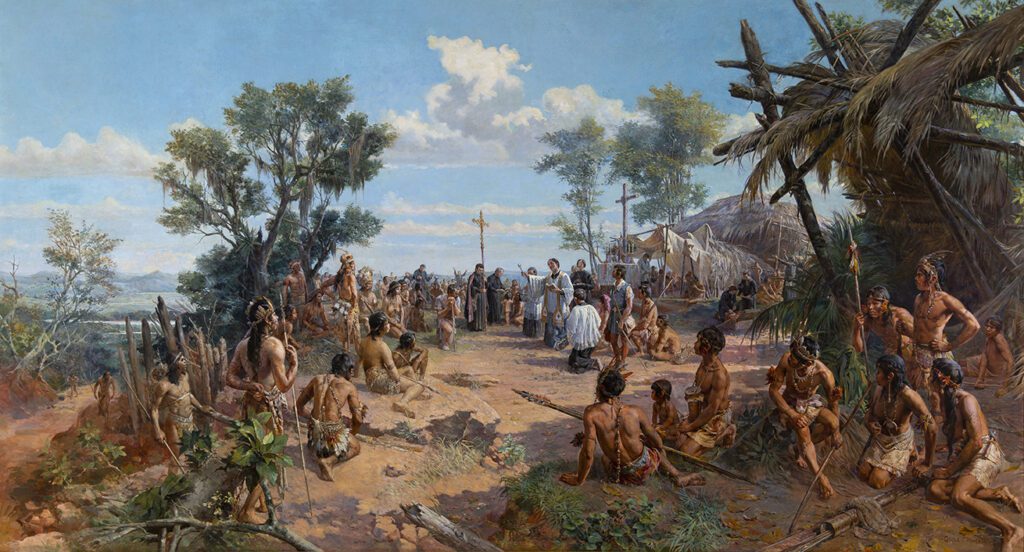
Guided tour: Indigenous representations in dialogue
In person
In Portuguese
Date and time: April 5, 6, 12, 19 and 26 | 2 PM
Meeting point: Lobby, next to the Staircase
Target audience: spontaneous
Number of vacancies: 20
In Libras (Brazilian Sign Language)
Date and time: April 2nd, 6th, 9th, 16th, 23rd and 30th | 3 PM
Meeting point: Reception area, next to the ticket office.
Target audience: spontaneous
Number of vacancies: 10
For both, No prior registration is required.
The visit invites the public to reflect on the representations of indigenous peoples in the collections of the Museu Paulista. The idea is to highlight the tensions and contrasts between academic and artistic views over time, emphasizing how these interpretations help or hinder the understanding of indigenous experiences and resistance in Brazil, especially in the context of São Paulo.
Guided tour: Indigenous representations in dialogue
In person
In Portuguese
Date and time: April 5, 6, 12, 19 and 26 | 2 PM
Meeting point: Lobby, next to the Staircase
Target audience: spontaneous
Number of vacancies: 20
In Libras (Brazilian Sign Language)
Date and time: April 2nd, 6th, 9th, 16th, 23rd and 30th | 3 PM
Meeting point: Reception area, next to the ticket office.
Target audience: spontaneous
Number of vacancies: 10
For both, No prior registration is required.
The visit invites the public to reflect on the representations of indigenous peoples in the collections of the Museu Paulista. The idea is to highlight the tensions and contrasts between academic and artistic views over time, emphasizing how these interpretations help or hinder the understanding of indigenous experiences and resistance in Brazil, especially in the context of São Paulo.
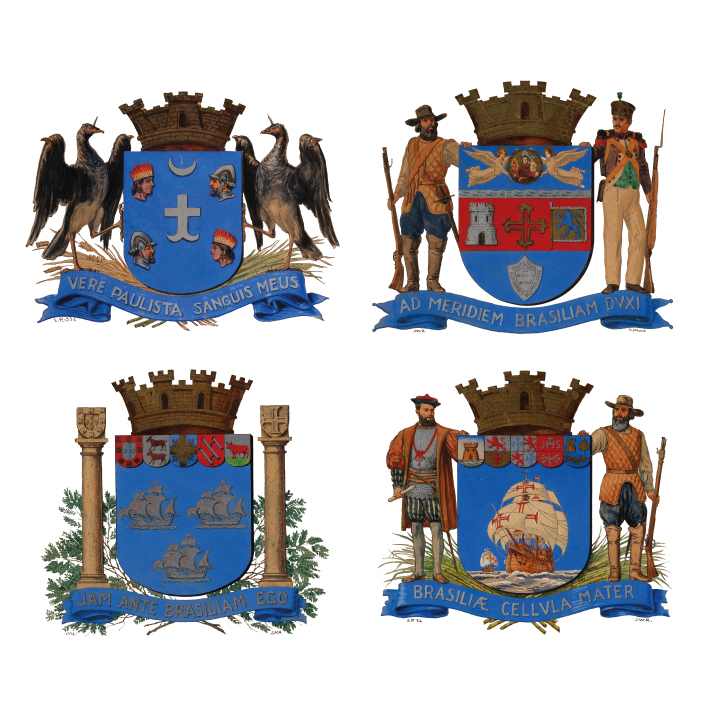
Coats of arms of the cities of Guarulhos, Laguna, São Vicente and Porto Segundo.
Source: José Wasth Rodrigues Collection of the Paulista Museum/USP
Lecture: Watercolor and gouache paintings by José Wasth Rodrigues: materiality, technique and preservation
In-person lecture
Date: April 26 (Saturday)
Time: from 2 PM to 6 PM
Workload: 4h
Job openings: 200
Location: Auditorium of the Ipiranga Museum
Free registration: From March 25th to April 21st in this link.
Science can be a great ally of museums in the preservation and understanding of historical works of art. This is what researcher Isabela Ferreira Sodré argues in her lecture. Watercolor and gouache paintings by José Wasth Rodrigues: materiality, technique and preservation.. At the event, she will present the main findings of her research on the paintings of municipal coats of arms belonging to the José Wasth Rodrigues Collection, held by the Museu Paulista of USP.
The research, funded by FAPESP, was conducted in a transdisciplinary manner, employing physicochemical methods to analyze the materiality of the works, identify the pigments used by the artist, and diagnose any degradation processes. The study brought new perspectives on the watercolor and gouache painting techniques applied in these works, in addition to contributing to conservation strategies for these pieces.
The lecture will address the importance of chemical characterization for the preservation of historical artifacts, the challenges in analyzing works on paper, and the impact of this study on understanding the material and technical aspects of the collection.
This event is part of the "Encounter with Research" cycle, an initiative of the Museu Paulista at USP (University of São Paulo) to bring the public closer to the research conducted using its collections. Throughout 2025, 12 monthly meetings will be held, always on Saturdays, bringing new perspectives on history and material culture.
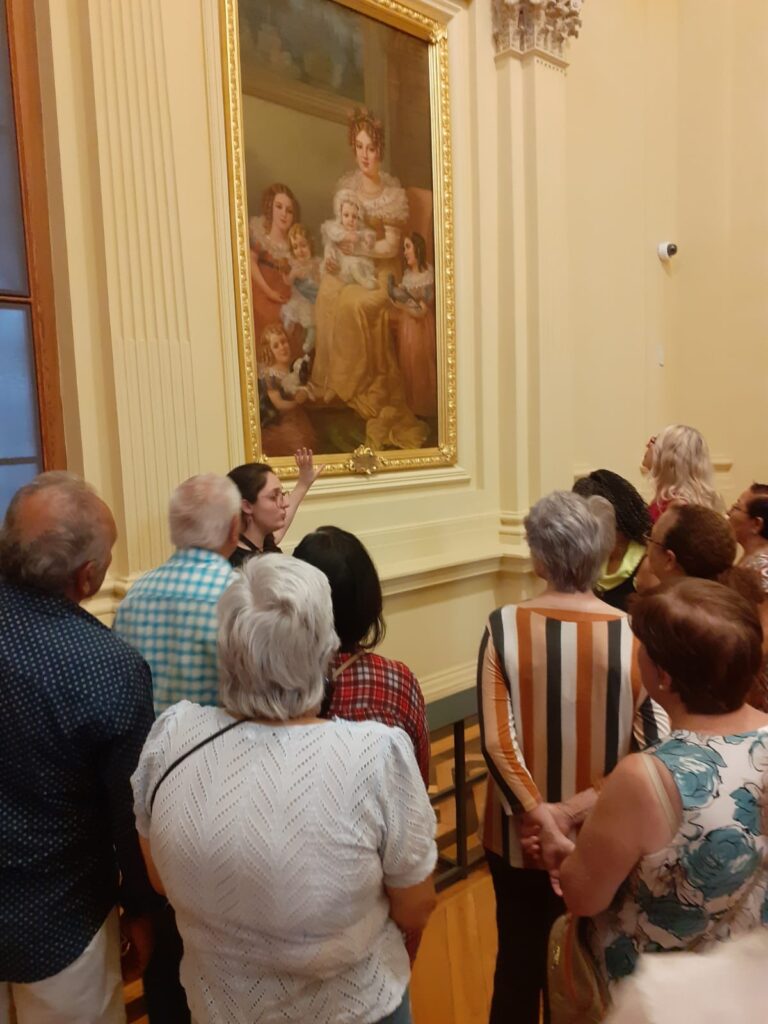
Building memory in a history museum.
In-person activity
Dates and times: April 8th, 15th and 22nd, from 2 PM to 4:30 PM
Job openings: 20
Target audience: people over 60 years old
Location: Workshop 1 of the Ipiranga Museum
Free registration: From March 17th to 28th via this link: https://forms.gle/SeJjtZJ2Z5RvRE3P7
Memory is a link between generations, allowing stories, knowledge, and experiences to be shared and preserved over time. The activity "Building Memory in a History Museum" aims to create a space for socialization, appreciation of cultural diversity, and strengthening intergenerational relationships.
Over three sessions, participants will have the opportunity to explore different perspectives on history through guided visits to the exhibitions Worlds of Work, Imagined Pasts, and Houses and Things. Each visit will be followed by a thematic workshop, where participants can exchange experiences, reflect on their own memories, and express their perceptions through hands-on activities.
Exhibition schedule:
- Worlds of Work Reflections on work throughout Brazilian history and its influence on daily life.
- Imagined Pasts The impact of historical representations and the construction of new interpretations of the past.
- Homes and Things The relationship between domestic space and social identities over time.
This is a special opportunity for people over 60 to connect with history and strengthen their ties to culture and memory.
Participate!
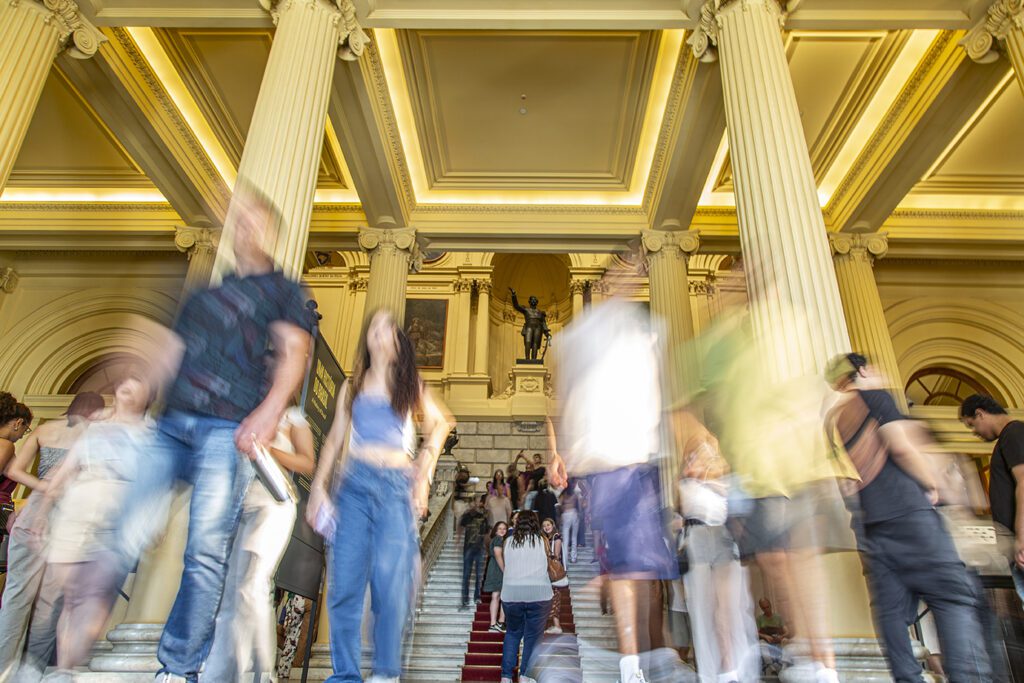
Shell Free Day
Free admission
Date: April 13th (Sunday)
Time: from 10am to 5pm (last entry: 4pm)
On April 13th, Shell, one of the sponsors of the Ipiranga Museum, is offering free admission to celebrate the company's anniversary. With this initiative, visitors can enjoy the special program prepared for the date, including a visit to the monument building and the collection on display.
Tickets will be distributed free of charge at the box office on the day of your visit, starting at 10:00 AM. Plan ahead and come live this experience!
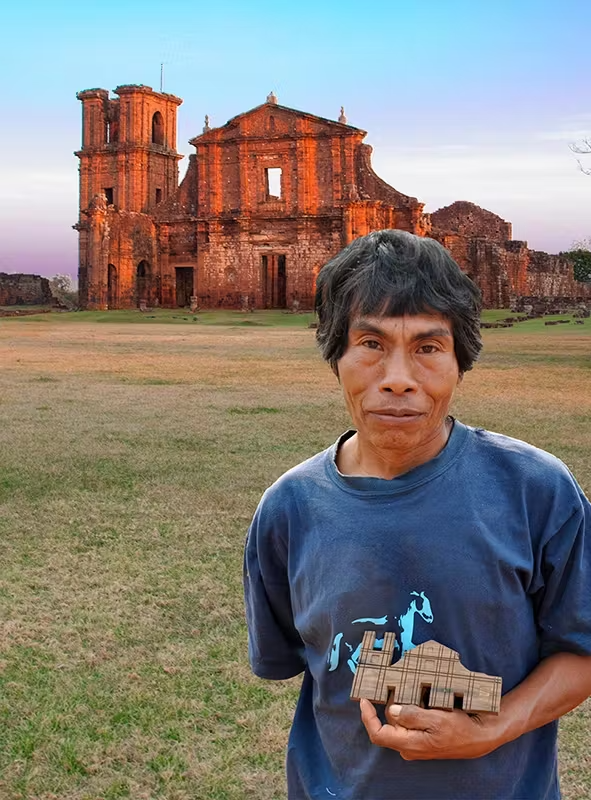
Photo: Vincent Carelli, Video in the Villages.
Cinema at the Museum - 1st Edition
Date and time: April 5th, at 3 PM
Location: Auditorium of the Ipiranga Museum
Workload: 4h
Free registration: From March 17th to 31st. Click here. here.
Accessibility features: Subtitles and audio description.
A certificate of participation will be issued to those interested.
Invited panelists: Ariel Ortega Kuaray Poty and Patrícia Ferreira Pará Yxapy
Mediator: David Ribeiro
The Ipiranga Museum invites you to the launch of Cinema at the Museum, a semester-long program that will feature screenings of films and documentaries followed by discussions with their filmmakers.
The first edition will take place on April 5th at 3 PM in the auditorium, with free admission, and will be dedicated to the film. Tava, the Stone House, produced by the NGO Vídeo nas Aldeias, founded by the indigenist Vincent Carelli.
The session will include audiovisual producer Patrícia Ferreira Pará Yxapy and filmmaker Ariel Ortega Kuaray Poty, who directed the documentary.
The film presents various dimensions of indigenous thought surrounding the so-called Ruins of the Jesuit Missions of the Guarani, recognized as a World Heritage Site by UNESCO, located in Brazilian and Argentinian territories. The documentary reclaims the right of indigenous peoples to self-determination and the power to tell their own stories.
Participate!
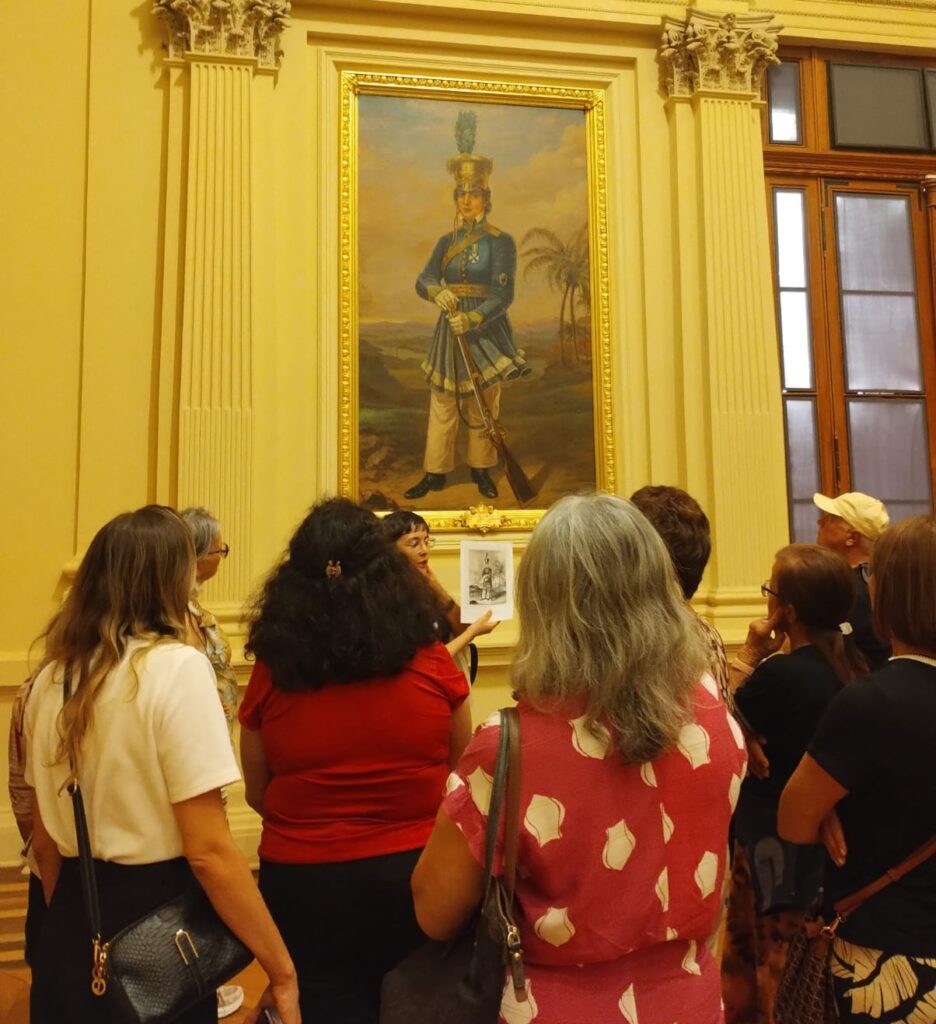
Guided tour: Absences and presences: Representations of women in the Museu Paulista
In person
Date and time: March 8th, 15th and 29th at 2 PM
Target audience: spontaneous
Number of vacancies: 20
Meeting point: In the Lobby, next to the Staircase.
Enrollment: it is not necessary
The itinerary proposes to discuss the absences and presences of women in the narratives of Brazilian history present in the collection of the Museu Paulista, engaging in dialogue with contemporary artistic productions. It will be discussed how these works allow us to understand the social roles attributed to women from the 20th century onwards and their reverberations in the present day.
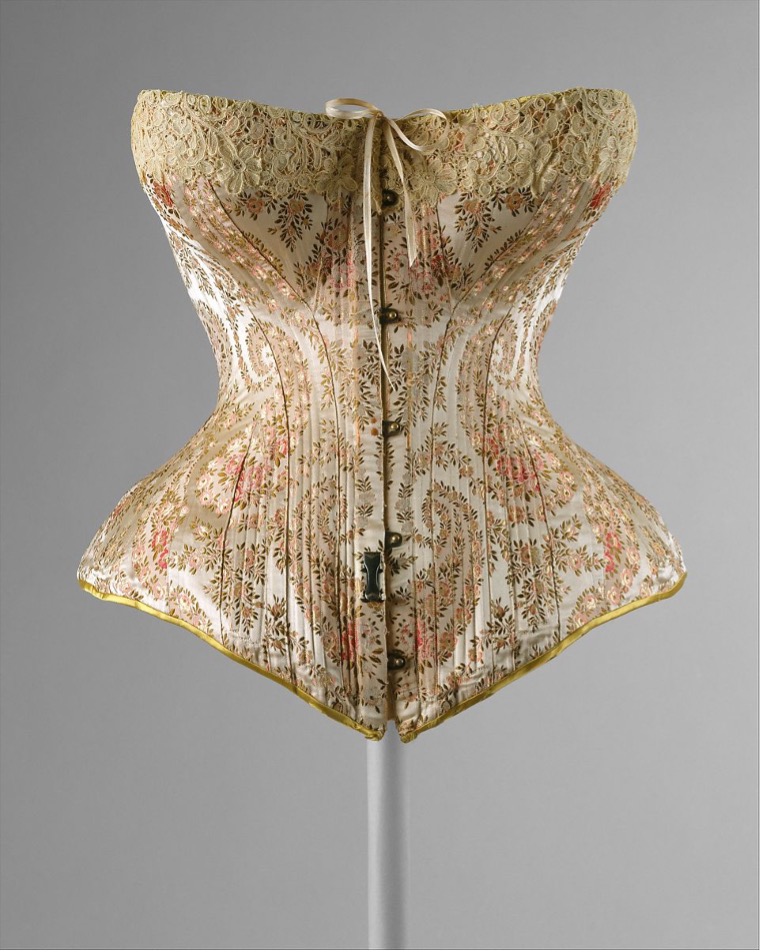
Silk corset by Maison Leóty., 1891
Source: Costume Institute, Metropolitan Museum of Art (NY)
Lecture: Interpreting Objects: Fashion, Intimacy, Gender, and History
In-person lecture
Date: March 22 (Saturday)
Time: from 2 PM to 6 PM
Workload: 4h
Job openings: 200
Location: Auditorium of the Ipiranga Museum
Free registration: Until 17/03 in this link.
What can clothes tell us about history? Much more than they seem. At the meeting Interpreting objects: fashion, intimacy, gender, and history., In this series, a pair of speakers delve into the world of fashion to understand how clothing has helped shape social norms, express individuality, and challenge gender conventions.
Guilherme Domingues Gonçales offers a perspective on the adoption of traditionally masculine garments – such as suits, vests, and ties – by women between 1851 and 1911. Based on the analysis of newspapers and photographs from the period, the study reflects on which women adopted this fashion, in what contexts, and what meanings this choice carried. The lecture will address the impacts of these garments on the social and bodily dynamics of the time, revealing how clothing can function as a marker of cultural transformations and challenges to gender norms.
Priscila Nina Ferreira presents her research on the use of the corset in Brazil between 1889 and 1929. The study investigates the role of this garment in the construction of femininity and bourgeois intimacy in Brazil at the turn of the 19th to the 20th century. More than just an item of clothing, the corset was present on women's bodies, in shop windows, in advertisements, and in artistic representations, reflecting the transformations of modern society. The lecture discusses how this artifact was an active agent in defining the boundaries between public and private, in the ritualization of daily life, and in the normalization of female bodies.
This lecture is part of the "Encounter with Research" series, an initiative of the Museu Paulista at USP (University of São Paulo) to bring the public closer to the research conducted using its collections. Throughout 2025, 12 monthly meetings will be held, always on Saturdays, covering a variety of topics and new perspectives on history and material culture.
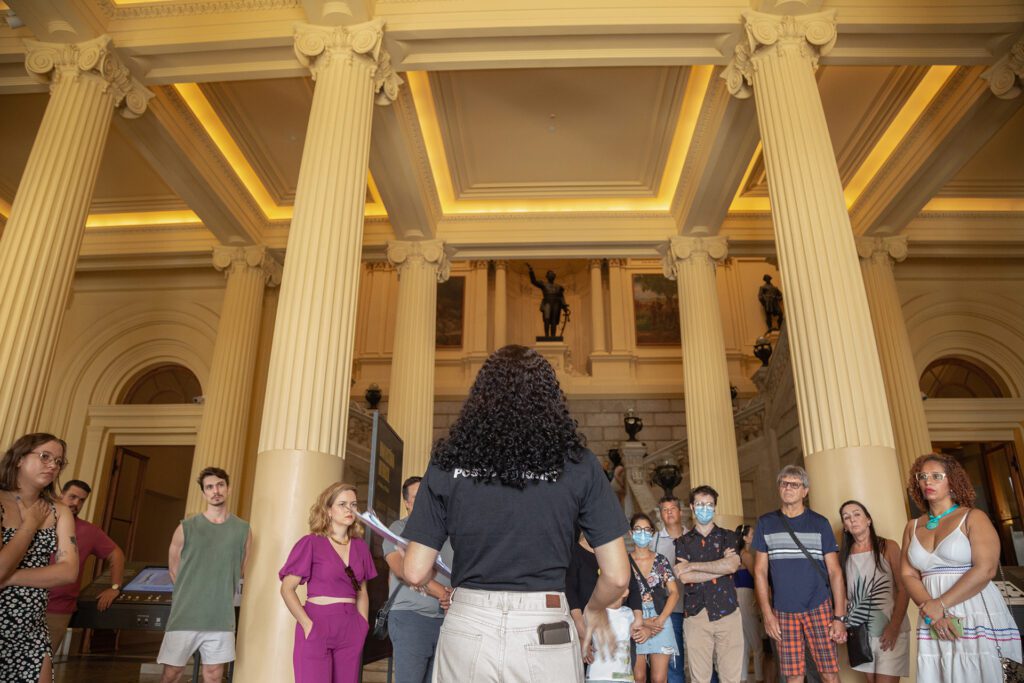
Course: Training for tourism professionals
In-person course
Date and time: March 15th, from 10 AM to 5 PM (with a lunch break)
Workload: 6h
Job openings: 20
Location: Classroom 1 of the Ipiranga Museum
Free registration: From February 24th to March 7th via this link: https://forms.gle/KbD4rrWFg5crPg7R6
Sign Language Interpreter: Yes
Issuance of certificate: Yes
Tourism and culture go hand in hand in the experience of visitors seeking knowledge and leisure. To ensure that these moments are enriching, it is essential that professionals in the field are prepared to offer accurate and contextualized information about historical and cultural heritage.
In this context, the course "Training for Tourism Professionals" aims to deepen knowledge about the Ipiranga Museum and its long-term exhibitions, as well as present the procedures for scheduling group visits and the visitation rules. The program includes a guided tour led by the Museum's educators, providing an immersive experience.
During the course, participants explored long-term exhibitions:
- To understand the MuseumThe history of the Monument-Building and the transformation of its collection over the years.
- A History of BrazilThe tour through the historic rooms of the Museum, highlighting the painting "Independence or Death!", by Pedro Américo.
- Imagined pasts: The impact of elitist historical representations and the discussion about new interpretations.
- Worlds of work: Representations of labor throughout Brazilian history.
Houses and things: Domestic space and its relationship with social identities.
This course is a unique opportunity for tour guides and professionals in the field to improve their practices and deepen their knowledge about the Ipiranga Museum.
Participate!
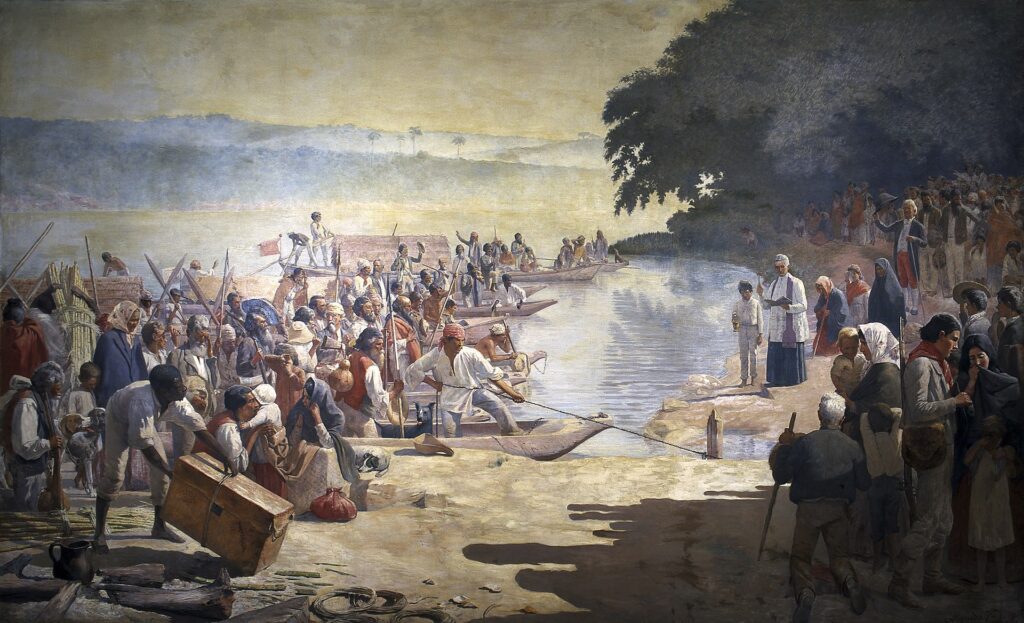
Departure of the monsoon (1897), by José Ferraz de Almeida Júnior | Museu Paulista – USP
Lecture: The Melancholy Labyrinth of "Partida da Monção" (1897), by Almeida Júnior
In-person lecture
Date: February 22 (Saturday)
Time: from 2 PM to 6 PM
Workload: 4h
Job openings: 200
Location: Auditorium of the Ipiranga Museum
Free registration: Until 18/02 in this link.
The lecture “The Melancholy Labyrinth of Departure of the monsoon (1897), by Almeida Júnior”, taught by Prof. Dr. Marco Antonio Silveira, proposes an in-depth analysis of the important work of the painter from Itu, focusing on the issue of metalanguage.
Beyond the bibliographical and analytical contextualization, the painting will be examined through its projection, highlighting how José Ferraz Almeida Júnior (1850-1899) used visual composition to construct a hall of mirrors effect. This effect transforms a supposed historical scene into a dreamlike and melancholic environment, challenging the traditional interpretation of the work as a simple representation of a historical fact.
The discussion will also address how the painter articulated influences from the aesthetic debates of his time, including studies on experimental psychology and the illusionist tradition present in Dutch painting since the 17th century. Formal, compositional, and iconological aspects of the painting will be explored, as well as how Almeida Júnior interacted with his audience and commissioners.
The lecture is part of the "Encounters with Research" series, which takes place throughout 2025, with the aim of disseminating academic work developed at the institution or research on its collections.
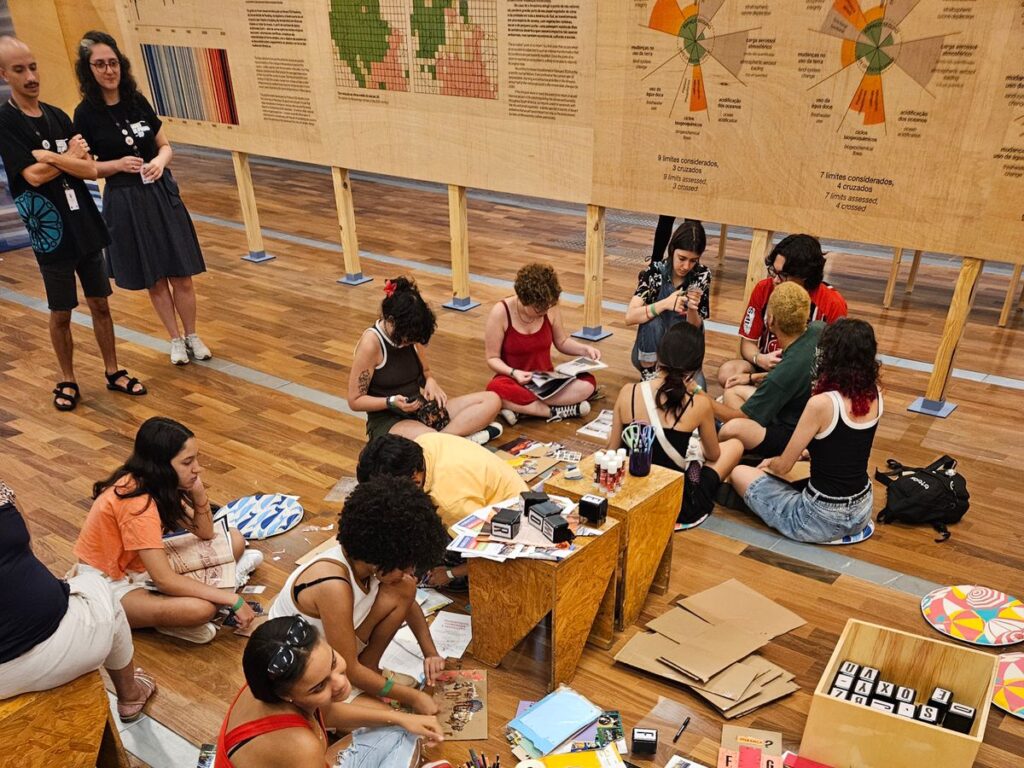
Art on Display
Free workshop
Age range: Above 9 years old
Number of vacancies: 15 children per time slot, accompanied by their guardians.
Day and time: February 15, 16, 22 and 23 (Saturdays and Sundays), at 2 PM
Duration: 2h
Meeting point: at the Reception area, next to the ticket office.
This activity aims to reflect on how contemporary art uses techniques such as cutouts, collages, screen prints, and watercolors to express social criticism. Based on the works in the exhibition "Where There's Smoke," participants will create artistic and critical posters that address social, environmental, and political issues. At the end, each participant can take their poster home or leave it on display at the Museum.
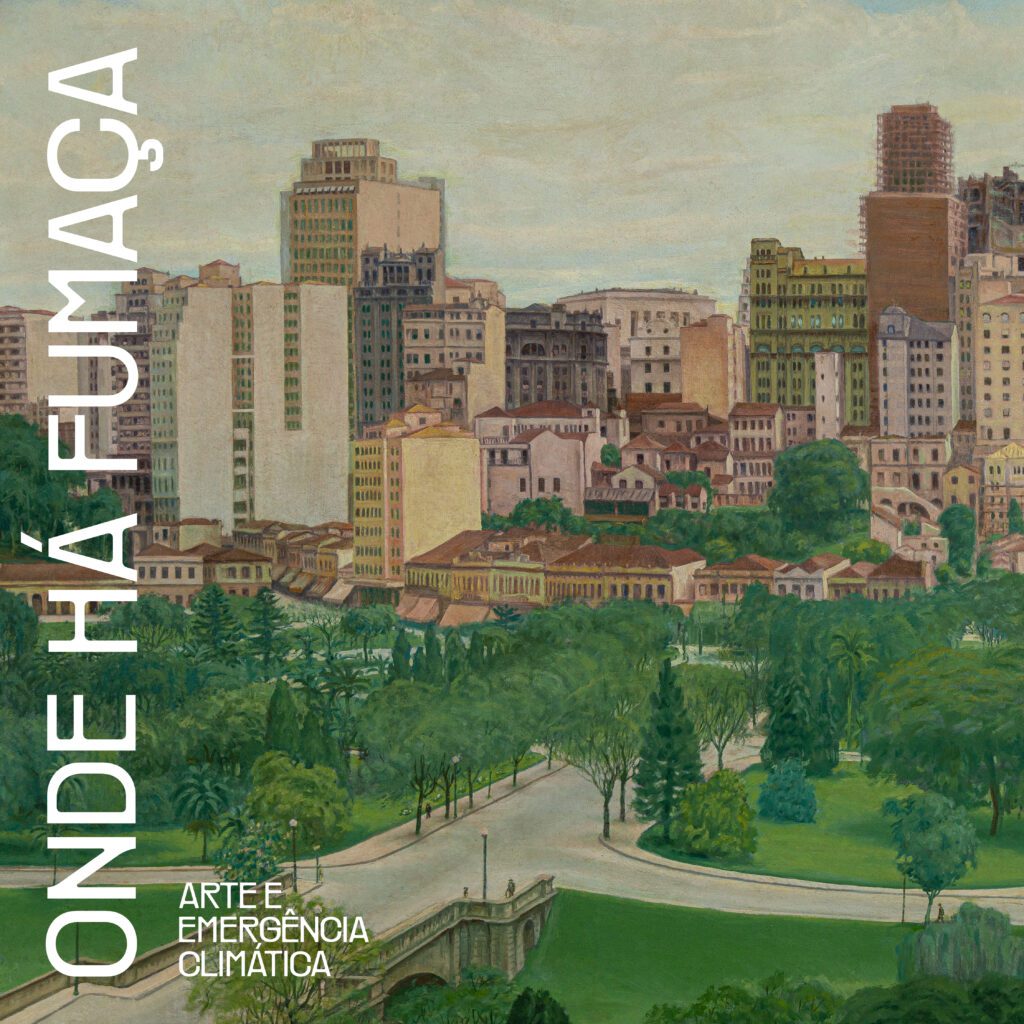
Where there's smoke – Catalog launch and lecture with Luiz Marques
Free event
Date: Saturday, February 8th
Location: Museum Auditorium (garden level)
Registration is open: until 7/2 in this link.
The event will include a sign language interpreter.
On February 8th, at 3 PM, the Ipiranga Museum invites the public to the launch of the exhibition catalog. Where there's smoke: art and the climate emergency, followed by a special lecture by historian and professor Luiz Marques.
The catalog expands on the exhibition's discussion, featuring texts by researchers, artists, and curators that connect art, science, and the climate emergency. Curators Vitor Lagoeiro, Marcela Rosenburg, and Felipe Carnevalli also participate in a conversation about the curatorial and editorial project.
Everyone in attendance will receive a free copy!
After the event, the public will be invited to visit the exhibition.
Participants:
Luiz Marques
Retired professor and collaborator of the History Department at Unicamp. He was chief curator of the São Paulo Museum of Art.
Vítor Roscoe Papini Lagoeiro
Architect and Urban Planner from the Federal University of Minas Gerais (UFMG) and co-founder of the architecture and urbanism group Micrópolis.
Felipe Carnevalli De Brot
Architect and Urban Planner from the Federal University of Minas Gerais (UFMG), Master in Architecture and Urbanism from the same institution (NPGAU) and Master in Social Sciences from the École des Hautes Études en Sciences Sociales (EHESS – Paris, France). He is the editor of Editora Piseagrama, co-founder of the Micrópolis group and researcher in the Cosmópolis research-extension group (UFMG).
Marcela Rosenburg Figueiredo
Architect and Urban Planner from the Federal University of Minas Gerais (UFMG) and holds a master's degree in Architecture and Urbanism, also from UFMG. Co-founder of the Micrópolis group. Substitute professor in the Architecture and Urbanism course at the Federal University of Ouro Preto (UFOP).
Schedule:
- Registration: 2:30 PM
- Roundtable discussion on curatorial and editorial projects: 3 PM
- Lecture with Luiz Marques: 4 PM
- Exhibition viewing hours: 5:30 PM to 6:30 PM

Lecture: Representing the Origins: The Foundations of São Paulo and São Vicente in Painting (1900 to 1954)
In-person lecture
Date: January 25th (Saturday)
Time: from 2 PM to 6 PM
Workload: 4h
Job openings: 200
Location: Auditorium of the Ipiranga Museum
Free registration: Until 17/01 in this link.
The lecture “Representing the Origins: The Foundations of São Paulo and São Vicente in Brazilian Painting (1900-1954)”, given by Prof. Dr. Michelli Cristine Scapol Monteiro and M.Sc. Eduardo Polidori, analyzes two paintings present in the exhibition “Imagined Pasts”: Foundation of São Vicente (1900), by Benedito Calixto, and Foundation of São Paulo (1907), by Oscar Pereira da Silva, highlighting the development of historical curatorship in a university museum specializing in material culture.
The class also presents the reflections proposed in the "Alliance or Conflict" room, where the paintings are displayed. There, the representations of the encounter between indigenous peoples, Europeans, and Catholics, as conveyed in historical paintings from Brazil from the second half of the 19th century onwards, are problematized. Similarly, the exhibition's narrative will be contextualized through theoretical discussions that connect visual studies of Brazil's and São Paulo's past to the history of art.
This lecture is the first in the "Encounters with Research" series, which will take place throughout 2025 and aims to disseminate work developed by researchers affiliated with the Museu Paulista of USP, as well as investigations by external researchers whose studies are based on the institution's various collections.
Shell Free Day
Free admission
Date: January 26 (Sunday)
Time: from 10am to 5pm (last entry: 4pm)
On January 26th, Shell, one of the sponsors of the Ipiranga Museum, is offering free admission to celebrate São Paulo's anniversary. With this initiative, visitors can enjoy the special program prepared for the date, including a visit to the monument building, the collection on display, and the viewpoint, which offers a panoramic view of the city.
Tickets will be distributed free of charge at the ticket office on the day of your visit, starting at 9 am. Plan ahead and come enjoy the holiday at the Ipiranga Museum!
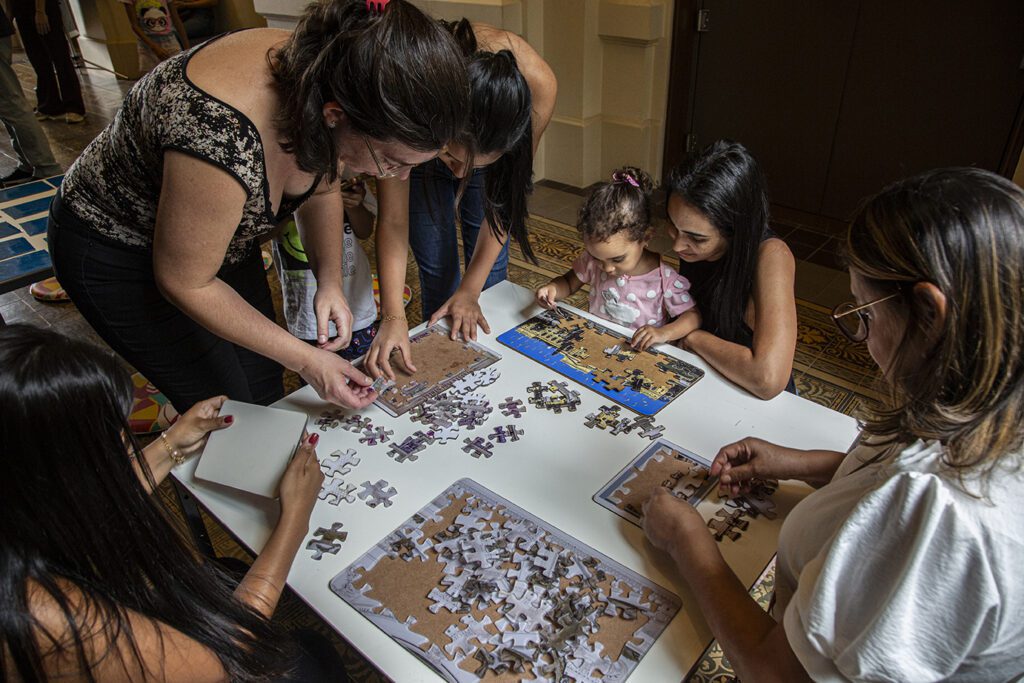
Holidays at the Ipiranga Museum
In January, the public will have fun and learn with the special holiday program at the Ipiranga Museum. A series of activities are planned for the week of São Paulo's anniversary, between January 21st and 26th.
Guided tours include interactive experiences in which participants will explore aspects of the collection, such as objects from the "Worlds of Work" and "Territories in Dispute" exhibitions, through challenges and riddles.
The program also includes activities related to theater, contemporary art, and the environment. There will be clay modeling and collage workshops using screen printing and watercolor techniques, inspired by the temporary exhibition "Where there's smoke: art and climate emergency," as well as a scenic improvisation experience based on the works in the exhibitions.
The program also offers activities for deaf and sign language children.
CHECK OUT THE FULL SCHEDULE:
Games room
Free activity, upon purchase of a ticket to the Ipiranga Museum.
Date and time: January 21st to 26th, from 10:30 AM to 4:30 PM
Age range: all ages
Location: break room of the exhibition “Understanding the Museum”
Guided tours
Registrations here link
Museums aren't just for adults!
Activity suspended due to emergency maintenance.
Solving mysteries at the museum
Activity suspended due to emergency maintenance.
Rivers with many turns
During this visit, children will be invited to observe hidden details in the works of art from some of the museum's exhibitions, in order to discuss the presence and importance of rivers in the daily life of cities. The works The topics explored during the visit will be: "Departure of the Monsoon," "Flooding of the Várzea do Carmo," and "Independence or Death.".
Age range: 4 to 10 years
Number of available spaces: 10 children per time slot, accompanied by their guardians.
Date and time: 21, 23 and 25, at 2:30 pm
Duration: 1 hour
Meeting point: at the Reception area, next to the ticket office.
Experiencing the territory: past and present
This visit aims to analyze the works in the temporary exhibition "Where There's Smoke: Art and Climate Emergency" to identify the mode of territorial production in Brazil's historical process. The public will be invited to discuss the socio-environmental impacts and the antagonistic alternatives experienced in the country's past and present.
Age range: all ages
Number of vacancies: 20
Date and time: 22, 24 and 26, at 2:30 pm
Duration: 1 hour
Meeting point: at the Reception area, next to the ticket office.
Workshops
Registrations here link
Sowing and playing with the earth
The activity will begin with a visit to the temporary exhibition "Where there's smoke: art and climate emergency," encouraging children to reflect on the importance of land for life and food. Afterwards, in the Educational Workshop, they will participate in a clay modeling workshop to create memories of the visit.
Age range: children aged 6 to 12 years
Number of available spaces: 10 children per time slot, accompanied by their guardians.
Date and time: 22, 24 and 25, at 11:30 am (all also in Libras - Brazilian Sign Language)
Duration: 1 hour
Meeting point: at the Reception area, next to the ticket office.
Art on display
This workshop aims to reflect on how contemporary art uses techniques such as cutouts, collages, screen prints, and watercolors to express social critiques. Based on the works in the exhibition "Where There's Smoke: Art and Climate Emergency," participants will create artistic and critical posters addressing social, environmental, and political issues. At the end, each participant can take their poster home or leave it on display at the Museum.
Age range: 9 years and older
Number of available spaces: 15 children per time slot, accompanied by their guardians.
Date and time: 22, 24 and 26 at 2:30 pm
Duration: 2 hours
Meeting point: at the Reception area, next to the ticket office.
Image Theatre: improvisation in the exhibition Worlds of Work
What stories do images tell us? And what stories can we create from them? In this workshop, inspired by the Image Theatre approach, which integrates the aesthetics of Augusto Boal's Theatre of the Oppressed, we will explore these questions using visual works from the exhibition Worlds of Work. By observing and interpreting the images, we will seek to understand the stories and realities they represent – whether from the past, present, or imagined. Participants will then be invited to transform these images into living scenes through improvisations where words are unnecessary. Using only our bodies, we will create narratives and provoke reflections on the themes present in the images.
Age range: 16 years and older
Number of vacancies: 15
Date and time: 21, 23 and 25 at 2:30 pm
Duration: 1 hour
Meeting point: at the Reception area, next to the ticket office.

Photo: Ricardo Carvalho.
Music at the Museum with Adriana Sanchez
Free event
Date: January 25th (Saturday)
Time: 11am
Location: Auditorium of the Ipiranga Museum
Free tickets: Pick up your ticket one hour in advance at the Ipiranga Museum ticket office. Subject to availability.
Suitable for all ages.
Event accessible in Libras (Brazilian Sign Language)
On January 25th, São Paulo's anniversary, at 11 am, the auditorium of the Ipiranga Museum will host an unmissable performance by singer and multi-instrumentalist Adriana Sanchez, renowned for her solid career in the Brazilian music scene.
The repertoire includes great songs by singers and composers such as Paulo Vanzolini, Tom Zé, Rita Lee, Maria Rita, and Adoniran Barbosa, accompanied by her band, composed of bass, drums, keyboard, and guitar. The performance, which will have a sign language interpreter, also includes songs by Luiz Gonzaga, honoring the travelers who left the Northeast and established roots in São Paulo.
The attraction is presented by Atlas Schindler, a partner company of the Ipiranga Museum.
To participate, pick up your free ticket at 10:00 AM at the Ipiranga Museum ticket office. Tickets are subject to availability.
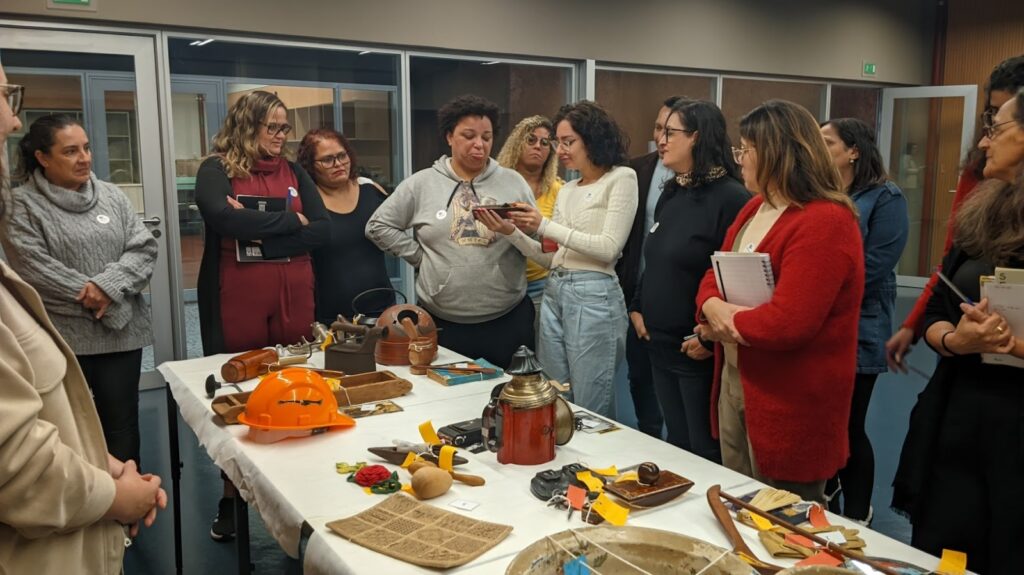
Course: Teaching and learning with museum collections
In-person course
Dates: January 13th to 17th (Monday to Friday)
Time: from 2 PM to 6 PM
Workload: 30h
Job openings: 80
Location: Auditorium of the Ipiranga Museum
Free registration: Until 5/12 in this link. Confirmation is required between December 6 and 15, 2024 to guarantee your spot.
The integration of art, culture, and education broadens horizons, allowing students to explore different perspectives, value diversity, and deepen their understanding of our history.
In this context, the course "Teaching and Learning with Museum Collections" presents the new Ipiranga Museum as a pedagogical resource, discussing strategies for working with material and visual culture in the classroom.
The program combines theoretical concepts and practical activities, addressing themes such as museum education, material and visual culture, and accessibility. At the end, a practical workshop will allow participants to develop educational projects applicable to daily school life.
This activity is part of the 25th edition of the USP-School Meeting, an initiative focused on the continuing education of public school teachers, organized by the USP Pro-Rectorate for Culture and University Extension. A valuable opportunity for professional development and updating.
Participate!
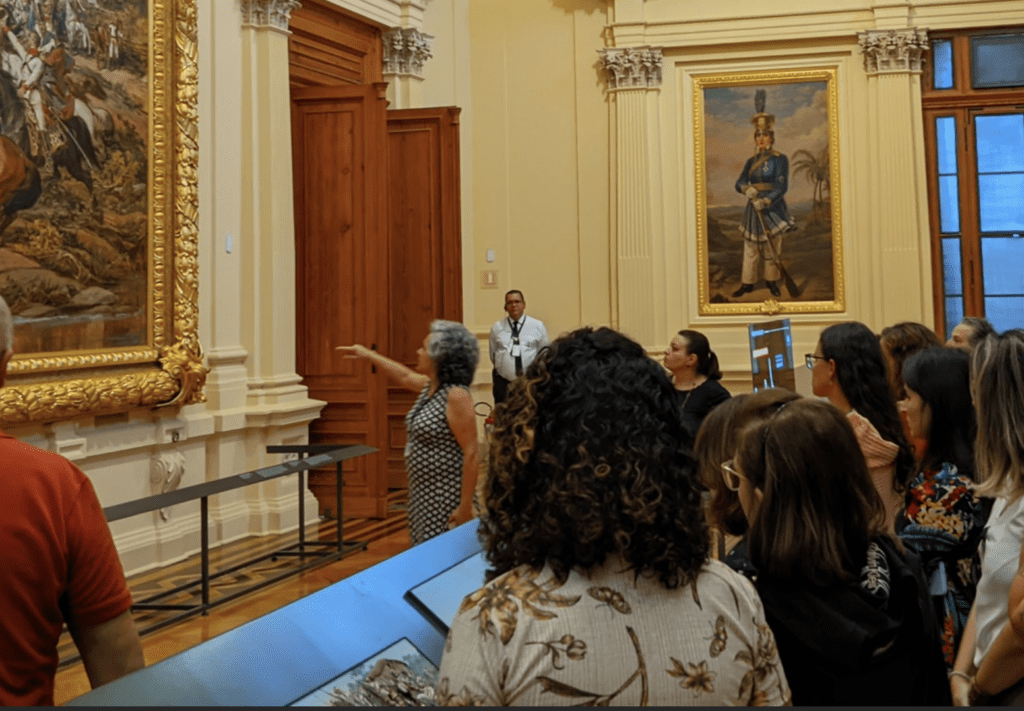
Course: Educational Activities at the Ipiranga Museum
Online course
Dates: December 16th and 17th (Monday and Tuesday)
Time: from 6pm to 9pm
Workload: 6h
Job openings: 500
Location: The course will be held in a virtual environment, through the Ipiranga Museum's profile on the YouTube platform.
Free registration: From 11/21 to 12/11 in this link. Teachers and students must complete the registration form at the provided link and send a copy of their institutional affiliation document via email: apoioacadmp@usp.br.
Information: e-mail: suporteacadmp@usp.br, tels. (11) 2065-8075/6644
Educational Curatorship is an approach that positions education as a central element in mediating between the public and cultural heritage. At the Ipiranga Museum, this perspective seeks to create meaningful and accessible experiences, promoting dialogues between visitors, exhibitions, and collections, based on inclusive and participatory practices.
It is in this context that the institution promotes the course. Educational Activities at the Ipiranga Museum. The objective is to empower educators and professionals interested in the field to develop educational practices aligned with the guidelines of heritage and museum education. Based on contemporary theoretical and practical reflections, the course will address methodologies that consider the diversity of audiences and broaden access to cultural heritage, promoting enriching experiences in the museum space.
The classes will discuss topics such as mediation strategies, accessibility resources, the development of teaching materials, and the importance of continuing education in a university museum. Participants will have the opportunity to delve deeper into the role of education in museum spaces and contribute to the democratization of cultural access.
The classes will be held remotely, with live streaming on the Museu do Ipiranga's YouTube channel. To receive the certificate, students must sign the attendance list on both days of the course.
Presenter: Laura Stocco Felicio
Program:
1. The educational program of the Ipiranga Museum: its structure and key concepts
2. Different audience profiles and mediation strategies
3. Accessibility resources and the role of education
4. Development of teaching materials
5. The importance of continuing education in a university museum.
6. Evaluation and reflection on practices
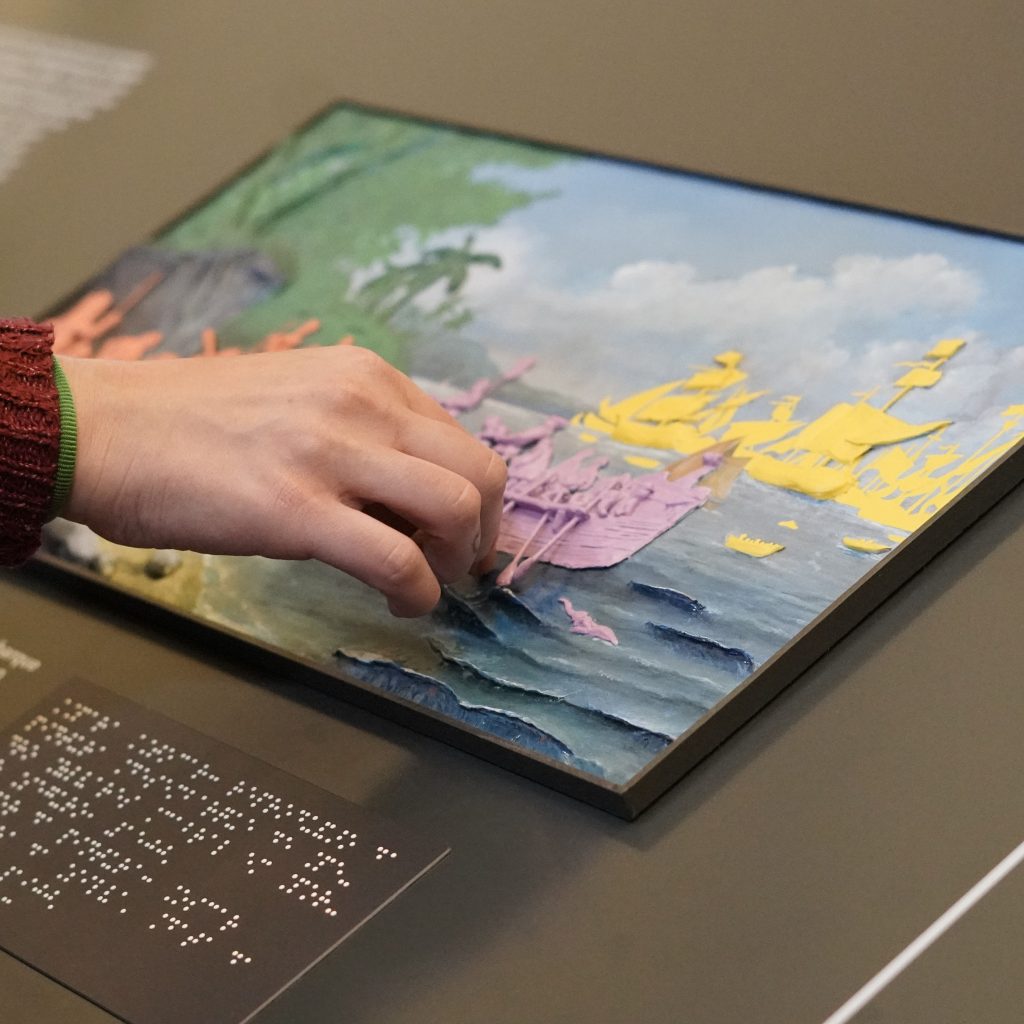
Course: Museum, education and accessibility
Online course
Dates: December 9th and 10th (Monday and Tuesday)
Time: from 6pm to 9pm
Workload: 6h
Job openings: 500
Location: The course will be held in a virtual environment, through the Ipiranga Museum's profile on the YouTube platform.
Free registration: From November 20th to December 4th in this link. Teachers and students must complete the registration form at the provided link and send a copy of their institutional affiliation document via email: apoioacadmp@usp.br.
Information: e-mail: suporteacadmp@usp.br, tels. (11) 2065-8075/6644
Accessibility in museums is an essential commitment to ensuring that all audiences can enjoy inclusive and meaningful cultural experiences. With this in mind, the Ipiranga Museum offers the course "Museum, Education and Accessibility," aimed at education professionals and those interested in promoting accessible museum practices.
The course aims to empower educators and museum professionals to develop actions that respect human diversity, promoting inclusion and accessibility in cultural spaces. Combining theory and practice, the classes will address topics such as physical, sensory, and intellectual accessibility, with reflections on inclusive exhibitions and the creation of multisensory resources.
This course is an opportunity to explore how museums can transform themselves into accessible spaces, fostering encounters between diverse audiences and offering experiences that respect diversity.
Classes will be held remotely and streamed live. To receive the certificate, students must sign the attendance sheet on both days of the course.
Presenter: Denise Peixoto
Program:
- Course presentation
2. Museums: public spaces for enjoyment and social interaction.
3. Human diversity: the issue of disability
4. Beyond definitions: inclusion, access and equity
5. Museums and accessibility
6. The Ipiranga Museum and curatorial actions
7. The Ipiranga Museum and its educational activities
8. The Ipiranga Museum and its accessibility initiatives
9. Multisensory resources: typologies, materials and uses
10. Accessible exhibitions: is there a model?
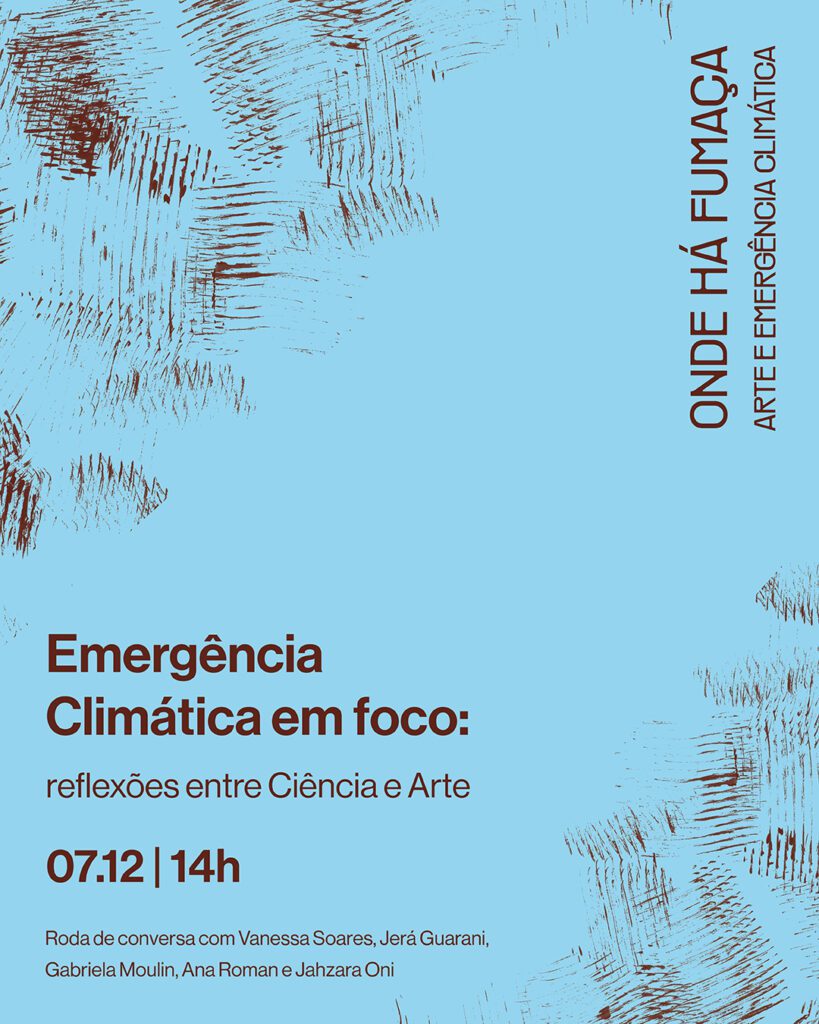
Climate Emergency in Focus: Reflections Between Science and Art
Wildfires, floods, extreme temperatures, droughts, water scarcity: the climate crisis we face today challenges us to rethink the model of progress that has shaped our society. On December 7th, the Ipiranga Museum will host the event... Climate Emergency in Focus: Reflections Between Science and Art, an offshoot of the exhibition Where there's smoke: art and the climate emergency.
The meeting brings together five women artists, researchers, and activists to discuss the climate emergency from historical, cultural, and scientific perspectives. Ana Roman, Gabriela Moulin, Jahzara Oná, Jerá Guarani, and Vanessa Soares will participate in a roundtable discussion, reflecting on the possibilities of collective action to face the challenges of the present and build pathways to a more sustainable future. After the discussion, the public will be invited to visit the exhibition.
Participants
Ana Roman
She holds a Master's degree in Geography (FFLCH-USP), a Postgraduate degree in Brazilian Studies (FESP/SP), and is a doctoral candidate at FAU-USP. She was assistant curator of the 34th São Paulo Art Biennial (2021), a member of the Nomination Committee for the PIPA Prize in 2022 and 2024, and curator of Pivô between 2022 and 2023. She was content coordinator of the research group Academia de Curadoria (2021/2023). Currently, she is a member of the Digital Archives and Research group and regularly contributes to the Piscina platform. She is the artistic superintendent of the Tomie Ohtake Institute.
Gabriela Moulin
Gabriela, executive director of the Tomie Ohtake Institute, has over 20 years of experience in cultural management and the private social investment sector. She holds a Master's degree in Architecture and Urbanism from UFMG and possesses extensive experience in strategic planning and public policy, with a focus on strengthening civil society organizations.
Jerá Guarani
Jerá, a leader in the Kalipety village within the Tenondé Porã Indigenous Territory, holds a degree in Education from USP (University of São Paulo) and is a farmer dedicated to recovering traditional seeds. Her work, which has already rescued more than 50 varieties of Guarani sweet potato, combines education and cultural preservation, promoting the strengthening of ancestral practices.
Jahzara Oná
Jahzara is a student of Geosciences and Environmental Education at USP (University of São Paulo) and a technician in Environmental Studies from ETEC Getúlio Vargas. She leads socio-environmental projects and researches topics such as Climate and Environmental Racism. She works as a climate activist and advocate at International Climate Conferences, is a member of YOUNGO, and collaborates with Palmares Lab.
Vanessa Soares
Actress, dancer, and educator who lives and works between São Paulo and Rio de Janeiro. She holds a degree in Dance from the Federal University of Rio de Janeiro. She is a member of the Nós do Morro Group (Vidigal – RJ). Her experience includes teaching body arts in projects and schools in favelas and peripheral areas. She developed what she calls Zombaria, a field of action that, through acts of disobedience, seeks new ways of elaborating the body in the world.
Climate Emergency in Focus: Reflections between Science and Art
Auditorium of the Ipiranga Museum
Saturday, December 7th
Registration: 1:30 PM
Roundtable discussion: 2 PM
Visit the exhibition: 5 PM to 6 PM
Free registration: From 11/22 to 12/06 in this link.
Event accessible in Libras (Brazilian Sign Language)
Meeting of Terreiros in Museums
Throughout history, religious sites of African origin have faced challenges in preservation and recognition, with many of their sacred objects being confiscated or donated to museums without due respect and understanding of their meanings. Between the days November 28-30, 2024, The Paulista Museum of USP promotes the Meeting Places in Museums, This is an opportunity to discuss the presence and treatment of these collections in museums.
The event, which is part of the program of Black Awareness Week, This initiative seeks to bring together researchers and holders of traditional knowledge to reflect on the sacred materiality of terreiros (Afro-Brazilian religious sites), going beyond ethnographic or folkloric perspectives. Inspired by initiatives such as the shared custody of the "Our Sacred" collection between the Museum of the Republic and the terreiro communities, the meeting aims to foster more inclusive and collaborative curatorial practices.
The activities include roundtable discussions with scholars and religious leaders, as well as a cultural itinerary and artistic presentation. The goal is to strengthen the methodologies and practices of identifying and historicizing sacred objects present in museums, reinterpreting them as fundamental documents for Afro-Brazilian history.
PROGRAMME
November 28th – Ipiranga Museum, São Paulo – Auditorium
4 PM Accreditation
4:30 PM Opening and welcome
5pm – Opening conference “Afro-Brazilian Religions: Memory, Oral, Academic-Literary and Material Records” with Prof. Reginaldo Prandi (USP)
Debater: Solange Ferraz de Lima
6:30 PM – Launch of the book “Death and the Boy Without Destiny” by Reginaldo Prandi, with a book signing session with the author.
November 29th – Ipiranga Museum, São Paulo – Auditorium
9am to 10am Accreditation
10am to 12pm – Roundtable discussion: The sacred in museums, shared experiences
Rogério Elisiário (Tat'Etu Lengulukenu – Inzo Unsaba Ria Inkosse)
Eduardo Possidonio (UFRRJ/IPN)
Lia Dias Laranjeira (UNILAB)
José Adário dos Santos (Zé Diabo, babalorixá and blacksmith of orixá)
Coord. Aline Montenegro Magalhães (MPUSP)
2 PM to 6 PM – The Black Territory of Ipiranga – a guide from the José Benedito Correia Leite Memory Point, led by the writer Abilio Ferreira
30/11 – Republican Museum Convention of Itu – Auditorium of the Center for Studies
9am Accreditation
10am to 12pm – Roundtable discussion: The terreiros (Afro-Brazilian religious sites) at the crossroads of museums
Lucas Marques (USP)
Alexandre Araujo Bispo (MAM SP)
Aline Antunes Zanatta (MRCI-MP/USP)
Sabrina Souli (Secult Itu)
Discussant: David Ribeiro (MP/USP)
2 PM – Testimony of Maria Natalina Pereira (Samba de bumbo de Itu)
3:30 PM – Closing with a samba de bumbo performance
Workload: 6 PM
Free registration: From 1/11 to 24/11 in this link.
Event accessible in Libras (Brazilian Sign Language)
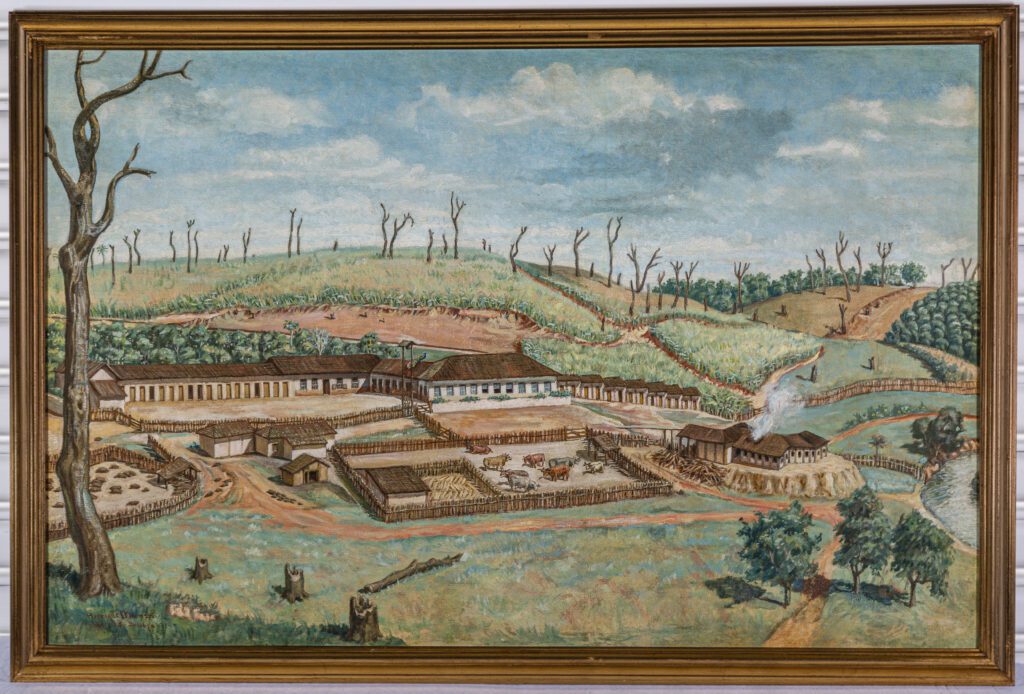
Course: Art and the Climate Emergency
Online course
Dates: November 25th and 26th (Monday and Tuesday)
Time: from 6pm to 9pm
Workload: 6h
Job openings: 500
Location: The course will be held in a virtual environment, through the Ipiranga Museum's profile on the YouTube platform.
Free registration: From October 30th to November 20th in this link. Professors and students must complete the registration form at the provided link and send a copy of their institutional affiliation document via email to: apoioacadmp@usp.br.
Information: e-mail: suporteacadmp@usp.br, tels. (11) 2065-8075/6644
Wildfires, floods, extreme temperatures, droughts, water scarcity: the current climate emergency challenges us to rethink the idea of progress that has brought us to this point.
In this course, we will discuss how art can raise awareness, inform, and mobilize society in the face of the environmental crisis. Through the analysis of works from the historical collection of the Museu Paulista, we will see how visual representations helped to construct and consolidate an imaginary of progress – while simultaneously highlighting processes of environmental and social degradation over time.
The classes also encourage critical reflection on the role of museums in creating new imaginaries and broadening our understanding of different ways of inhabiting the world.
The course is online and broadcast live. To obtain the certificate, students must sign the attendance sheet on both days of the course.
Presenters:
Professor Marcela Rosenburg Figueiredo
Architect and Urban Planner from the Federal University of Minas Gerais (UFMG) and holds a master's degree in Architecture and Urbanism, also from UFMG. Co-founder of the Micrópolis group. Substitute professor in the Architecture and Urbanism course at the Federal University of Ouro Preto (UFOP).
Professor Vítor Roscoe Papini Lagoeiro
Architect and Urban Planner from the Federal University of Minas Gerais (UFMG) and co-founder of the architecture and urbanism group Micrópolis.
Prof. Felipe Carnevalli De Brot
Architect and Urban Planner from the Federal University of Minas Gerais (UFMG), Master in Architecture and Urbanism from the same institution (NPGAU) and Master in Social Sciences from the École des Hautes Études en Sciences Sociales (EHESS – Paris, France). He is the editor of Editora Piseagrama, co-founder of the Micrópolis group and researcher in the Cosmópolis research-extension group (UFMG).
Program:
Module 1: Narratives and counter-narratives
- Historical narratives and the coloniality of knowledge
- The problem of images
- Revisiting the images, rethinking history, and creating new imaginaries.
Module 2: Cities and the climate emergency
- Monoculture of thought, extensive urbanization
- Climate crisis as a cultural crisis
- Opening the world to other worlds
- Reforesting the imagination through art.
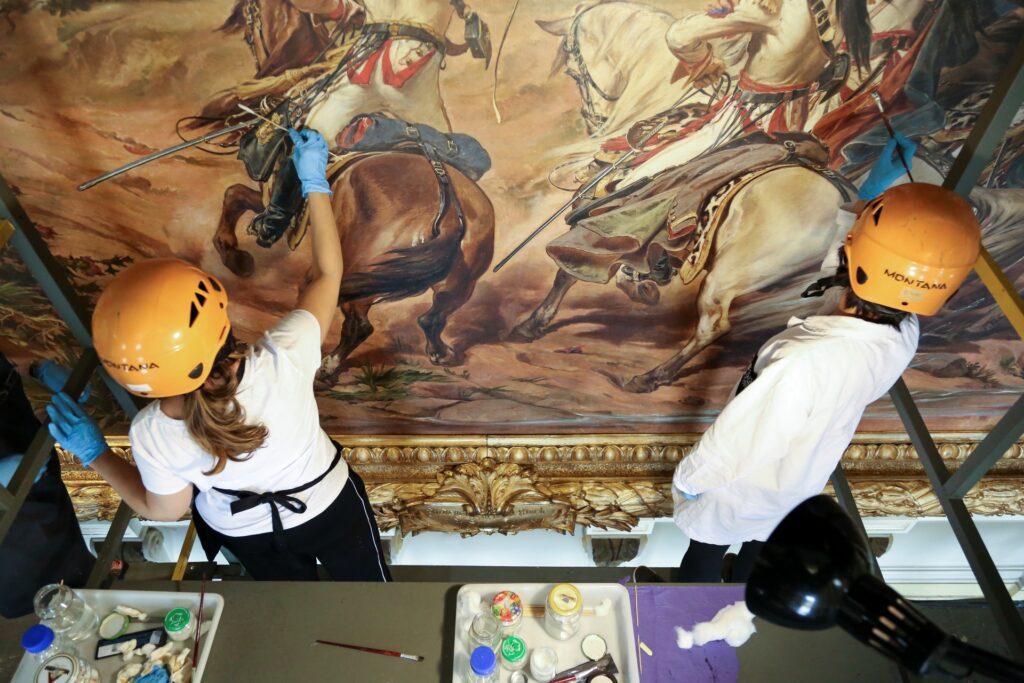
Course: Conservation of Cultural Heritage: Challenges and Practices
Online course
Dates: November 18th and 19th (Monday and Tuesday)
Time: from 6pm to 9pm
Workload: 6h
Job openings: 500
Location: The course will be held in a virtual environment, through the Ipiranga Museum's profile on the YouTube platform.
Free registration: Until 11/13 in this link. Professors and students must complete the registration form at the provided link and send a copy of their institutional affiliation document via email to: apoioacadmp@usp.br.
Information: e-mail: suporteacadmp@usp.br, tels. (11) 2065-8075/6644
Cultural objects, whether of sentimental or historical value, require specific attention and care to be preserved and appreciated by future generations. At the Ipiranga Museum, the collections undergo rigorous conservation processes to guarantee their integrity and authenticity over time. In the course “"Conservation of Cultural Heritage: Challenges and Practices"”, In this course, offered by the Museum, we will explore the fundamental aspects of preserving cultural heritage, addressing the practices and challenges encountered in storage areas and exhibition spaces.
This course aims to equip participants with knowledge about the routines and care necessary for the preservation of museum collections, including the role of the professionals involved and the importance of an interdisciplinary approach to risk management and conservation processes. Practical situations and real-life cases from the Ipiranga Museum will be presented, offering an in-depth understanding of the conservation of cultural assets.
This course is an excellent opportunity for students, cultural professionals, and anyone interested in the topic to gain a comprehensive understanding of heritage conservation.
Classes will be held remotely and streamed live. To receive the certificate, students must sign the attendance sheet on both days of the course.
Presenters: Ina Hergert and Juliana Bechara Saft
Program:
Lesson 1: Guard Areas – Processes and Risks
- Introductory concepts of preservation
- Processes relating to the preservation of objects
- Managing potential risks in guard areas
- Interdisciplinarity and challenges encountered
- Question and discussion session with participants.
Lesson 2: Exhibition Spaces – Processes and Risks
- Introductory notions of exposition.
- Exhibition preparation processes
- Risk management in exhibition spaces
- Interdisciplinarity and challenges encountered
- Question and discussion session with participants.
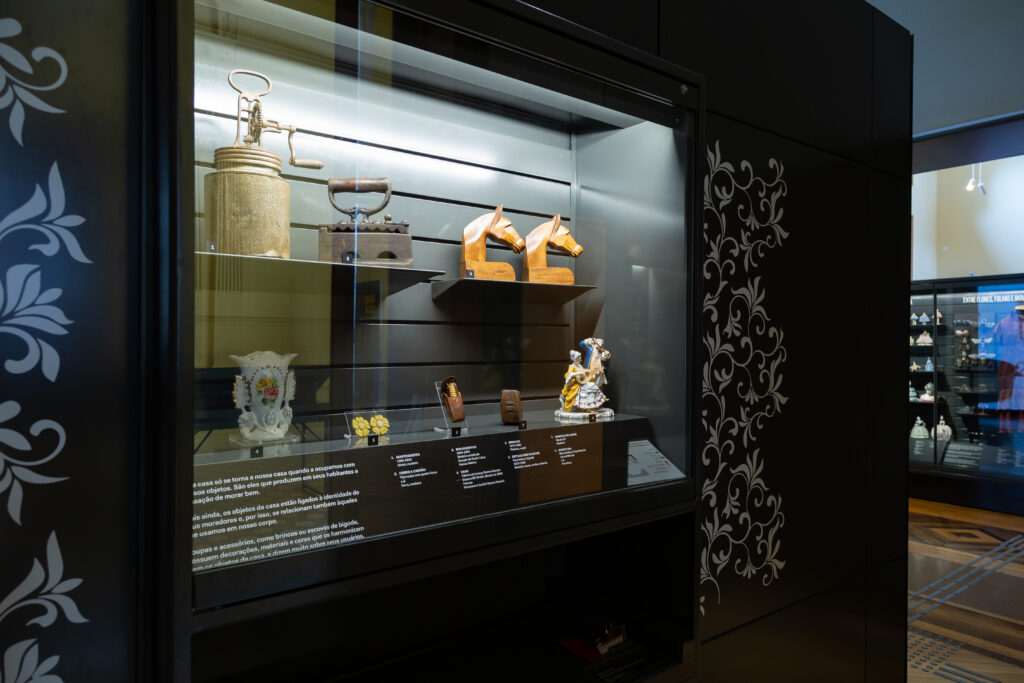
Course: Houses and Things
Online course
Dates: November 6th and 7th (Wednesday and Thursday)
Time: from 6pm to 9pm
Workload: 6h
Job openings: 500
Location: The course will be held in a virtual environment, through the Ipiranga Museum's profile on the YouTube platform.
Free registration: From October 14th to November 1st in this link. Professors and students must complete the registration form at the provided link and send a copy of their institutional affiliation document via email to: apoioacadmp@usp.br.
Information: e-mail: suporteacadmp@usp.br, tels. (11) 2065-8075/6644
Since the 18th century, the objects that fill homes around the world have shaped identities, behaviors, and even gender relations. Each piece of furniture, each kitchen utensil, tells a part of this silent narrative. In the course "Houses and Things," offered by the Ipiranga Museum, we will explore how these objects have been protagonists in the construction of female and male subjectivities throughout the centuries.
The classes will discuss how the organization of domestic space, decorating choices, artifacts, and home spaces reflect and produce gender differences. The course will also address exhibition design and three-dimensional narrative, offering an in-depth look at the curatorial process and the theoretical discussions that underpin the exhibition.
This course offers an opportunity to broaden your understanding of the relationship between material culture, gender, and the construction of identities in the domestic sphere throughout the centuries.
Classes will be held remotely and streamed live. To receive the certificate, students must sign the attendance sheet on both days of the course.
Presenters: Vânia Carneiro de Carvalho, Viviane Soares Aguiar and Laura Stocco Felicio
Program:
1. The importance of material culture in studies on modern domestic space.
2. The modern house and the production of subjectivities
3. The role of decoration and functional objects in the production of gender differences.
4. The museographic concept of the exhibition Houses and Things
5. The Work and Happiness Room as a product and producer of academic-museological research.
6. Is the kitchen your place? Uses of artifacts and technologies and the production of female identities.
7. Female Subjectivities, Recipe Books, and the Powers of the Pantry
8. Modern cuisine and technological disputes
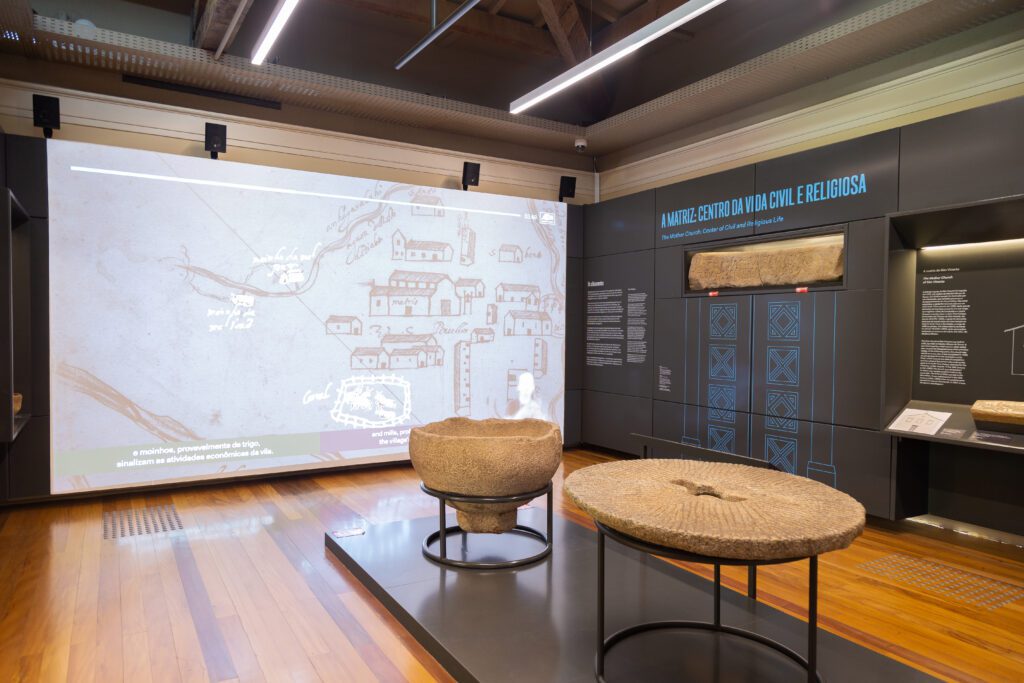
Course: Territories in Dispute
Online course
Dates: October 21st and 22nd (Monday and Tuesday)
Time: from 6pm to 9pm
Workload: 6h
Job openings: 500
Location: The course will be held in a virtual environment, through the Ipiranga Museum's profile on the YouTube platform.
Free registration: From October 2nd to October 16th in this link. Teachers and students must complete the registration form at the provided link and send a copy of their institutional affiliation document via email: apoioacadmp@usp.br.
Information: e-mail: apoioacadmp@usp.br, tels. (11) 2065-8075/6644
The territories we now call Brazil were the stage for intense disputes between explorers, religious figures, and indigenous peoples. These struggles shaped not only the geographical space but also the country's identity. The course "Territories in Dispute," offered by the Ipiranga Museum, will use these issues as a starting point to deepen the debate on fundamental themes in History and Geography.
The classes will offer a critical and detailed approach to territories, populations, indigenous lands, and other related topics. The focus will be on themes such as the Treaty of Tordesillas, the Hereditary Captaincies, the influence of the Church on territorial formation, and indigenous freedom. The course aims to provide essential resources for teachers who wish to enrich their classes and contribute to the understanding of our complex territorial history.
Classes will be held remotely and streamed live. To receive the certificate, students must sign the attendance sheet on both days of the course.
Presenters: Jorge Pimentel Cintra and Francisco de Carvalho Dias de Andrade
Program:
1. Introduction
2. Whose Earth is it?
3. Look at the sky, draw the Earth.
4. Breaking paradigms: lithics and land ownership
5. War and peace: border treaties
6. The new map of the hereditary captaincies
7. The presence of the Church in the formation of the territory.
8. Settlers, Jesuits, and Indigenous people
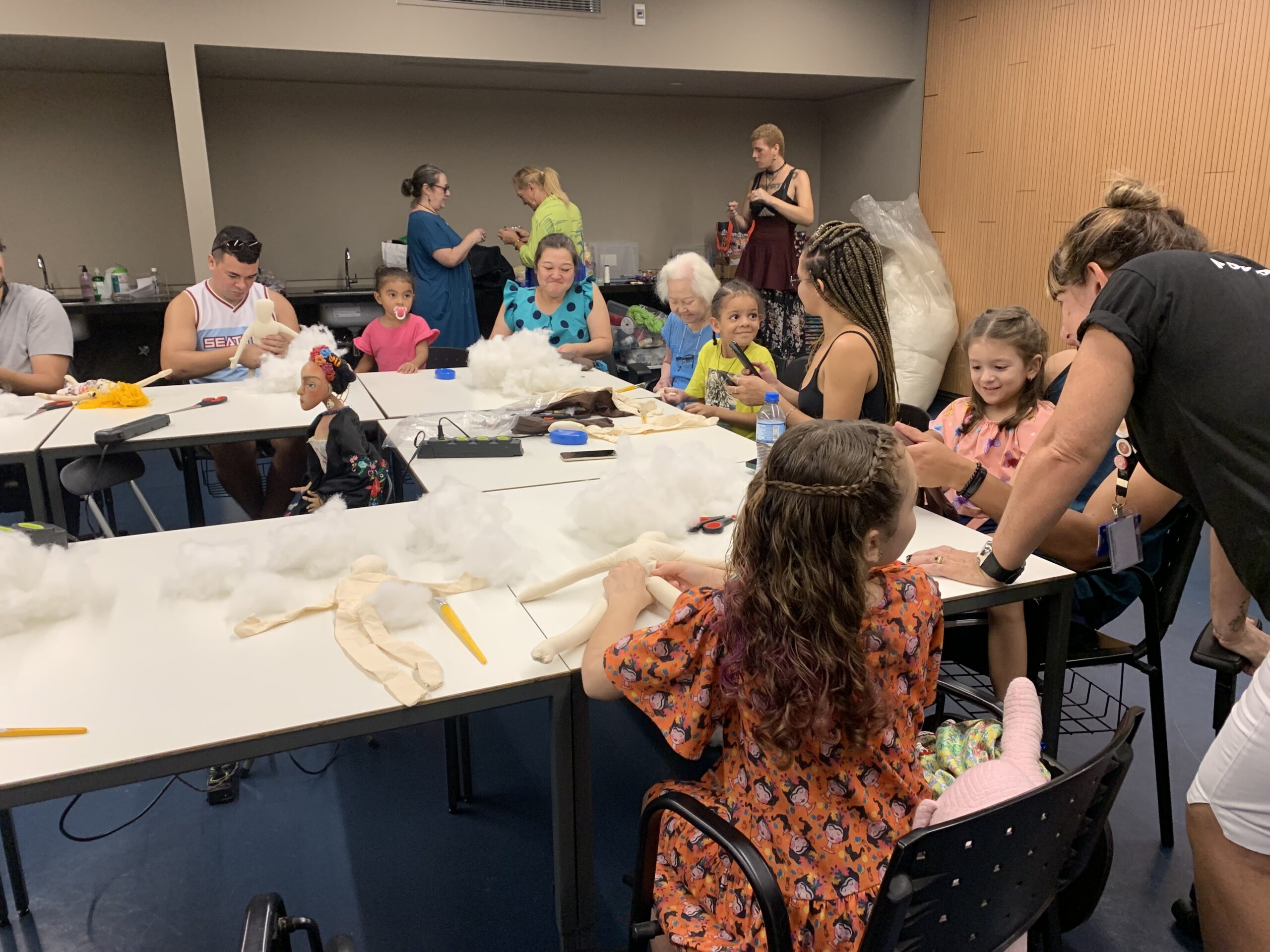
Children's Day Program
On October 12th and 13th, the Ipiranga Museum has prepared a special program for children and families to explore the universe of creativity and history. With unmissable activities, the museum invites the public to participate in experiences that combine fun, learning, and interaction with cultural and social themes.
Adventures of Making 2: Doll Making Workshop with the Trans Sol Collective
Date: October 12th, from 1 PM to 5 PM
Location: Ipiranga Museum Workshop (Garden Floor)
Job openings: 20 | Free registration until 10/12 in this link.
Public: Children and pre-teens, accompanied by their guardians.
In this creative and inclusive workshop, participants will be able to make dolls from raw, brown, or tan fabric, painting faces, creating clothing and accessories. The activity goes beyond simple crafting, raising issues of diversity, coexistence, and equality. Led by the Trans Sol Collective, which teaches sewing and handicrafts to transgender and transvestite women, the workshop is a space for learning and valuing creativity and self-esteem.
Coordination: Professor Ana Paula Nascimento
Presenters:
Priscila Nunes: visual artist and doll maker
Fernanda Costa da Silva: seamstress and entrepreneur
Detail hunting
Dates: October 12th and 13th
Opening hours: 10:30 AM and 1:30 PM
Duration: 40 minutes
Public: From age 6 onwards
Meeting point: Lobby, next to the Staircase (no appointment necessary)
Job openings: 10 people per group.
In this interactive activity, children will be invited to observe hidden details in the exhibitions "A History of Brazil" and "Imagined Pasts." The goal is to explore the museum spaces and find curious elements related to the representation of rivers in the daily life of cities.
USP International Symposium on Scientific and Technological Initiation – SIICUSP
Free event
Date: September 30th • 9 AM to 6 PM
Location: Classroom 1
On September 30th, the Ipiranga Museum will host the presentation and oral discussion sessions of scientific and technological research initiation projects carried out by USP undergraduate students, as part of the 32nd SIICUSP. The event is an opportunity to disseminate the results of research developed by students, promoting the exchange of ideas between academics and researchers from various fields.
The SIICUSP consists of two phases: the first, with presentations in each Unit or group of Units of USP, and the second, the "International Stage," which brings together projects from various areas of knowledge, including work by students from foreign institutions.
The program is open to all students, faculty, researchers, and the general public interested, with no prior registration required. USP museums, such as the Museum of Archaeology and Ethnology, the Paulista Museum, and the Museum of Contemporary Art, participate annually with a joint program.
Seminar: Digital Accountability: How to Communicate Performance to Engage Society and Stakeholders
In-person event
Date: October 1st (Tuesday)
Time: from 2 PM to 4 PM
Location: Ipiranga Museum, Classroom 2
Free registration: click here
Information: e-mail: suporteacadmp@usp.br, tels. (11) 2065-8075/6644
The seminar will discuss the importance of digital performance communication as an essential tool for engaging society and sponsors. Performance communication not only promotes transparency but also strengthens organizational trust. The event will address strategies and practices to improve this communication and will present case studies from Italian museums.
Presenter:
Professor Deborah Agostino
Professor at the School of Management of the Polytechnic University of Milan and director of the “Observatory of Digital Innovation in Culture”. She is working on a PhD in Heritage Science, focusing on the history of technology and museum management. Deborah coordinates projects focused on the impact of generative AI on cultural heritage professionals and the digitization of Italian cultural heritage, both funded by the Italian Ministry of Culture.
Celebrating new futures: 10 Years of the São Paulo Innovation Environments System (SPAI)
Free event
Date: September 30th • 9 AM to 6 PM
Free registration: click here
Location: Welcome to the Ipiranga Museum
On September 30th, from 9 am to 6 pm, the Ipiranga Museum will host the event "Celebrating New Futures," promoted by the Secretariat of Science, Technology and Innovation of the State of São Paulo (SCTI).
The event, which celebrates the 10th anniversary of the São Paulo Innovation Environments System (SPAI), will bring together leading figures in innovation to discuss the future and propose solutions that connect science and the market. The program will be broadcast live on the SCTI YouTube channel.
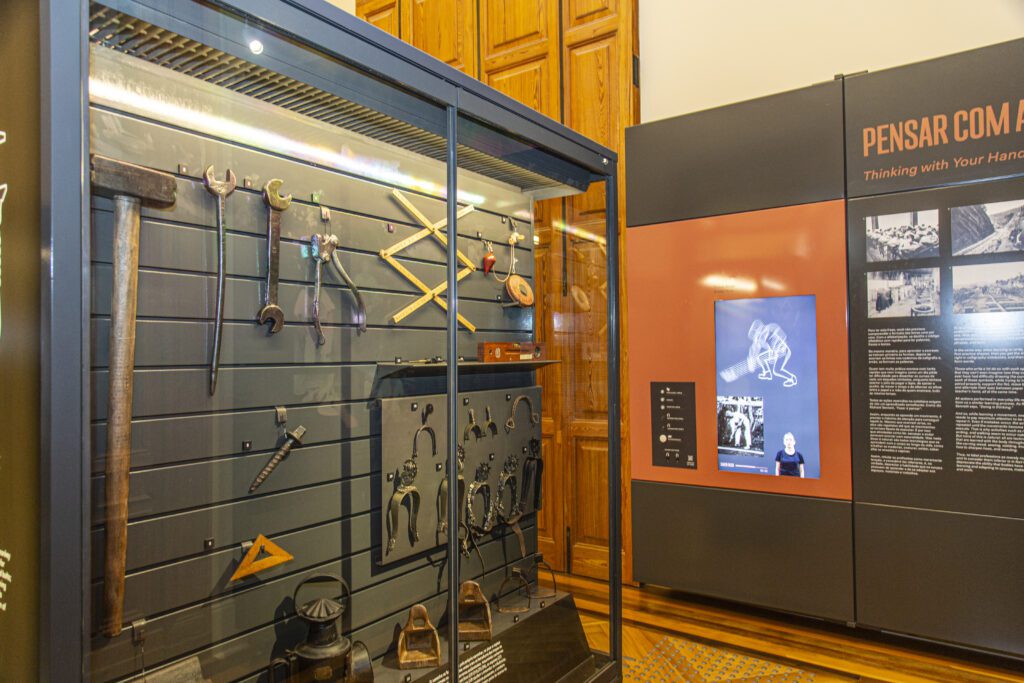
Course: Worlds of Work
Online course
Dates: September 30th and October 1st (Monday and Tuesday)
Time: from 6pm to 9pm
Workload: 6h
Job openings: 500
Target audience: Teachers and students from the public school system, with an emphasis on the public university system. Anyone interested in general.
Registration: from 5/9 to 20/9 in this link. Professors and students must complete the registration form at the provided link and send a copy of their institutional affiliation document via email to: apoioacadmp@usp.br.
Coordination: Professor Maria Aparecida de Menezes Borrego
Vice-coordination: Professor Ana Paula Nascimento
Presenters: Professor Maria Aparecida de Menezes Borrego, Professor Ana Paula Nascimento, José Rogério Beier and Rogério Ricciluca Matiello Félix
Information: e-mail: suporteacadmp@usp.br, tels. (11) 2065-8075/6644
To be eligible for the certificate, the student must sign the attendance list on both days of the course.
This course explores the curatorial development of the exhibition "Worlds of Work," which has occupied the east wing of the first floor of the Ipiranga Museum since its reopening in 2022. Exhibition design and the three-dimensional narrative of the exhibition will be discussed, based on theoretical studies of material culture and the world of work, one of the museum's main research areas. The course also includes four case studies that delve into specific themes related to the collection and the history of work.
Program:
1. Introduction
2. Touring the "Worlds of Work" exhibition“
3. Case Study 1: Theodoro Sampaio and the Waters of the City of São Paulo
4. Case study 2: The body and the artifacts
5. The collections in the exhibition “Worlds of Work”
6. Case study 3: Making paths
7. Case Study 4: From Hands to Feet
8. Behind the scenes of the "World of Work"“

Seminar: "Brazilian Furniture in Question: collections, research and curation"“
Free event
Date: September 21, 22 and 29 (Saturday and Sunday) • at 2:30 PM
Location: Temporary exhibition hall and Studio 1
Free registration: https://forms.gle/SiNgSAGBcpCstR7r6
Target audience: Above 5 years old
On September 21st, 22nd, and 29th, the Ipiranga Museum invites you to the free workshops "What furniture makes a house?", starting at 2:30 PM and lasting one hour.
The activity begins with a guided tour of the exhibition “Sitting, storing, sleeping: the Brazilian House Museum and the Paulista Museum in dialogue” and is followed by a playful workshop in which participants will be encouraged to choose furniture for the various rooms of a house using images. The educators will lead a conversation about the meanings and uses of furniture in São Paulo homes throughout history.
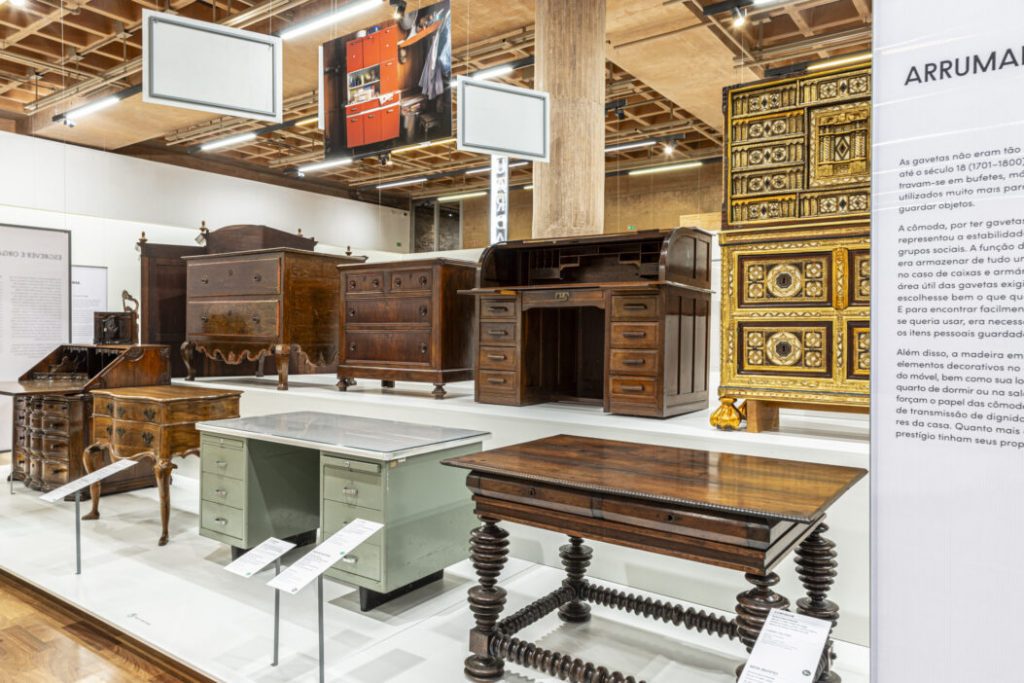
Workshop: What furniture makes a house?
Free event
Date: September 21, 22 and 29 (Saturday and Sunday) • at 2:30 PM
Location: Temporary exhibition hall and Studio 1
Free registration: https://forms.gle/SiNgSAGBcpCstR7r6
Target audience: Above 5 years old
On September 21st, 22nd, and 29th, the Ipiranga Museum invites you to the free workshops "What furniture makes a house?", starting at 2:30 PM and lasting one hour.
The activity begins with a guided tour of the exhibition “Sitting, storing, sleeping: the Brazilian House Museum and the Paulista Museum in dialogue” and is followed by a playful workshop in which participants will be encouraged to choose furniture for the various rooms of a house using images. The educators will lead a conversation about the meanings and uses of furniture in São Paulo homes throughout history.
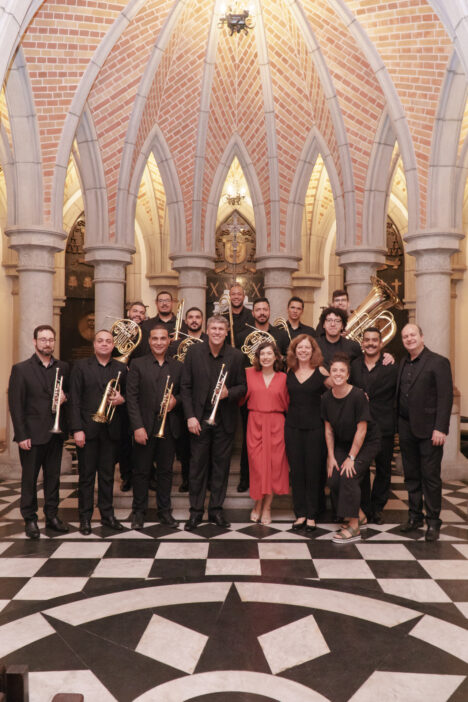
São Paulo Chamber Music Group presents Baroque Music
Free event
Date: September 21st (Saturday) • at 11:00 AM and 2:30 PM
Location: Auditorium of the Ipiranga Museum
Free admission: Pick up your ticket one hour in advance at the Ipiranga Museum ticket office. Subject to availability.
Suitable for all ages.
Event accessible in Libras (Brazilian Sign Language)
Next Saturday, the 21st, the SP Chamber Music Group will be at the Ipiranga Museum Auditorium with two free sessions: the first at 11 am and the second at 2:30 pm. Tickets can be picked up at the Museum's box office one hour in advance.
The concerts will feature the Baroque Music Group and the Woodwind Quintet, performing works from the Baroque period, such as the "Concerto in C major for two trumpets" and the "Concerto No. 5 in F major for Traverso; Opus X", both by Antonio Vivaldi.
Handel's "Eternal Source of Light Divine" and "Let the Bright Seraphim" will also be performed, as well as Henry Purcell's "The Blessed Virgin's Expostulation." The program also includes Jean Joseph Mouret's "Rondeau" and, to conclude, Johann Sebastian Bach's "Cantata 51" and "Quintet.".
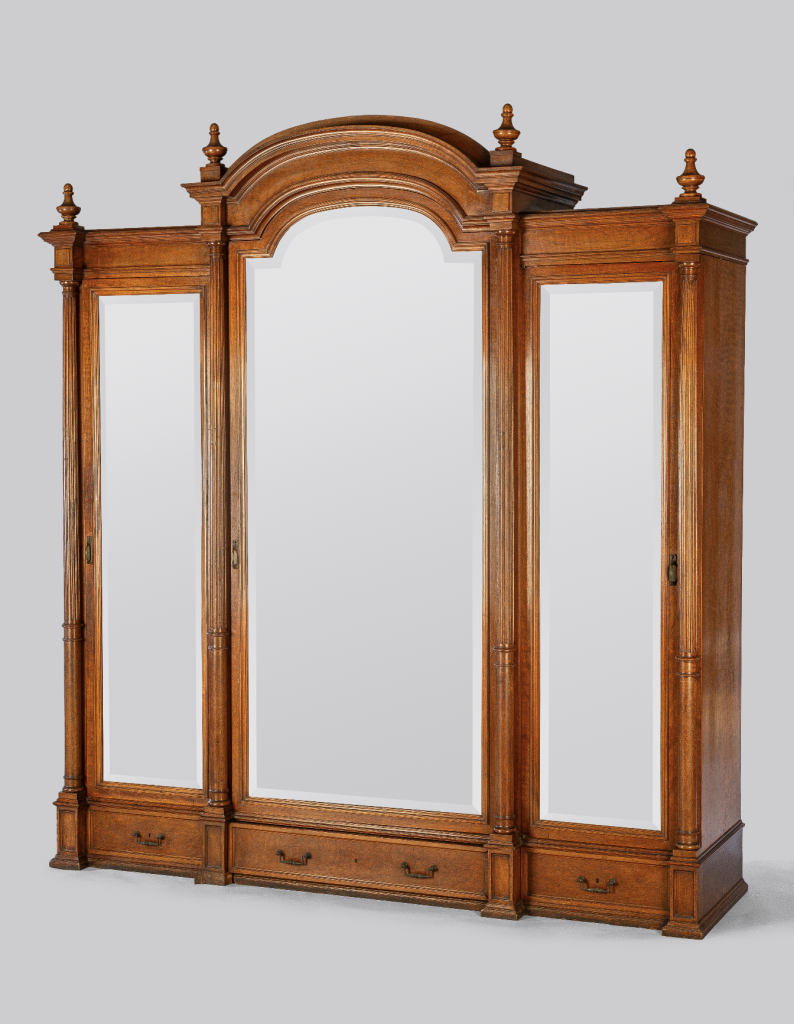
Course: Sitting, storing, sleeping: Museu da Casa Brasileira and Museu Paulista in dialogue
Online course
Dates: September 23rd and 24th (Monday and Tuesday)
Time: from 6pm to 9pm
Workload: 6h
Job openings: 500
Target audience: Teachers and students from the public school system, with an emphasis on the public university system. Anyone interested in general.
Registration: from 8/28 to 9/16 in this link. Professors and students must complete the registration form at the provided link and send a copy of their institutional affiliation document via email to: apoioacadmp@usp.br.
Coordination: Professor Maria Aparecida de Menezes Borrego
Presenters: Rogério Ricciluca Matiello Félix and José Wilton Nascimento Guerra
Information: e-mail: suporteacadmp@usp.br, tels. (11) 2065-8075/6644
A certificate will be provided to participants with 75% attendance at the event.
This course presents the development of the exhibition “Sitting, Storing, Sleeping: Museu da Casa Brasileira and Museu Paulista in Dialogue”. The idea is to explore themes and curatorial and exhibition design choices that illustrate the diversity of solutions used over time for these everyday actions. Specific issues of the collections will be addressed to help the public understand the formation of the collections and their points of convergence, bringing discussions about the cultural and social multiplicity of the people who used and produced the exhibited furniture items.
Program:
September 23rd (Monday):
Joint presentation of the exhibition. Through photographs, a tour of the exhibition will be conducted, exploring its modules and sections, with commentary on the main pieces from the collections. The curatorial and exhibition design choices, as well as the formation of the collections in dialogue, will be explained.
September 24th (Tuesday):
Individual presentations by the instructors on specific topics based on the exhibition of collections: furniture collections in museum institutions and the study of bodily practices in relation to furniture as a source for history and other areas of knowledge.
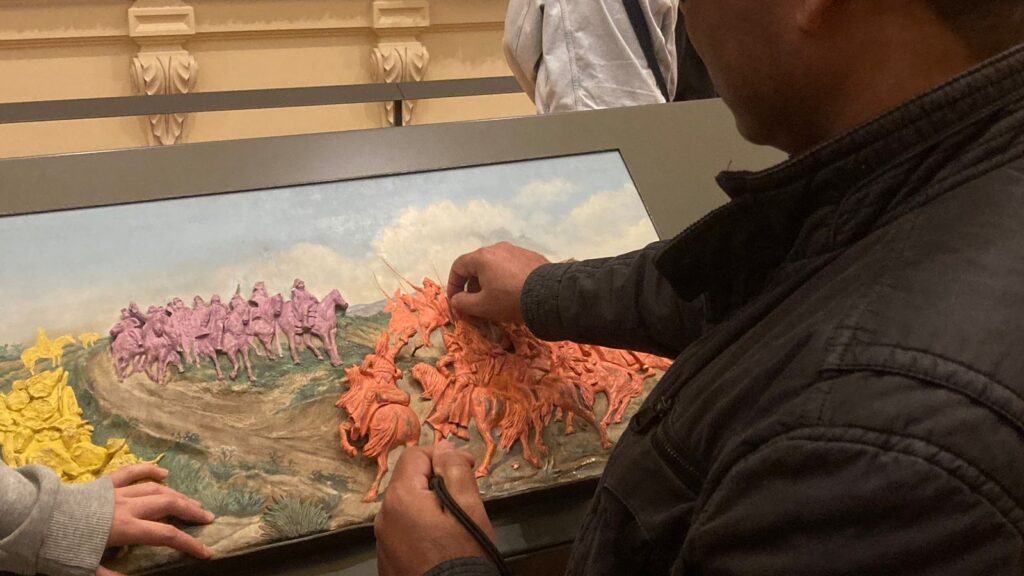
Springtime of Museums at the Ipiranga Museum
Between September 23rd and 29th, the Ipiranga Museum is hosting a special program to celebrate the 18th Spring of Museums, whose theme is "Museums, accessibility and inclusion".
Everyone is welcome! To participate in the activities, simply register via the link: https://forms.gle/Ha6Tq2V1Nw9LBnM27. The deadline for registration is the day before each activity.
Check out the full schedule:
Visit: “To touch: exploring multisensory resources in the exhibitions of the Ipiranga Museum”
Dates: September 25th and 29th at 10:30 AM
Job openings: 10
Meeting pointIn front of the Ticket Office (Garden Level)
Age rating: above 15 years old.
The visit will explore the exhibitions. To Understand the Museum e A History of Brazil In an interactive way, using multisensory resources such as reproductions of works of art and photographs, scale models, and objects available for touch.
A tour in Libras (Brazilian Sign Language): "Gender, object, and representation"“
Dates: September 26th at 3 PM | September 29th at 10:30 AM
Job openings: 10
Meeting point: in front of the Ticket Office (Garden Level)
Age ratingfree
Participants will be invited to investigate works of art and everyday objects to understand the social roles of men and women in the late 19th and early 20th centuries. We will also reflect on whether these expectations still make sense today. The visit will take place in the exhibitions Houses and Things, A History of Brazil and Sitting, Storing, Sleeping: Brazilian House Museum and Paulista Museum in Dialogue.
Sign Language Tour: "Body and Work"“
Dates: September 25th at 3 PM | September 29th at 3 PM
Job openings: 10
Meeting point: in front of the Ticket Office (Garden Level)
Age ratingfree
The visit will take place at the "Worlds of Work" exhibition. We will explore how body movements relate to the specific tools of each profession. We will also reflect on production and work processes, comparing them to current realities. The visit will include the exhibitions "Sitting, Storing, Sleeping: Museu da Casa Brasileira and Museu Paulista in Dialogue," "Worlds of Work," and "A History of Brazil.".
Workshop: Sounds of Vitality
Date: September 28th at 2 PM
Job openings: 15
Meeting point: in front of the Ticket Office (Garden Level)
Age rating: From age 7 onwards.
Participants will be invited to create musical instruments using everyday objects to construct a sound narrative about nature and its elements.
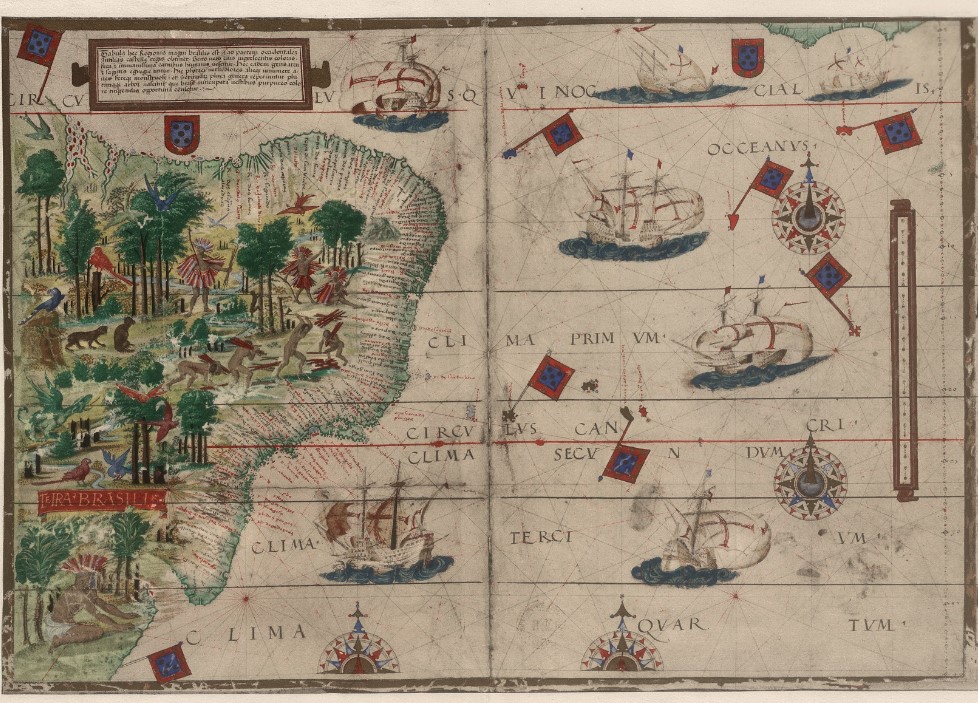
Course: History of Cartography in Brazil
Dates: From September 10th to November 26th, Tuesdays
Time: From 8:30 AM to 12:30 PM.
Workload: 48h.
Registration: R$50, from 8/14 to 9/4, in this link.
Job openings: 200
Location of classes: Auditorium of the Ipiranga Museum.
Presenter: Jorge Pimentel Cintra.
RequirementsGraduates.
A certificate will be provided to participants with 75% attendance.
For more information, click here. here.
The course will present topics from the History of Cartography in Brazil, with practical exercises in map reading.
The classes will be interspersed with an overview of the evolution of cartographic techniques, mainly regarding latitude and longitude measurements, cartographic projections, and prime meridians.
Among the approaches covered in the course will be map reading, paleographic reading of place names, critical analysis of maps as documentary sources and their contrast with other sources; and cross-sectional studies of cartography with science and art.
PROGRAMME
1. Course Presentation. Objectives and approach. The transversality of cartography: literature, history, astronomy, navigation, iconography, mentalities. Mastering cartographic language. Map reading techniques.
* Map reading exercise: Terra Brasilis, by Pedro Reinel and Lopo Homem.
2. The birth of scientific cartography in the Greek world and an overview of this science in antiquity and the medieval world. The classics in cartography. Ptolemy and his Geography.
* Reading exercise: Ptolemy's world map.
3. Cartography and the Age of Exploration: The Formation of Our Image of the World.
* An exercise in transversality.
4. The development of the concepts of latitude and longitude and the theory of projections, up to the Renaissance. Ptolemy and the conic projection.
* Exercises in analyzing the cartographic quality of historical maps.
5. Master João's Letter and the beginning of cartography in Brazil.
* An exercise in paleographic reading using this letter and sixteenth and seventeenth-century maps.
6. The map as a historical document. Riches and pitfalls. The importance of consulting sources and comparing them with other documents.
* Exercises: the map of the Hereditary Captaincies in Luis Teixeira, in Varnhagen and in textbooks.
7. The history of longitude. Galileo and the moons of Jupiter, Huygens and pendulums, Harris's chronometer. Modern methods: telegraph, radio clock, and GPS.
* Practical exercise: calculating the longitude of the Tordesillas meridian.
8. Prime meridians and map discrepancies. Prime meridians on maps of Brazil: Cape Verde, Ilha do Ferro, Paris, Morro do Castelo, and Greenwich.
* Exercise: the prime meridian of the map Brasilia qua parte paret Belgis, by Jorge Marcgrave
9. History of latitudes in Brazil. Latitudes in 16th and 17th century maps and itineraries; the astrolabe and its use in conjunction with tables of solar declination.
* Exercise: analysis of latitudes in the "Roteiro de todos os sinais" (Route of all signs), by Luis Teixeira.
10. History of longitudes in Brazil. Longitudes on old maps. History of the Map of the Courts and the maps of the Mathematical Priests.
* Exercise: Analysis of the Map of the Courts and its intentional distortions.
11. Toponymy and cartography in sixteenth and seventeenth-century maps.
*Exercise: Reading and comparative table of toponymy on the maps: Terra Brasilis and Luis Teixeira (attached to the Guide to all signs).
12. Digital cartography as a tool for historical cartography. Examples of application.
* Presentation of digital mapping programs and their possibilities.
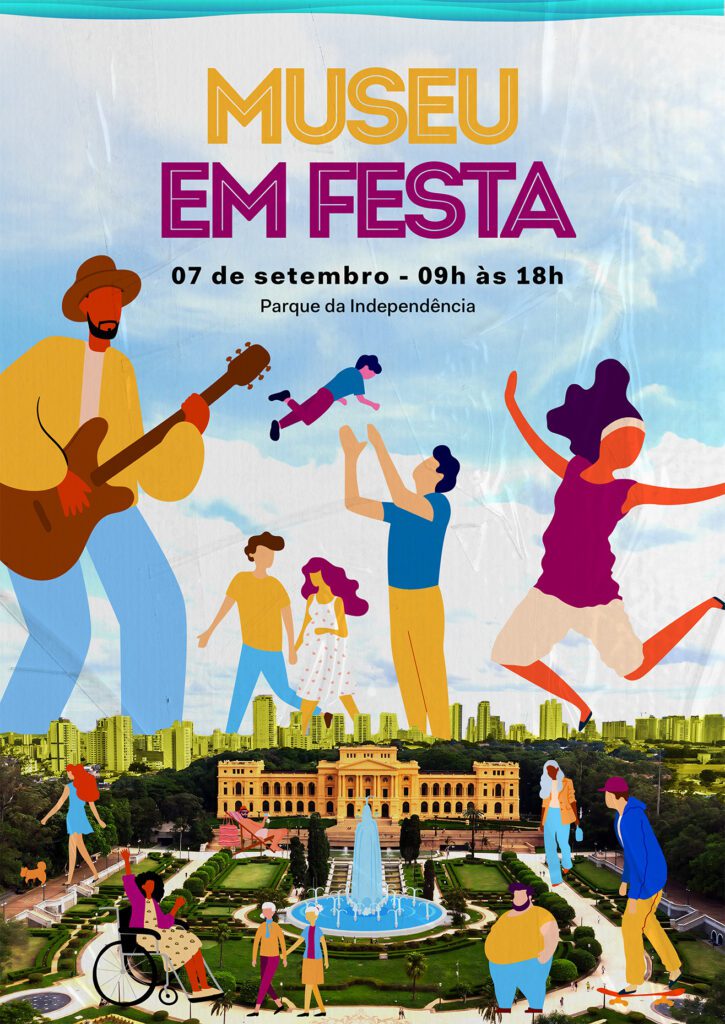
Museum in Celebration • 2024
September 7, 2024 • 9 AM to 6 PM
A free celebration honoring Brazilian historical and cultural heritage awaits you at the Ipiranga Museum on Independence Day. Activities offer a day of leisure outdoors, with games and challenges, workshops, walks, storytelling, and artistic interventions, in addition to a visit to the monument building.
The event is sponsored by Shell, with institutional partnership from Sesc Ipiranga and the Municipal Tourism Secretariat of the City of São Paulo, as well as support from Hospital Dom Alvarenga.
Check out the full schedule:
Free admission to the Ipiranga Museum.
From 9am to 6pm • last entry at 5pm
Activities with accessibility resources for the deaf community and loan of audio guides, with audio description and video sign language (video with subtitles and sign language interpreter).
Visit the exhibitions “A History of Brazil”, “Understanding the Museum” and “Imagined Pasts”.
Independence or Death!
9:30 AM to 5:00 PM • Main Hall of the Ipiranga Museum
Guided tours in Libras (Brazilian Sign Language) at 9:30 AM, 11:30 AM, 1:30 PM, and 3:30 PM.
Mediation in the Main Hall regarding the painting "Independence or Death!", by Pedro Américo.
Coral USP
9:30 AM to 10:30 AM • esplanade staircase
Activity with live audio description and sign language interpreter.
Created in 1967 by Maestro Benito Juarez and José Luiz Visconti, it encompasses 12 groups and 3 workshops under the direction of 7 conductors, with more than 650 choristers. The group will present a repertoire of classics of Brazilian popular music, such as Aquarela, João e Maria, Mas que Nada, Maluco Beleza and País Tropical.
This activity is offered by Shell.
Rap Battle
11:30 AM to 12:30 PM • intervention
MCs challenge each other in a competition of improvised rhymes set to rap beats.
With Brasirima, in partnership with Shell.
Soiree
2 PM to 3 PM • intervention
A celebration of art in various formats: music, poetry, and visual arts. Focused on the reality of the periphery, the event uses rap and MPB (Brazilian Popular Music) to express the struggle for the right to a dignified life, showcasing original works and inspirations from peripheral artists.
With Coletivo Perafatividade, in partnership with Shell.
Brass Quintet
5pm to 6pm • music
The Baccarelli Institute Brass Quintet presents a selection of pieces ranging from classical to contemporary to the public.
With Instituto Baccarelli, in partnership with Shell.
Poems of the Umbrella
10:30 AM to 11:00 AM | 11:30 AM to 12:00 PM | 12:30 PM to 1:00 PM • Intervention in the Garden
Two artists interact with the public using a trunk full of surprises and an umbrella that drips poems.
With Cia Suno, in partnership with SESC Ipiranga
Hiking Trail to Identify the Vegetation
11am to 12pm | 3pm to 4pm • Garden experience
Through botanical observations, participants will learn about the names, characteristics, interesting facts, and cultivation of the plants found in the Ipiranga Museum Garden.
With Assucena Tupiasu, in partnership with SESC Ipiranga
Queue Quiz
9am to 4pm • experience
A game of questions about the Ipiranga Museum and the themes of its exhibitions along the entrance queue.
With the Education Team of the Ipiranga Museum
French Garden: Nazaré terrace
Educational games and experiences
From 10am to 5pm • experience
Activity with accessibility features for the deaf community.
Games and mediation materials related to the themes of the Ipiranga Museum's collection.
With the Education team from the Ipiranga Museum
Did I look good in the photo?
10am to 5pm • intervention
Visitors will be able to experience what it's like to be photographed in a 19th-century photography studio.
This activity is offered by Shell.
shoes swapped
10:30 AM to 11:00 AM • Storytelling
An activity about the importance of adapting and being happy with who we are and what life brings us.
With Cia Makunaicontos, in partnership with SESC Ipiranga
The Mouth of the Night
11:00 AM to 11:30 AM • Storytelling
An activity that tells a bit about the history, childhood, family, and culture of the Wapichana people.
With Cia Makunaicontos, in partnership with SESC Ipiranga
Botanical Impressions in Gelatin
11:00 AM to 11:45 AM | 2:30 PM to 3:15 PM • workshop
Activity involving graphic prints of tree leaves from the Ipiranga neighborhood.
With Technology and Arts Educators, in partnership with SESC Ipiranga
Small Botanical Notebooks
11:45 AM to 12:30 PM | 3:15 PM to 4:00 PM • workshop
Participants will create a small accordion-style book with botanical prints and elaborate compositions using stamps provided during the workshop.
With Technology and Arts Educators, in partnership with SESC Ipiranga
The Monkey and the Moon
12:00 PM to 12:45 PM • Storytelling
Clowns Sarita Jurupoca and João Pimentão use classic circus acts, acrobatics, music, and playfulness to relive this story, which mythically recounts how drums originated in Africa.
With Ateliê Moitará, in partnership with SESC Ipiranga
Screen printing workshop: trees of São Paulo
12pm to 3pm • workshop
The activity invites the public to explore the silkscreen technique and print their own image; the suggestion is to use images of trees and leaves that belong to the biome of the state of São Paulo.
With Quiosco Cultural, in partnership with SESC Ipiranga
Games, Notebooks and Stamps
12:30 PM to 1:15 PM | 4:00 PM to 4:45 PM • workshop
Participants are introduced to bookbinding techniques and invited to activate their notebooks in activities involving drawing and stamping.
With Technology and Arts Educators, in partnership with SESC Ipiranga
At the Foot of the Baobab Tree
1 PM to 4 PM • Storytelling
The playful Abayomi dolls—Ayo, Luedji, Fayola, Dandara, and Ayana—hold secrets and myths! With a trunk full of works written by Afro-Brazilian authors, these dolls return to Brazil after a journey through the African continent.
With Cia Abayomis Brincante, in partnership with SESC Ipiranga
Experience in juggling
1 PM to 5 PM • experience
The public is encouraged to try juggling and other circus techniques.
With the Becker Brothers, in partnership with SESC Ipiranga.
Body in Motion – We are made of Samba
4pm to 5pm • open class
Samba workshops will teach basic steps, maneuvers, and sequences for beginners and experienced practitioners, using the MP method, which is gradual and accessible to all skill levels.
With Marcus Prado and team, in partnership with SESC Ipiranga.
Playing at painting with earth paints
2 PM to 5 PM • workshop
A workshop on producing handcrafted paints using natural pigments extracted from the earth, allowing participants to create their own paints and explore painting techniques in a creative and sustainable way.
With Kênya Garbossa, in partnership with SESC Ipiranga
Go by Script
10am to 5pm • guided tours
Guided tour itineraries for Independence Park in partnership with the Municipal Tourism Secretariat.
French Garden: Xavier Terrace
Automata for playing
10am to 1pm • workshop
A playful experience of creating toys and reinventing everyday objects using popsicle sticks, paper, and paint.
With Bruno Perê, in partnership with SESC Ipiranga
Games and rhythmic activities
10am to 1pm • experience
Children's games inspired by cacuriás. The audience is invited to play and dance while the group sets the rhythm with songs and musical instruments.
With Macamba N'Goma, in partnership with SESC Ipiranga
Handmade printing with Adinkras
10:00 AM to 11:30 AM | 11:30 AM to 1:00 PM • workshop
A dialogue about the meanings and origins of the symbols known as Adinkra symbols, with experimentation using the block printing technique on textile supports.
With Coletivo Iê Cultural, in partnership with SESC Ipiranga
Affective cartographies
2 PM to 5 PM • workshop
Creating drawings based on the observation of different elements in space (people, plants, animals, buildings), in dialogue with personal and collective memories.
With Carla Caffé, in partnership with SESC Ipiranga
Fanzine-making ideas: production creative in fanzines
2:30 PM to 5:00 PM • workshop
A fanzine workshop, guided by reflections on history and potential.
This language is used for expression, activism, criticism, and social and political mobilization by individuals.
With Roger BeatJesus, in partnership with SESC Ipirangaga

Course: Understanding the Museum
Online course
Dates: August 20th and 21st (Tuesday and Wednesday)
Time: From 6 PM to 9 PM.
Workload: 6h.
Job openings: 500
Target audience: Teachers and students from the public school system, with an emphasis on the public university system. Anyone interested in general.
Registration: from 08/08/2024 to 08/14/2024, in this link. Teachers and students must complete the registration form at the provided link and send a copy of their institutional affiliation document via email: apoioacadmp@usp.br.
Coordination: Professor Solange Ferraz de Lima
Presenters: Professor Solange Ferraz de Lima and Professor Aline Montenegro Magalhães
Information: e-mail: suporteacadmp@usp.br, tels. (11) 2065-8075/6644
A certificate will be provided to participants.
This course aims to provide educators and students with the tools to better explore the potential of the Museu Paulista at USP. In addition to presenting the curatorial project for the exhibition axis "Understanding the Museum," which encompasses five exhibitions, the course will cover the museum's diverse areas of activity and its history.
Classes will be remote and live, with accessibility features (sign language, subtitles, and audio description) and supporting materials as teaching resources.
PROGRAMME
What is a museum and what is its purpose?
The Paulista Museum at the Ipiranga Monument
Curatorship and Research in the collections of the Museu Paulista
What is a Healing Cycle?
The stages of the curatorial cycle
Research in museums – a case study
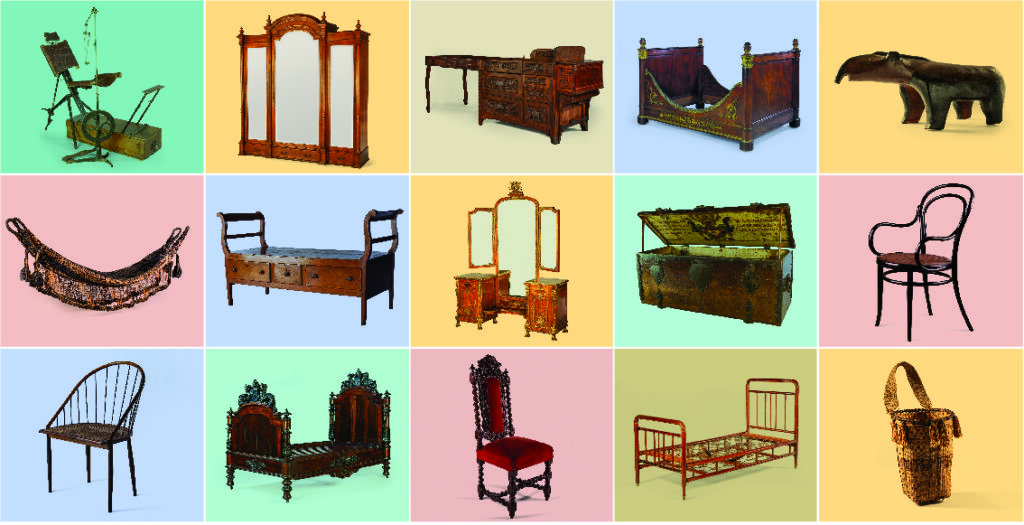
The arts of everyday life: sitting, putting things away, sleeping.
Date: 24/08 • at 2 PM
Location: Auditorium of the Ipiranga Museum.
Registration: click here.
How about learning more about the new temporary exhibition at the Ipiranga Museum by interacting with the curators themselves?
At the event “The Arts of Everyday Life: Sitting, Storing, Sleeping,” the public will be able to participate in a conversation with the curators of the new temporary exhibition at the Ipiranga Museum, having an enriching experience about the themes addressed in the show.
The director of the Museu Paulista, Prof. Dr. Paulo César Garcez Marins, discusses the act of sleeping. The vice-director, Prof. Dr. Maria Aparecida de Menezes Borrego, addresses the idea of storing things. Guest curator Giancarlo Latorraca discusses solutions involving sitting.
Don't miss out!
About the curators:
Prof. Dr. Paulo César Garcez Marins
Director of the Paulista Museum
Professor Dr. Maria Aparecida de Menezes Borrego
Vice-director of the Paulista Museum
Giancarlo Latorraca
Architect and Technical Director of the Brazilian House Museum between 2008 and 2023.
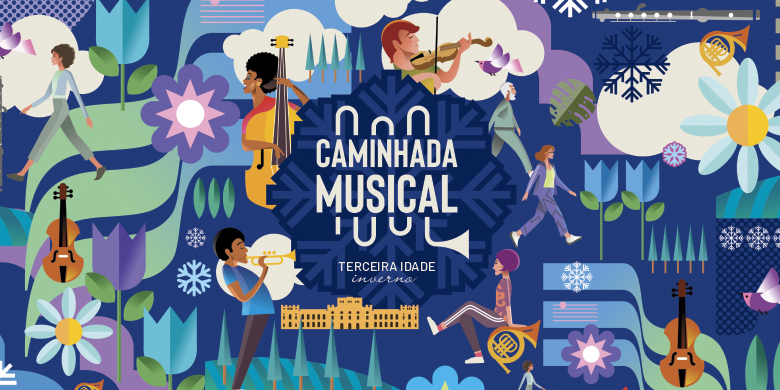
Musical Walk for Senior Citizens – Closing Concert
Date: 25/8 • at 4 PM
Location: Auditorium of the Ipiranga Museum
Free tickets: Tickets can be picked up from 2 PM onwards at the Ipiranga Museum ticket office. Subject to availability.
Suitable for all ages.
Event accessible in Libras (Brazilian Sign Language)
On Sunday, August 25th, the Ipiranga Museum will host the ALMAI-SP Chamber Orchestra for the closing of this year's Musical Walk for Senior Citizens season.
Conducted by maestro Flávio Lago and featuring a solo performance by violinist Alessandro Oliveira, the performance will take place in the Museum Auditorium at 4 PM. Free tickets for the show can be picked up at the Museum's box office on the day of the event, starting at 2 PM.
The Musical Walk is a project that offers physical activity routes combined with musical performances for senior citizens. Learn more at http://www.caminhadamusica.com.br/.
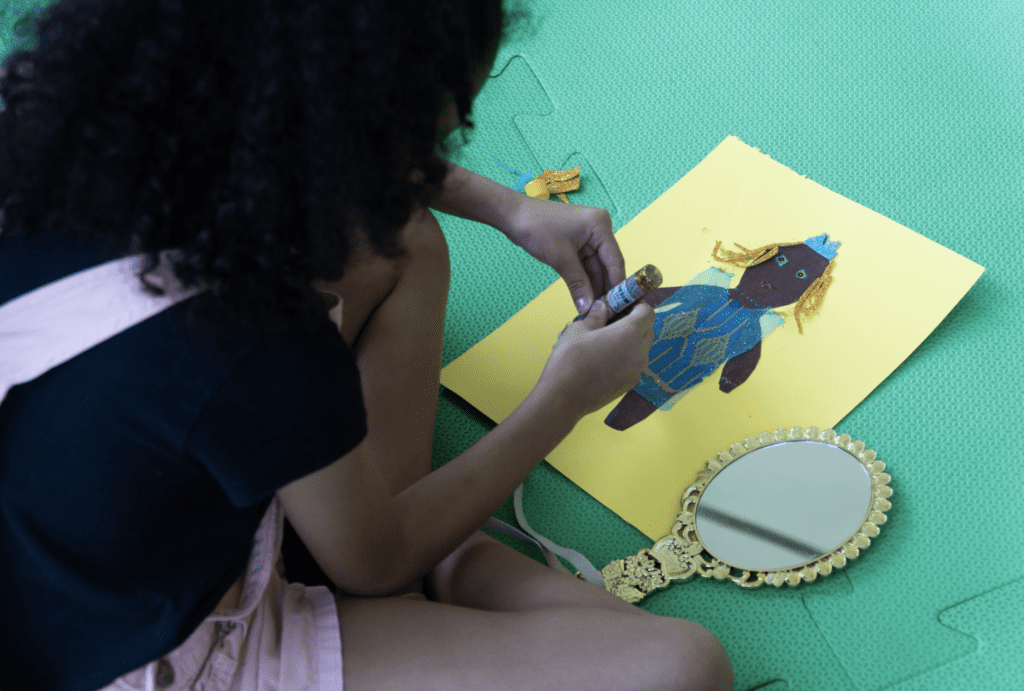
Holidays at the Museum
The Ipiranga Museum has prepared a special program for the school holidays.
The activities are aimed at all visitors to the museum.
Through playful and fun activities, families will be able to learn a little more about the history and stories of Brazil.
Dates: July 9th to July 14th • July 16th to July 21st
Activities
Guided tours of the temporary exhibition “Sitting, storing, sleeping: Museu da Casa Brasileira and Museu Paulista in dialogue”
Free entry
Times: 10:30 AM and 1:30 PM • Meeting point: reception area
Investigating the Garden
Guided tours of the esplanade of the monument building, the side terraces, and the area around the fountain. After the activity, participants may visit the Museum, subject to ticket availability.
Free activity
Schedule: 10:00 AM to 11:00 AM | 3:30 PM to 4:30 PM • Meeting point: reception area
Independence celebrated in monuments.
Guided tours of the exhibitions "A History of Brazil" and "Understanding the Museum".
Free activity, upon purchase of a ticket to the Ipiranga Museum.
Times: 10:30 AM to 11:30 AM | 1:30 PM to 2:30 PM • Meeting point: museum lobby
How art recreates the past
Guided tours of the exhibitions Imagined Pasts and A History of Brazil
Free activity, upon purchase of a ticket to the Ipiranga Museum.
Opening hours: 11:00 AM to 12:00 PM | 3:00 PM to 4:00 PM • Meeting point: museum lobby
Gender, object, and representation
Guided tours of the exhibitions Houses and Things and Main Hall (One
history of Brazil
Free activity, upon purchase of a ticket to the Ipiranga Museum.
Schedule: 12:30 PM to 1:30 PM • Meeting point: museum lobby
Work in motion
Guided tours of the exhibitions Worlds of Work and Houses and Things
Free activity, upon purchase of a ticket to the Ipiranga Museum.
Schedule: 1 PM to 2 PM • Meeting point: museum lobby
Games
Free activity, upon purchase of a ticket to the Ipiranga Museum.
10:30 AM to 4:30 PM • Meeting point: break room of the "Understanding the Museum" exhibition“
Workshops
Free activity, upon purchase of a ticket to the Ipiranga Museum.
10:30 AM and 2:00 PM • Meeting point: reception area
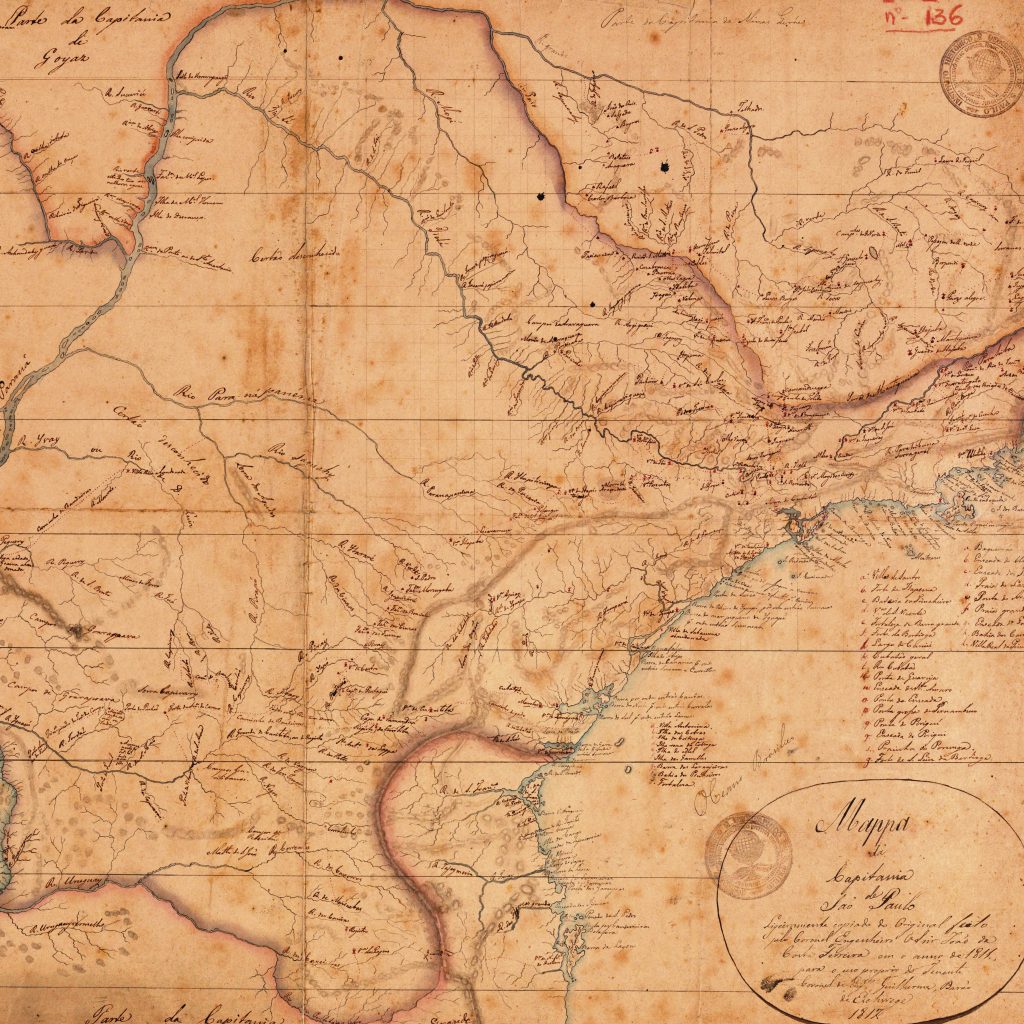
Course: History of cartography in São Paulo
Dates: from April 16th to July 9th, Tuesdays.
Hours: 8:30 AM to 12:30 PM.
Course duration: 48 hours.
Registration: R$50, until 5/4, in this link.
Openings: 300
Location of the classes: auditorium of the Ipiranga Museum.
Presenter: Jorge Pimentel Cintra.
Requirements: graduates.
A certificate will be provided to participants with 75% attendance at the event.
For more information, click here. here.
The course will present basic topics in the history of cartography in São Paulo, with practical exercises in reading maps from the collection of the Museu Paulista.
The classes will be interspersed with an overview of the evolution of cartographic techniques, mainly regarding latitude and longitude measurements, cartographic projections, and prime meridians.
Among the approaches covered in the course will be map reading, paleographic reading of place names, critical analysis of maps as a documentary source, and cross-disciplinary studies of cartography in relation to science and art.
PROGRAMME
1. Course Presentation. Objectives and teaching methods. The relationship between the history of Brazilian and São Paulo cartography. São Paulo in the first maps of Brazil. Map reading techniques.
Reading exercise: Terra Brasilis (Pedro Reinel and Lopo Homem) and Luis Teixeira.
2. The cartography of Martim Afonso de Sousa's voyage. The letter of Pero Lopes de Sousa and the map of Gaspar Viegas. Martim Afonso and Pedro Nunes.
Reading exercise: Gaspar Viegas' Map and the old maps of the bays of Santos and Rio de Janeiro (Albernaz/Teixeira family).
3. The occupation of Brazilian and São Paulo territory. Symbols of possession on maps and in the territory: flags and shields, possession markers. Donation charters and charters of the captaincies and the power to create villages and distribute land grants. The respective legal documents, pillories and markers.
Letter reading exercises (excerpts): donation to Martim Afonso, town charters, and land grant letters.
4. The formation and representation of the territory of São Paulo, from the hereditary captaincies to the State of São Paulo. The vicissitudes of the territories of Martim Afonso and Pero Lopes de Sousa.
Reading exercise: the reconstruction of the territory of the southern captaincies and the modifications of borders.
5. Taunay and the first maps of the territory of São Paulo. Room A10 of the Museu Paulista. History and context of the production of the map by Céspedes de Xeria and its copies.
An exercise in reading the map by Céspedes de Xeria and the copy from the Museu Paulista.
6. Delisle and the reform of world cartography. Reflections on the politics of King John V and the reform of cartography in Brazil. The mathematical priests and their work. The instruments of cartographers at the time.
Reading exercises: Delisle's map in light of longitude measurement techniques.
7. The Maps of the Mathematical Fathers. History of latitude and longitude tables. Method of constructing their maps.
Reading exercise: the maps of the Mathematical Fathers in the collection of the Paulista Museum.
8. The border demarcation engineers and their cartographic work in São Paulo, especially Francisco de Oliveira Barbosa, Bento Sanches D'Orta, João da Costa Ferreira and Antonio Rodrigues Matosinho.
Reading exercise: A Collection of Maps of Ancient Paulista Cartography: selected maps.
9. Other maps of the Province of São Paulo: Wilhelm Ludwig von Eschwege (1817), Daniel Pedro Miller (1841), Jules Martin (1878) and Carlos Daniel Rath (1886).
Exercises in analyzing the cartographic quality of historical maps.
10. The map as a historical document for determining the layout of ancient roads. Riches and pitfalls. The importance of consulting sources and comparing them with other documents. Digital cartography programs as a tool.
Exercise: The layout of the old roads from São Paulo to Itu.
11. The Geographic and Geological Commission of São Paulo and the beginning of systematic cartography in Brazil. Its purposes and significance. The exploration of rivers and the determination of the State's borders.
Exercise: reading and analyzing the CGG mapping and its reports.
12. Mapping SARA Brazil. Recovering its history: its pioneering spirit, doubts, and uncertainties. Its technical and informative quality. Its value as a historical document.
Exercise: reading and analyzing the SARA map and the location of the so-called Cry of Ipiranga.
Optional courses
Job openings: 5 people per subject
Target audience: undergraduate students who are not enrolled at USP
LocalClassroom at the Ipiranga Museum
Registration is closed.
Certificates of participation will be issued.
Writings of History in Museums
This course proposes to reflect on historiographical production in museums, understanding these institutions as laboratories of history, according to the definition of Ulpiano Bezerra de Meneses (1994).
It also aims to identify specific experiences in historiographical production, analyzing them as curatorial practices in museums such as the National Historical Museum, the Mariano Procópio Museum, and the Paulista Museum.
The scope encompasses heritage preservation actions as part of a museum's history-writing project, such as the National Monuments Inspectorate; disputes in the field of heritage and the creation of new history museums between the 1930s and 1940s; and the analysis of the history currently being produced in history museums, seeking to identify challenges, interests, continuities, and ruptures.
Instructor: Professor Aline Monteiro Magalhães
Class period: February 28th to July 3rd
Full menu: click here
Collections and Curatorship in History Museums
Based on the exhibitions currently on display at the Museu Paulista, the aim is to discuss the themes presented, the collections used, and the multisensory resources available.
Through visits to the exhibition rooms and readings of books from the 2022 Ipiranga Museum Collection, the problems faced by museum professionals in their work will be addressed, such as the policy of acquiring collections, methods of documenting collections, conservation practices for artifacts, and actions to disseminate historical knowledge generated through outreach activities, especially exhibitions, courses, seminars, and publications.
Instructor: Professor Maria Aparecida de Menezes Borrego
Class period: March 1st to July 5th
Full menu: click here
Images and Accounts: Travelers and the Construction of Narratives
Starting from the premise of the shift in understanding of the world from the Enlightenment (18th century) and the strong commitment to cataloging animate and inanimate beings, the discipline focuses on some of the accounts and images produced by foreign artist-scientist-travelers who explored part of the province/state of São Paulo throughout the 19th century.
It will contrast with the representations produced by some local members and how the same elements are interpreted, how such images and texts were appropriated for a particular historical construction, especially by Afonso d'Escragnolle Taunay, when he was director of the Museu Paulista (1917-1945).
Instructor: Professor Ana Paula Nascimento
Class period: March 7th to July 11th
Full menu: click here
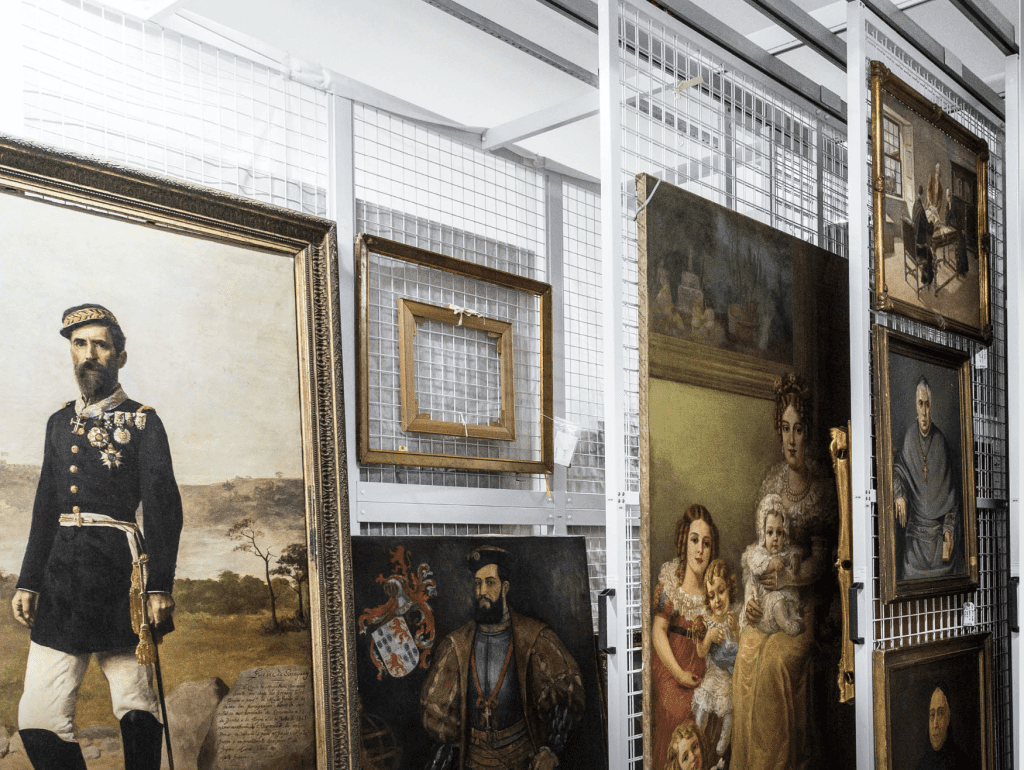
PREVENTIVE CONSERVATION OF COLLECTIONS
Module 1: The Impact of the Building and its Surroundings. 3rd Edition
Extension Course. Modality: Refresher Course
Presenters:
Prof. Rosaria Ono (Paulista Museum and FAU/USP)
Prof. Sheila Walbe Ornstein (FAU/USP)
Prof. Alberto Hernandez Neto (EPUSP)
Architect Juliana Saft (IFSP)
Specialist Ina Hergert (Paulista Museum)
Online and in-person course
Date: On Thursdays and Fridays, between April 29th and July 5th, from 8:30 AM to 12:00 PM. Total hours: 36.
Registration: until 24/4, in this link
Job openings: 25
Target Audience: Professionals and researchers who work in or conduct research related to cultural collections.
Requirements:
1. Have completed undergraduate studies; 2. Be available to participate in classes, meetings, and scheduled activities; 3. Have worked or conducted research with collections or related areas for at least 3 years; 4. Work directly with the USP collection; 5. Work or conduct research at a USP unit; 6. Work or conduct research with collections at another cultural institution.
Value: R$ 200
• Up to 4 free places, subject to analysis of the justification presented; • 50% discount for postgraduate students and USP employees, upon proof.
Information: acadmp@usp.br
A certificate will be offered to participants.
This introductory course aims to present the main tools for planning practical actions for sustainable preservation and preventive conservation. Students will be encouraged to apply the tools and instruments presented in their practical activities, using their affiliated institution as a case study.
The content is structured in a hybrid format, with 10 recorded lectures (online and asynchronous) and 7 discussion sessions, including clarification of doubts about the lectures and the final project to be developed remotely (online and synchronous). There will also be an on-site technical visit and a final in-person lecture.
PROGRAMME
Lessons 1 and 2: Risk management tools and instruments applied to assets.
Professor Rosaria Ono
Lessons 3 and 4: Post-Occupancy Evaluation (POE) and environmental quality applied to heritage sites.
Juliana Saft
Lessons 5 and 6: HVAC (Heating, Ventilation and Air Conditioning) systems for archives.
Professor Alberto Hernandez
Lessons 7 and 8: Post-Occupancy Evaluation (POE) Instruments Applied to Real Estate
Professor Sheila Walbe Ornstein
Lessons 9 and 10: Preventive conservation of collections
Ina Hergert
Lesson 11: On-site technical visit / Practical activity
Lesson 12: Remote support
Lesson 13: Remote support
Lesson 14: Presentation of the work – part 1 – hybrid
Lesson 15: Presentation of the work – part 2 – hybrid format with an in-person visit at the end.
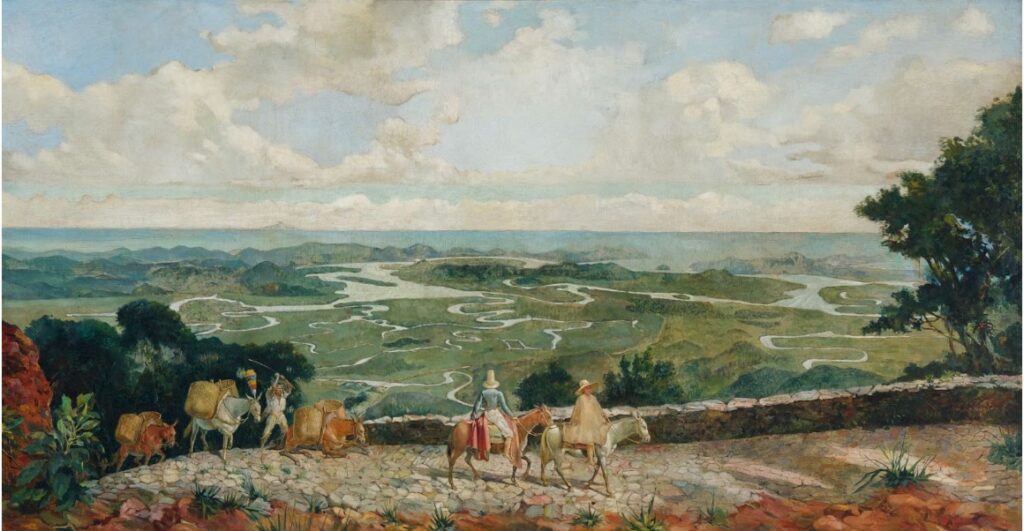
Course: Images and Accounts – Travelers and the Construction of Narratives
Dates: From August 8th to November 28th, Thursdays
Time: from 2 PM to 6 PM
Registration: from 8/7 to 30/7 via email acadmp@usp.br
Job openings: 5, for undergraduate students not enrolled at USP
Location of classes: classroom at the Ipiranga Museum.
Presenter: Professor Dr. Ana Paula Nascimento
The course focuses on accounts and images produced by foreign artist-scientist-travelers who explored São Paulo throughout the 19th century, and how such landscapes, buildings, customs, and forms of work were represented and disseminated.
This will be contrasted with the representations produced by some local members and how the same elements are interpreted and appropriated for a specific historical construction, especially by Afonso d'Escragnolle Taunay, when he was director of the Museu Paulista (1917-1945), both in some of the institution's exhibitions and in other media. Finally, it will explore how such images and texts are analyzed in contemporary times.
Program
I - Prologue
1. Program Presentation
2. Concepts of representation, practices and appropriations
3. Illustration and Romanticism: The Territories of Reason and Sensibility
4. The notions of nature in the 18th and 19th centuries
5. The sublime and the picturesque
6. The romantic landscape
7. Study visit to a cultural institution
II- Visions and descriptions
1. Visions of the New World: the difference as interpreted by the foreigner
2. Images of the colonial country: travelers and the representation of tropical nature
3. Images of the colonial country: travelers and the representation of villages
4. Images of the colonial country: travelers and the representation of work
5. Image Transit
6. Completing the journey through the printed account
7. Study visit to a cultural institution
III- The appropriation of narratives and images
1. The construction of places of memory
2. The Paulista Museum in the conception of Afonso Taunay: exhibition as an ideological instrument
3. The use of images and travelers' accounts at the Museu Paulista
4. An exemplary case: Hercule Florence at the Paulista Museum
5. Local (itinerant) artists on the walls of the Museum: Miguelzinho Dutra and José Wasth Rodrigues
6. Expanding sources: other travelers
7. The contemporary perspective
8. Guidance for the final project
Lorem ipsum dolor sit amet, consectetur adipiscing elit. Ut elit tellus, luctus nec ullamcorper mattis, pulvinar dapibus leo.