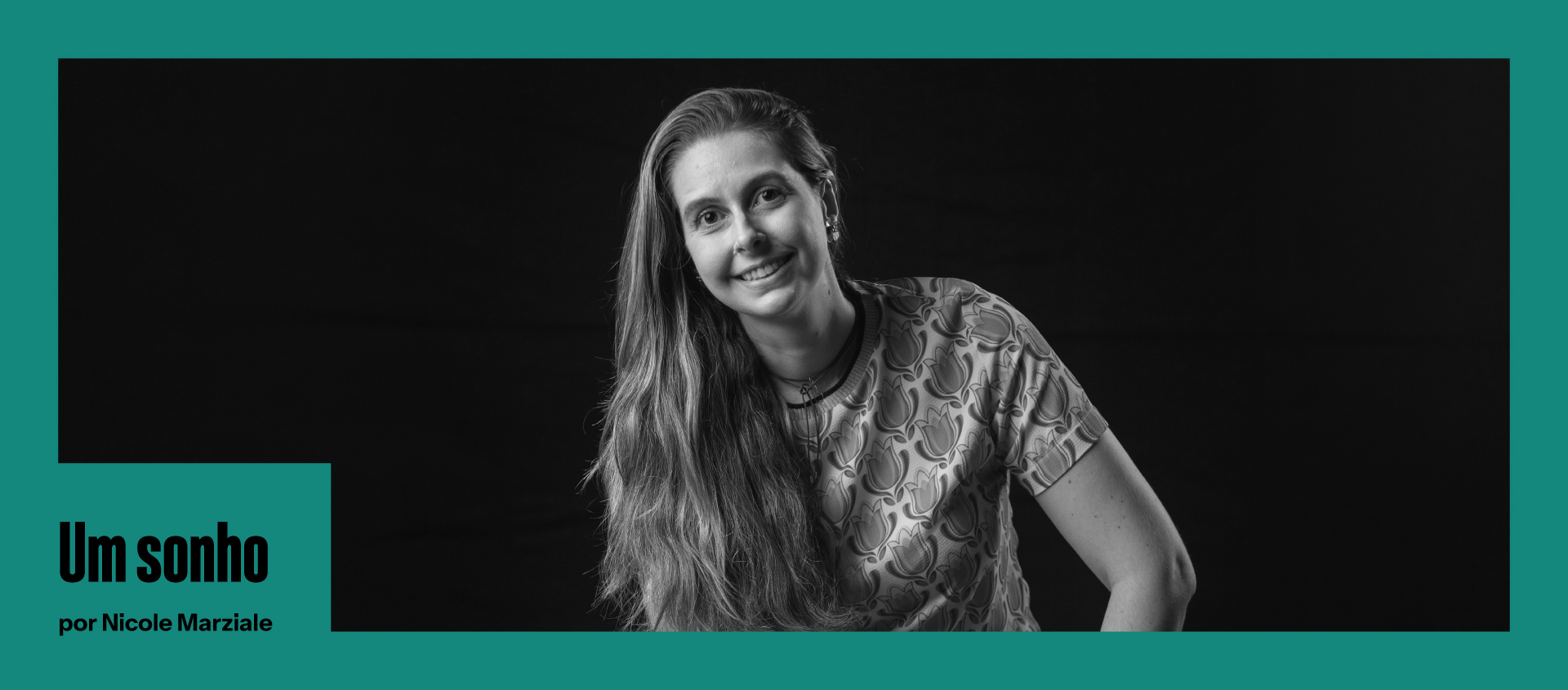
I parachute-jumped into the Ipiranga Museum.
When I took the civil service exam in 2024, I thought it was to work at the Museum of Archaeology and Ethnology of the University of São Paulo. I had already taken a course at the Museum during my master's degree, and had visited the exhibition Resistance Now! Strengthening and unity of the Kaingang, Guarani Nhandewa, and Terena Indigenous cultures, which proved especially significant as it resulted from a shared curatorial process between these indigenous groups and the museum researchers. As the bibliography for the exam included themes related to this institution, I immediately deduced that the position would be there, although there was a possibility of being called to any of the museums administered by USP.
I came in second place in the competition and, very upset, stopped checking the website updates. Then one day, I opened my email, and I came across the following message:
Congratulations on your approval!
I remember I was in Ribeirão Preto, at my mother's house, and I brought the computer to her to ask if what I was seeing was real. We both started crying. I called my father, and he broke down too. Later, when I told my husband, I was still crying so much that he thought my dog had died.
It had been about three months since the results came out, and at first, I thought only one person would be selected. The HR employee explained that I should report to the Ipiranga Museum, and only at that moment did I understand where I had been selected to go. I even asked:
– Isn't it at the Museum of Archaeology?
No, it wasn't. At that time, it was already decided that I would go to Ipiranga, and although it was unexpected, I was very excited about the opportunity to work in the educational area of a museum.
When I moved to São Paulo in 2012, still as a Communications student, working with something related to the art world seemed like a dream. At that time, I had my first contact with contemporary art at a Lygia Clark exhibition at Itaú Cultural.
What caught my attention was that they made reproductions of the pieces so that visitors could experience different sensations. The exhibition had everything from the Critters, which are those metal plates with hinges, made for the public to create new shapes, even works that involved even greater engagement of the visitor's body. I remember the work Tunnel, which, as the name suggests, consists of a path made of elastic fabric, through which the person passes until they reach the exit. In the beginning, the experience can cause a feeling of anguish, of suffocation; then, relief arises. The work can be interpreted as an attempt to make the visitor sensorially relive the experience of birth.
Experiences like these fueled my desire to study Art History, which I was able to pursue starting with my master's degree. Lygia wanted her art to be experienced by the body as a whole. Sight, hearing, touch, smell, and taste appeared together, in a multisensory way.
I addressed this topic in my final graduation project, for my second degree, this time in the “Art: Critical History and Curatorship” course at PUC. Since ancient Greece, sight has been considered the “noblest of the senses,” but various anthropologists have already shown that this is a cultural valuation. Therefore, I wanted to know how museums could use diverse resources to broaden visitors' sensory experiences, and I was precisely conducting this research when I visited the Ipiranga for the first time.
I didn't get to visit the Museum before its reopening in 2022. It closed about a year after I arrived in São Paulo, and I wasn't able to visit it in time. But on my first visit, I was completely fascinated to see how accessibility was prioritized within the exhibitions. In other institutions, accessibility features, when they exist, are usually in unobtrusive spaces, separate from the exhibitions. At the Ipiranga Museum, on the other hand, they occupied a central place in the exhibition route. In addition to fundamental resources such as Braille texts, audio descriptions, and sign language interpreters, I was struck by the number of works and objects accessible to touch, with diverse shapes and materials, expanding the possibilities for exploring the exhibition content.
At that time, I was pursuing my doctorate, which was about the transformation of popular objects into works of art. But I still felt insecure about what I was doing and began to question where it would lead me. The interest in the theme of accessibility then emerged as an escape valve, as a subject I wanted to research, but without the weight of my thesis.
I've always had a special affection for museum education and, for a long time, sought to stay in that field. I had already had very significant experiences with popular education, and the decision to study art is largely due to my work as an educator at the 31st Biennial.
In this professional experience, between the selection, the training, and the exhibition period, the process lasted almost a year. I joined an interdisciplinary group, with supervisors who came from the theater and made many proposals for bodily engagement. It was a decisive moment for me to loosen up more.
It was a very experimental Biennial, and that's when the world opened up. We always talk about the relationship between the public and art, and the public appears almost as an abstract concept. But in that context, I realized the particularities of each group I came into contact with.
I understood what it was like to work with the children and even the teenagers who arrived with that indifferent air. In a short time, I realized that the high school students loved to stop in front of Turkish artist Halil Altindere's video, in which a rap group traveled through the community where he was born, singing lyrics about their reality. On the other hand, the younger ones had fun with the installation by Grupo Contrafilé, which proposed a series of encounters around a baobab tree – as the tree lives for about 6,000 years, the collective's proposal was to have it as the guardian of our stories.
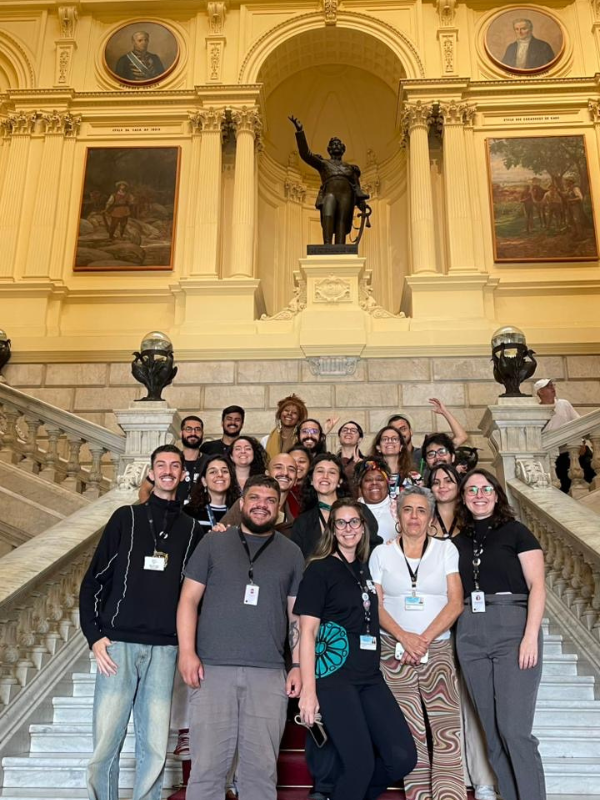
I think what they experienced there were moments they will carry with them for a lifetime, just as I still have the memory of the times I visited the Biennial when I was younger. Art has this power to mark our lives and awaken our sensitivities, and it is precisely this impact I aim to bring to the Educational activities.
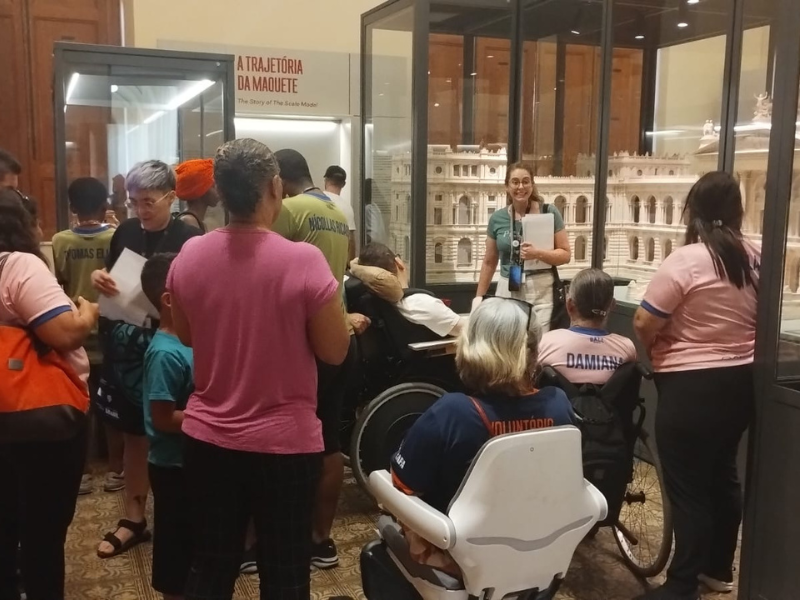
Recently, the Museum received a large group of visitors participating in the third National Meeting of the Inclusive Reading Network, organized by the Dorina Nowill Foundation. The group included people with visual impairments. It was a wonderful opportunity to focus the visit on the exploration of the tactile works present in the Museum.
We started with the building's model, located on the Garden Floor. It was possible to perceive its details through touch. From this experience, we talked about its construction, carried out between 1885 and 1890, and about its conception as a monument to commemorate the Proclamation of Independence, which occurred in 1822.
We also cover the inauguration of the Paulista Museum at the site in 1895 and the renovation carried out between 2013 and 2022.
I explained that the model represents, on a reduced scale, a building of large proportions, measuring 123 meters wide, 31 meters high, and 18 meters deep. In it, we can identify both the original entrance, via the stairways, and the current access to the Museum, facing the reception area where we were.
The idea was to convey the magnitude of the building, a central element in the visitors' experience. To enhance the spatial and sensory perception, I adopted a strategy suggested by my colleague Vini, also an educator at the Museum: upon arriving at the lobby, the group was invited to embrace the building's robust columns. The proposal helped to intensify the bodily and sensory experience in the space.
My contact with the scientific research that underpins the museum's exhibitions opened up a new perspective on artworks that were already familiar to me through educational materials. This shift in perspective has stayed with me since the first time I visited the “Imagined Pasts” exhibition, even as a museum visitor. By understanding the works in the collection as historical documents, I began to pay closer.
How are historical narratives constructed?
Who appears as the protagonist?
Which groups have been historically erased?
Thinking about these issues is one of the current initiatives of the Ipiranga Museum. The idea of the bandeirantes as heroic figures, for example, was an image that the institution helped to create and disseminate, and which we are now problematizing with visitors, bringing this past, which was also violent and enslaving, into discussion.
When I visited the Ipiranga Museum after its reopening, I could never have imagined that it would be in this building that I would fulfill my dream of working with art. I was the kind of person who only frequented contemporary art spaces, even when I traveled, and my relationship with history museums seemed distant.
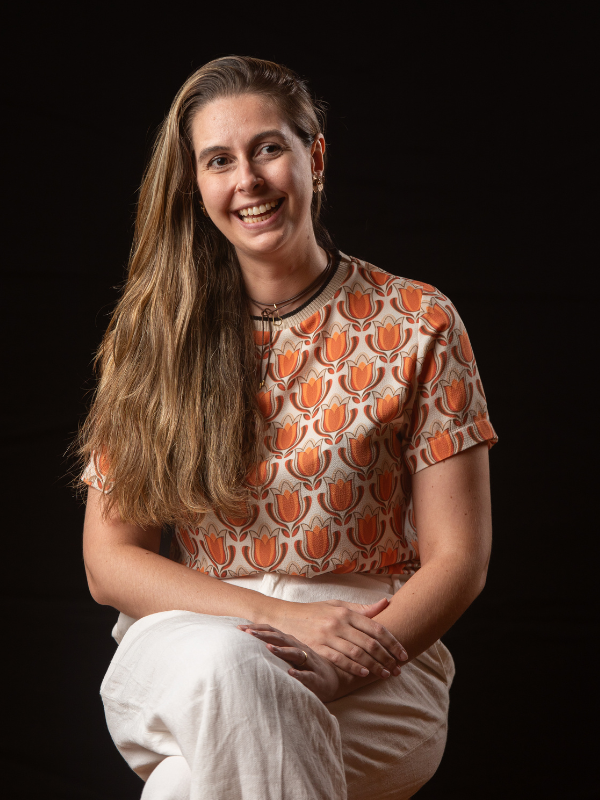
Since I started in 2024, I've been seeking to learn more and more daily. My desire is to articulate this new knowledge with the experience I already bring with me, which relates to artistic practices of our time.
For example, in the exhibition “Debret in Question – Contemporary Perspectives,” our education team, in dialogue with the curatorial team, developed a sensory exploration proposal that included several works. Throughout the exhibition route, tables with tactile resources extend the possibilities for enjoying the exhibition.
For example, in the room with photographs of the Acadêmicos do Salgueiro Samba School, which had Debret as the theme of the parade in 1959, our idea was to transform the samba-enredo into vibration. The challenge was to create a synchronization between the lyrics and the sound of the samba-enredo, its version in Libras, and the possibility of understanding this information through touch on a surface.
If I landed at the Ipiranga Museum almost by parachute, without knowing exactly where I was landing, today I understand that it wasn't by chance. It is in this space, between art, history, and education, that I want to build my place. A dream I'm realizing every day.