
Have you heard that song by Fagner?
My love, what will become of me?
Quixeramobim.
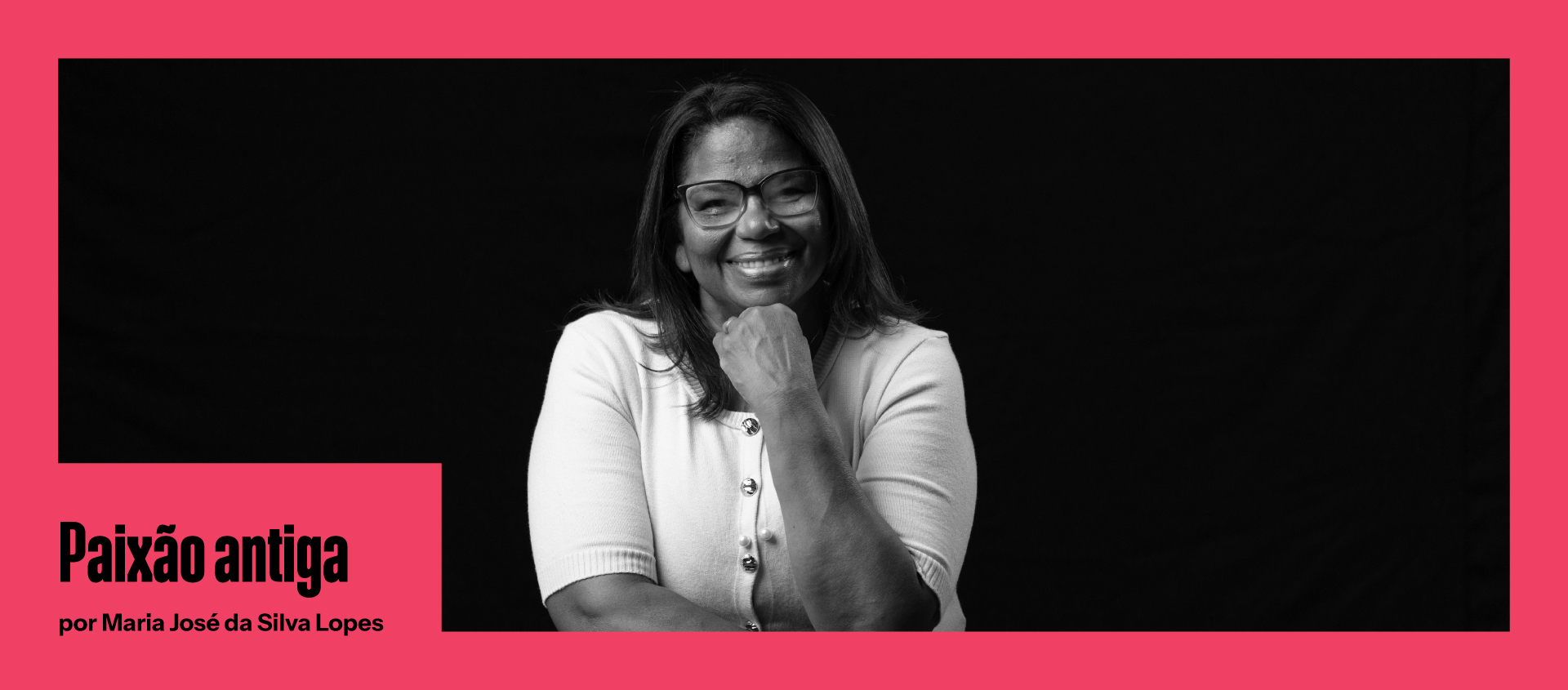
That's where I come from. I was born and raised in that city in the interior of Ceará with that name that nobody forgets: Quixeramobim.
My parents worked in the fields, and my older siblings didn't have the opportunity to study; they can barely sign their own names. Later, we moved to the city center, and I managed to complete high school – I started late, at 12 years old, in the first grade, still learning to read and write.
The city was so quiet that it was difficult to even find work. I took on cleaning jobs, babysitting, but everything sporadically. At 22, I failed high school, and that news came along with a very strong feeling that it wasn't fair for my mother to work so hard without me being able to help her.
I was always very mature and, at that age, I already understood that I couldn't settle for the same life my parents had. I was full of dreams and had a lot of courage.
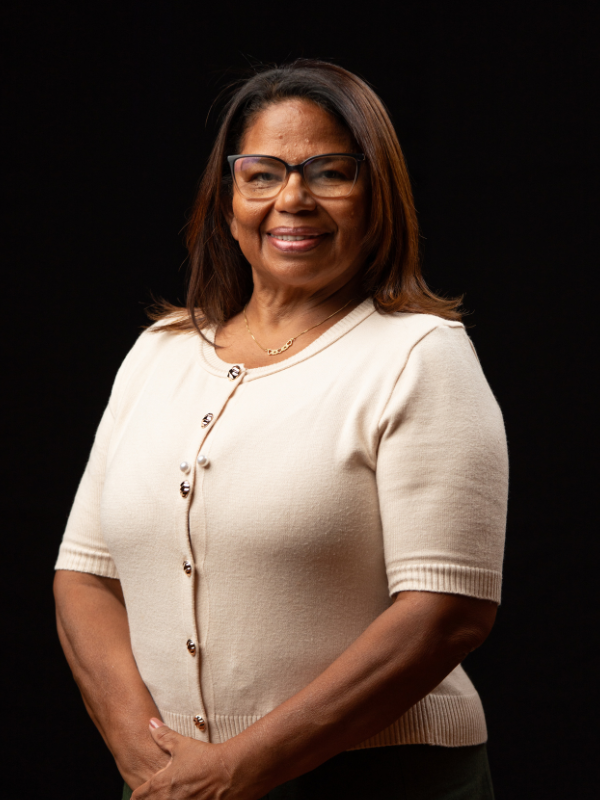
That's why I accepted an invitation from a family of friends to try my luck in São Paulo. The only problem was the money for the ticket. So I talked to my sister, we sold the sewing machine she used, and so I came, with nothing but the clothes on my back, on a bus trip that lasted three days.
Thanks to these people who took me in, while I was looking for a job, I did odd jobs finishing parts at the metalworking shop where they worked. It was welding work, but it could be done outside the company to guarantee some extra income.
I arrived in February 1986 and set myself a four-month deadline to find a permanent job. With my work permit in hand, I knocked on doors wherever I saw an advertisement: general helper, production assistant, whatever.
Until an acquaintance told me there was a vacancy at the Ipiranga Museum.
I remember writing down the address on a piece of paper and leaving accompanied by one of the daughters of the couple where I was staying. I was walking through downtown São Paulo, surrounded by so many skyscrapers, and I was still wondering:
“"Will I ever get used to this city?".
I was completely inexperienced, a "barriga-verde," as they call newcomers in Ceará. But my determination was so strong that the city embraced me, and today it's as if I was born and raised in the capital.
I started at the Ipiranga Museum as the youngest employee, and for the first three months, I was terrified of not passing the probationary period. I was very afraid of not impressing and being unemployed again. The older people used to calm me down.
Back then, we would go in without any idea of what a museum was, and we would discover it through our daily routine. Every time a teacher or educator passed by, for example, I would discreetly approach them, listening intently, just to learn about what they were saying.
The camaraderie with my colleagues was excellent. We never let a date go by without celebrating, and any occasion was a reason to commemorate. We even got together to play soccer – I was the goalkeeper – and, during the June festivals, everyone came dressed up and participated in the square dances. Every now and then, we had games with a best costume contest. I even dressed up as Pedrinho, a character from Castelo Rá-Tim-Bum, and my group even sang:
Wash one (hand)
Wash the other (hand)
Wash one, wash the other (hand)
Aside from secret Santa, we used pseudonyms and left a little box near the elevator so we could exchange messages without revealing our identities. There were many laughs because we had to retrieve the notes secretly so that no one would suspect who was who. Many times, I would see that there was a message, but I would pretend I couldn't find anything to throw off the other classmates.
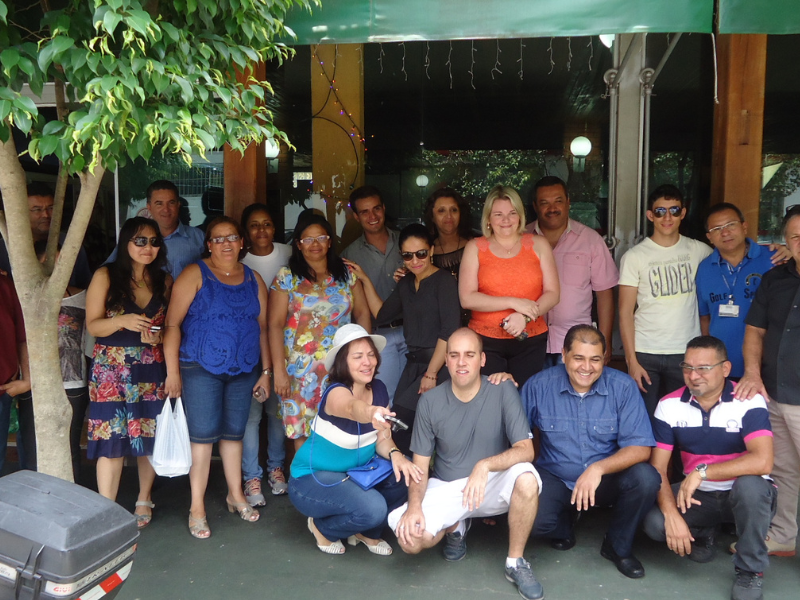
We did everything. If we needed to sweep, we swept. If there was a leak, it was a mad rush with people from all sectors grabbing cloths and mopping up the water from the floor. For the good of the Museum, we took on the most diverse tasks, as if we were taking care of a family member.
When I joined the security area, each member of the team was responsible for a single space. My room was the one with the fans, and I think I can still visualize every little bit of it to this day. Going up the stairs, it was the first one on the west side. In the back were the coats and dresses, and in front, a round display case with combs and fans – all open, beautiful. The clothes were formal attire, and the everyday items were made of such fine materials that I wouldn't even know how to describe them.
I ended up becoming attached to those objects and enjoyed being surrounded by them. I also felt a huge responsibility knowing that I was dealing with unique pieces that could never be damaged, and that made me want to take even better care of them.
And of course, almost everyone asked if the costumes belonged to the royal family – if the outfits belonged to Dom Pedro I and Maria Leopoldina and if they had actually lived in that building. We would answer no, remind them of the museum's inauguration date – 1895 – and explain that, since the Brazilian emperor had died sixty years earlier, that would be impossible.
I spent ten years in that same space and there wasn't a single day I was bored. Over time, however, we started rotating between rooms because some people didn't think it was fair to be in places considered more attractive than others. I loved where I was, but I agreed, and I confess that this led me to discover new treasures in the collection.
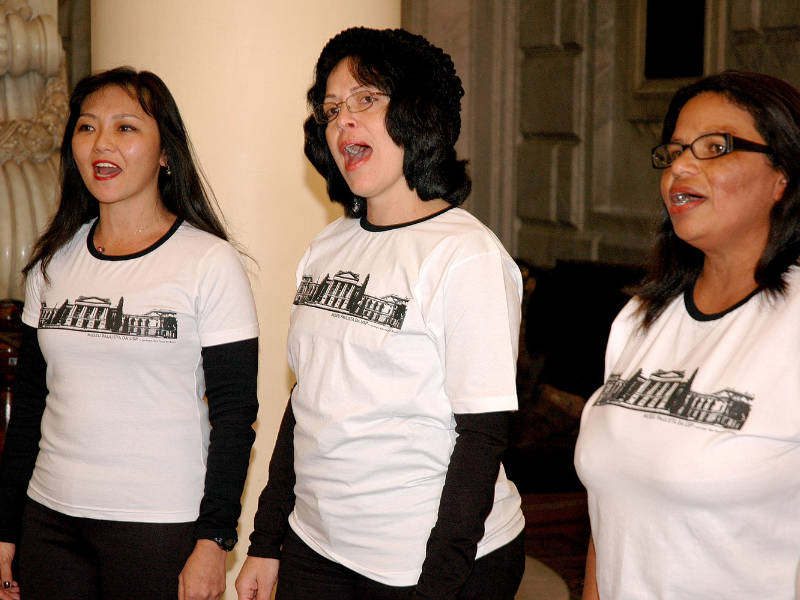
When I was standing before Carmo Floodplain, I kept noticing every detail of the painting and each time I discovered some new element. Those houses being flooded by water and the birds amidst the smoke, flying away. It seemed as if they were even coming out of the painting, as if the painting were alive.
During this change, we noticed that one employee had certain privileges and continued to have a designated spot – she was in a room with a kind of alcove behind the window, allowing her to keep a bottle of coffee and another of water there. So, while everyone else had to move around to get a drink, she remained as the "employee of the month," never missing a single minute of her work.
I dislike all injustice and always I had The courage to question. I'm not a complacent person, and when I see that something can be improved, Why not talk?If this will benefit the smooth running of the work – both mine and that of my colleagues –, I don't see why we shouldn't fight for the good of all.
I believe I have innate leadership; it's in my blood, and people see that in me too. Although I know some perceive it negatively, I think overall this characteristic is seen as positive. So much so that I started participating in the Security Committee as a representative of the security staff and, shortly after, the board invited me to lead the team.
At first I hesitated, because I know that dealing with different personalities – each wanting something their own way – requires a lot of responsibility and tact. But the management convinced me, arguing that I was the person my colleagues trusted.
And so I remained, tiny, at 1.56m tall, always defending what I believed was right for the Museum and for the well-being of all.
Sometimes it was challenging and I had to face some huge men who were almost two meters tall, but I stood firm for 16 years.
What I was looking for was balance, and my greatest satisfaction was seeing everything running smoothly, with people happy in their roles. From solely caring for the rooms, I moved on to monitoring the team, but the objective was exactly the same: to ensure that nothing was damaged in the Museum. I had to keep an eye on everything, because if something happened to an object, it would also fall on me, as it would mean that I wasn't paying enough attention.
When you become responsible for a group, the dynamics change, and you start to take care of the employees' professional lives as well, because for a job to go well, they need to feel supported. There were 22 permanent employees and 12 outsourced workers. I remember that when the museum closed due to structural problems, we needed to continue monitoring the building. I knew there was no risk and that the structure wouldn't collapse to the point of injuring anyone, but I insisted on putting myself in the same position as them.
“"I will be here with you every day and I will not leave anyone alone," he said.
Vigilance is always the last thing to turn off the lights.
Until the collection was transferred and the renovations began, we had to look after everything that was there. So, we kept going, and we set up a rotation to do the rounds and check that everything was alright.
With the reopening, I ended up being relocated to another address because they decided to divide security between the Ipiranga Museum and the properties rented for the staff and the collection. It was a tough change, and it's no secret how upset I was.
The day I was informed of this decision, the shock was immense. I couldn't even control my emotions, and today I see that I had an exasperated reaction.
I spent quite a while taking care of the security of the rented houses, but then I was invited to take on other infrastructure tasks. Today I catalog the physical and digital documents related to outsourced employees, which includes everyone from security guards to civilian firefighters. I'm enjoying what I do and very happy in this new role. At first, I thought I would struggle, but I'm learning so much and I was so well received by the team that I believe I made the right decision. Even so, I remain open, of course, to returning to the operational side if necessary.
I still haven't been to the Ipiranga Museum. However, whenever I can, I pop in to see my friends who still work in the building, and I don't think there's a day that goes by that I don't take photos there. It's on my way to catch the bus, and I take selfies near the Independence Monument, the staircase, and the fountain. To this day, I'm still amazed by what I see there.
I remember it like it was yesterday when I first walked into the building. You know that feeling you get when you fall in love and you can't even explain why? It's like Fagner sings.
My love, what will become of me?
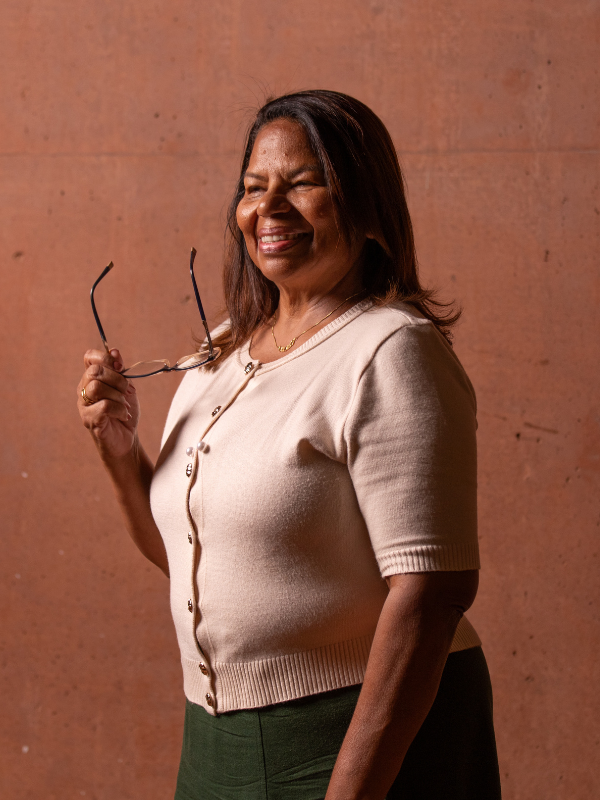
First comes the initial excitement, and then, when we realize it, the involvement is so strong that we can't detach ourselves: we want to care for and defend what we consider ours.
My connection to the Museum is so deep that it's as if I was born to work there. It's where I put down roots and learned to be who I am.
Forty years later, my passion remains the same.