
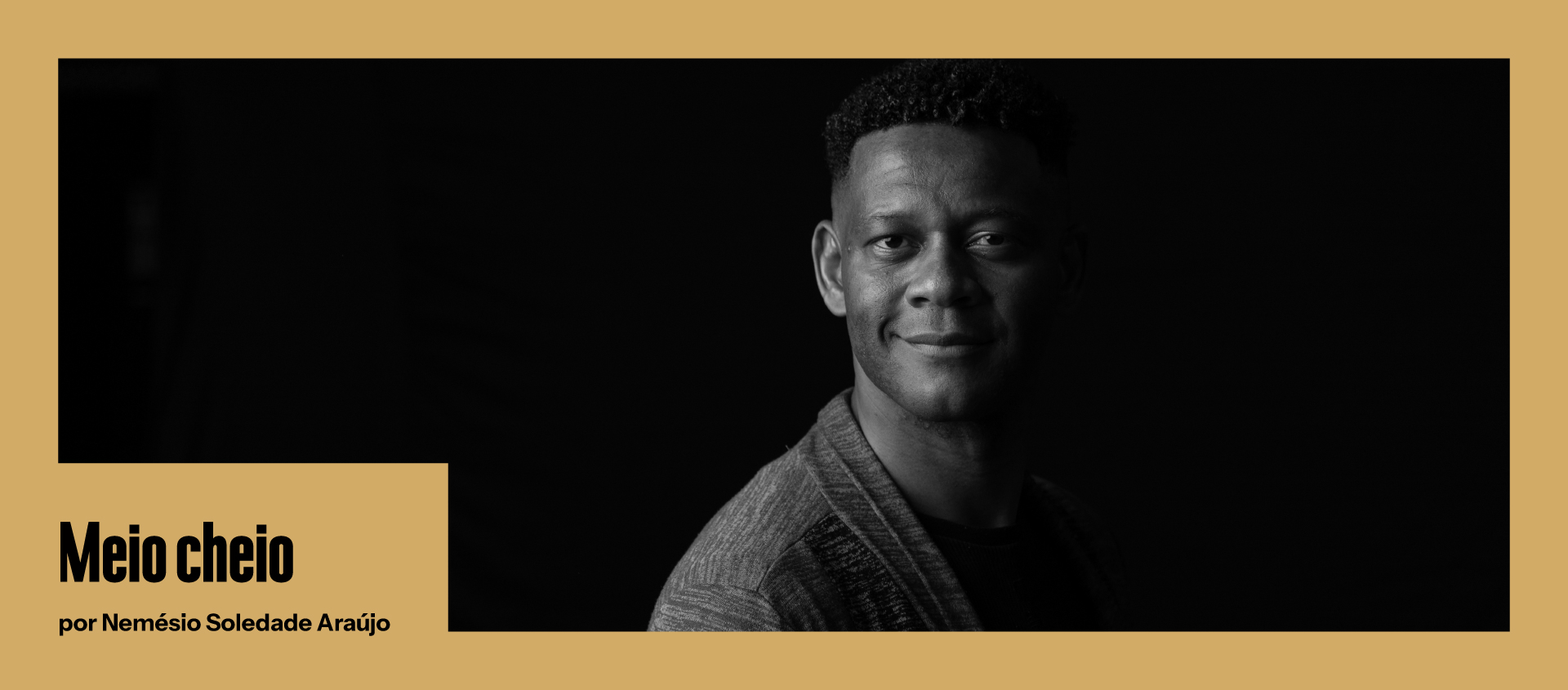
The idea many people have is that security guards don't read, don't know how to speak, and are all ignorant.
Unfortunately, this is the image of our area.
No one realizes that it takes a lot of knowledge and emotional intelligence to deal with the situations we face every day.
When I was hired to work in hospitals, the biggest difficulty was managing the raw emotions of patients' families and friends. I had to control, for example, the excessive number of visitors. Sometimes with three, four, or five people wanting to enter the room at the same time.
I was looking for empathy. The secret lies in how you communicate.
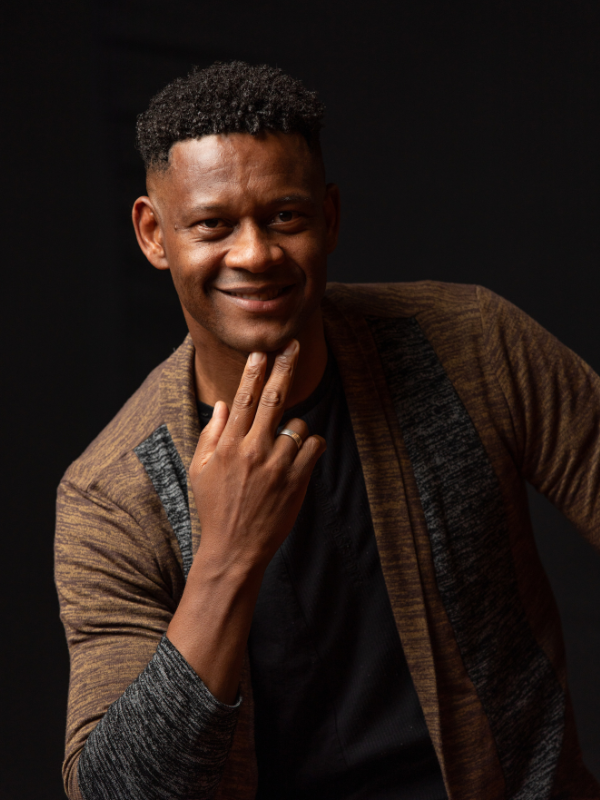
I know that in some places, what is expected is similar to police work. But not here in Ipiranga, because we feel that we are at the service of the public. I think that's what made me identify so much with this job.
The museum requires another language, another type of communication.
It's funny to think that I spent so much time looking at the building from the outside and fantasizing about what it would be like inside, without ever dreaming that one day I would be in it.
The first time I walked past Ipiranga, I saw that huge building. I never dreamed of working here. I just imagined:
What should it be like inside?
Did D. Pedro live here?
They said he's buried around here?
And what about Maria Quitéria's body, my fellow countrywoman? Do you think it's anywhere too?
It wasn't common to come to this part of town – I live in Guaianases, in the East Zone. The trip takes no less than 1 hour and 30 minutes on a good day. But when my sister was hospitalized in a hospital near Ipiranga, I often passed by the Museum with my nieces.
We stayed outside, posing in the garden and admiring the expressions and movements of the figures depicted in the Monument to Independence.
Even with everything we were going through, it was impossible not to be enchanted by the beauty of the building.
I had never been to a museum before. I came from Bahia to São Paulo when I was 18.
As soon as I arrived, I found my older brothers were already employed and I got my first gig as a drywall helper. The work wasn't bad, but I ended up being influenced by a cousin to move into security.
“You're tall, you have presence,” she told me, and I went.
I just didn't imagine the challenges.
At the São Paulo Metropolitan Trains Company, for example, my main role was to combat the work of street vendors, the hustlers. I felt like I was in a cat-and-mouse game. We trying to keep them away, and them always finding a way to come back.
When I saw them setting up and taking everything down quickly, often cornered by the police, I also thought that they were there, like me, trying to make a living.
I know I have the height and build, but I've never been a confrontational person. Everyone says I always have a big smile on my face, and I learned from my parents to resolve everything peacefully. So, I was thinking:
Do I really need to use force?
The courses for working in the security field are regulated and supervised by the Federal Police. I think in the past, schools followed a regime similar to the military.
We had to be ready to apply force gradually. That is, if the warnings didn't work, we could proceed to light restraints, batons, and even firearms. This, of course, if we had permits and authorization to carry them.
Even so, in all the spaces where I've worked, I've always sought dialogue. I'd put myself in each person's shoes and then guide them in the best way possible.
That's why I like working here so much.
When I first entered the Ipiranga building, I had no idea of the size of the space, nor even what a museum was.
I was surprised by the architecture and couldn't stop thinking about how they managed to build pillars so tall back then. I also couldn't believe it when I found out the place didn't just hold the painting. Independence or Death and a collection of over 400,000 items.
I was completely amazed and finally found myself.
It all happened because my wife got pregnant and I went to ask my supervisor to get off the night shift where I worked. I had no idea I would be going to such a different area, but he presented me with the possibility of choosing between three spaces: the Museum of Contemporary Art, the Maria Antonia Center, and the Ipiranga Museum.
I confess that I had never heard of the first two, but when I heard “Ipiranga,” I remembered my trips to Guaianases and replied that that was where I would like to be.
Unlike other places I've worked, where people were just passing through and didn't intend to stay long, at the Museum visitors come looking for stories. I love sharing information and talking with them.
I know that, as security, I can't get ahead of myself thinking I'll be teaching, but I need to have a minimal understanding to guide the public. And everyone who arrives asks:
“Where are the carriages?”
“Why are there no more clothes?”
I explained that the collection is large and that we cannot display all the objects. I also told them that they will understand more about Brazil and the place they occupy in the construction of our country.
Then they ask me:
“How long will it take me to see everything?”
I'd say it depends on your point of view and what interests each person most: the architecture, the French garden, the objects on display. And I'll also ask another question:
“How will you look at the painting of D. Pedro?”
I think this way I can inspire imagination and make the visitor understand what it means to visit a museum.
I don't forget when I entered the Noble Hall for the first time and looked at Pedro Américo's painting.
I saw those men, well-dressed, with swords raised, and some horses rearing. The image that remained with me was of great strength and courage. They weren't just soldiers on horseback, but a scene that said a lot about everything we can have.
It was in light of this situation that I understood independence is in our heads and that we can achieve it from the moment we think we can win.
In the museum's daily routine, I feel I learn a lot from interacting with the educators. With each new exhibition, they conduct a tour with the security guards.
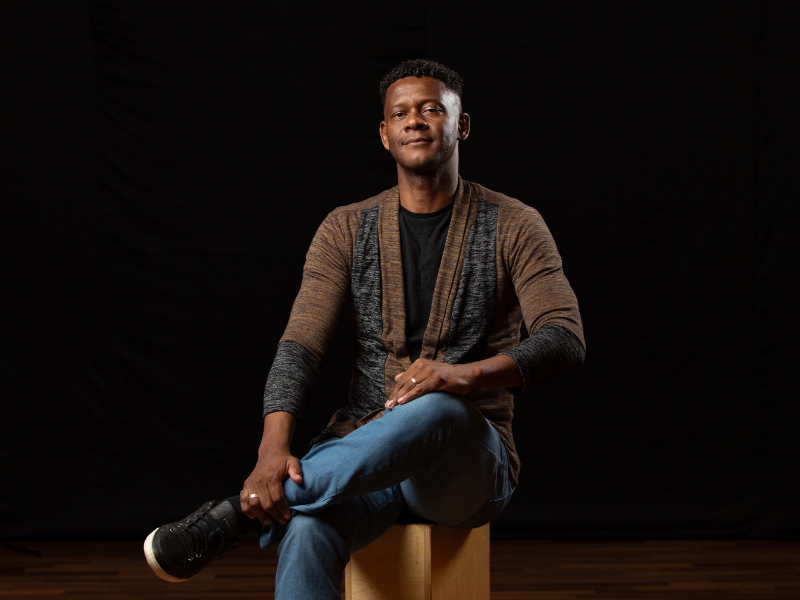
It is through their gaze that I can see beyond what is in paintings and photographs. In the exhibition “Debret in Question,” for example, I noticed how many artists value suffering more than joy. I prefer to see the glass as half full rather than half empty. Debret chose to show enslaved people carrying their masters and being whipped. These are abusive situations from the time, but others prefer not to portray Black people in that way anymore. Like Gê Viana, who depicts them in a festive mood.
It's a struggle that has lasted over 500 years, but within it, we can find happiness.
And that's what I feel when I'm at my post.
Sometimes it happens that, between one piece of information and another, I remember my father's face.
It's curious.
He died at 91. When I was born, he was 83. His birth certificate is from 1898, a few years after the Museum opened.
This is why I remember him. The world in which Ipiranga was built was his world.
From then on, my mind goes to my hometown in Itabuna, where I was born and raised and from which I left 26 years ago – the youngest of six siblings, and the last of them to move to São Paulo.
There, my mother ironed our shirts with the same iron that is now in the display cases of the “Homes and Things” exhibition. The porcelain plates and mugs were also similar to the ones we used, and the spring beds we slept on were identical to those I found in the Ipiranga collection.
In Bahia, the houses are larger, have high ceilings and a backyard. They bring something of the freedom I found in the Museum, this way of mine of seeing the world beyond suffering and sadness.
So, every day when I come to work, and I interact with people from all over the world – China, Japan, Canada – who come to learn more about Brazil's history, I feel like they are learning a bit of my story too.
It's a reunion with the boy I was, who for a long time believed that the beauty of life was in the simplicity of playing soccer and bathing in the Cachoeira River.