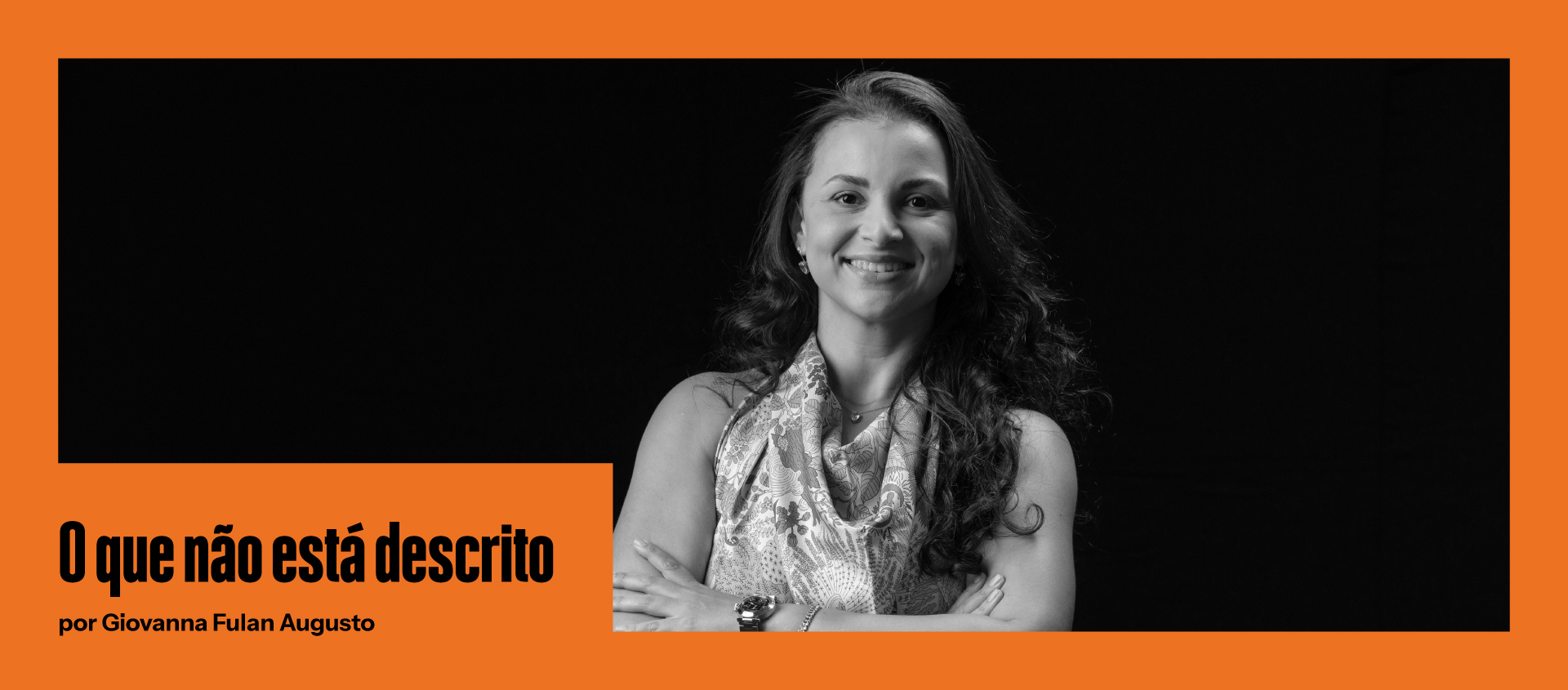
When I heard about the job opening at the Republican Museum of Itu, I had just turned 18 and had no idea what it meant to work in a museum, much less what the position of documentation technician entailed.
I had been financially independent since I was 16 because I participated in the Young Apprentice Program, but as soon as I saw the job opening, I thought it could be interesting because it was a civil service position. I can't say exactly what caught my attention in the job posting, but my mother's experience as a state employee certainly influenced my decision, as I grew up seeing the stability, benefits, and recognition she had.
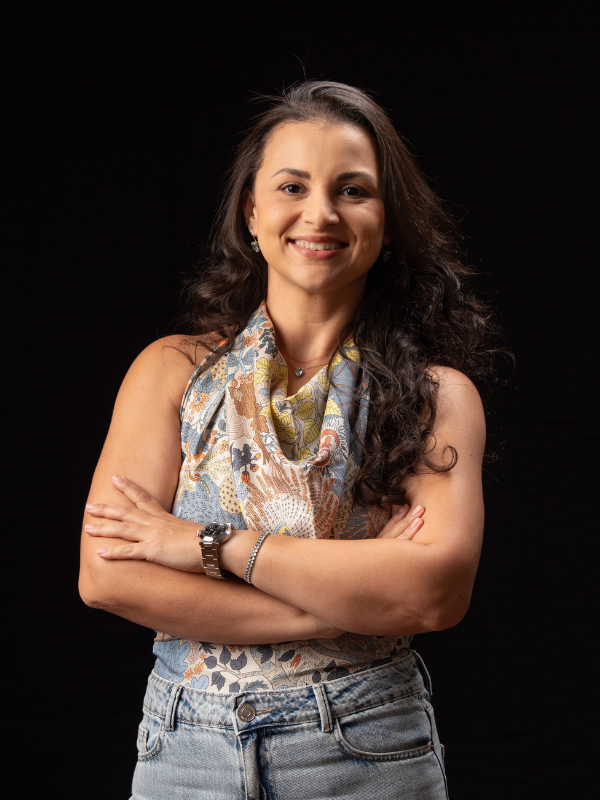
It was only through practice, however, that I began to understand what it meant to be a civil servant in a library within a museum space.
My first job at the library was with the Prudente de Moraes Collection, applying barcodes to the entire collection. It was days and days repeating the same gesture, label after label.
I had barely finished working on the Prudente de Moraes collection when I was already faced with another task: cataloging Professor Edgard Carone's publications. There were 27,000 books and a single mechanical stamp to number the entire collection. As if that weren't enough, the machine was old, malfunctioned, and required disproportionate force, more ink than it should have, and extra care to prevent the excess from spreading across the pages like an irreversible stain.
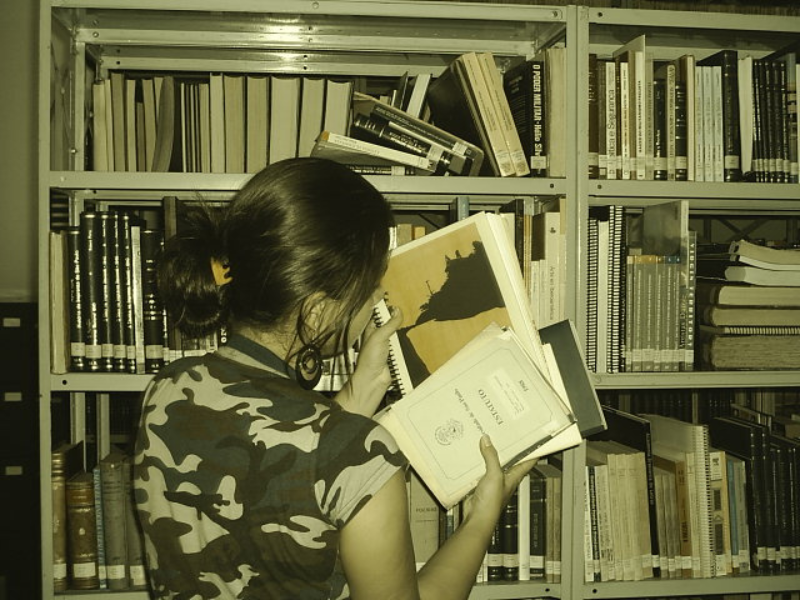
Furthermore, many books arrived covered in a fine, whitish powder. Only later did I discover that it was benzene hexachloride, a toxic insecticide banned since the 1980s, but which was still present in the Edgard Carone collection.
I worked eight hours a day, went to college at night, and kept going without a break. Even so, the constant contact with books kept opening other doors: with each page turned, a curiosity arose that I pursued during my lunch break.
Lee The Capital, It included Marx's works, and a multitude of texts about the military dictatorship, but also etiquette manuals and travelogues. It ranged from publications with images of torture and injured faces to meticulous descriptions of how to dress or behave at social events.
Since the readings took place during my lunch break and I couldn't take the materials home, I wasn't able to read the entire volumes, but I would stop at various passages of everything that interested me before putting the publications on the shelves or sending them for cataloging.
It was always like that – one book leading to another. “This one looks good,” I’d think. “I want to take a closer look.” And, little by little, I acquired knowledge about completely different subjects, since more than 30 different titles passed across my desk every day.
During that period, I also participated in the organization of three seminars and even developed the visual identity for two of them. For the first, without any resources, I resorted to Paint, which was a basic editing program. For the second, I managed to secure a Photoshop license with the IT team and was able to produce something more sophisticated.
Furthermore, I used to actively participate in the administrative committees, either as a full member or an alternate, and we met every week to discuss all sorts of matters: we talked about security, rules for using the space, institutional partnerships. Since the Republican Museum is a small institution, everyone did a little bit of everything, and I got involved in everything that was within my reach.
Not to mention all the events I signed up for. They were courses related to paper conservation, bibliographic collections, and anything else that could be related to my field. I traveled to Campinas, São Paulo, and spared no effort to learn more.
Although the work involved some mechanical tasks, I enjoyed what I did, but after five years, I had no intention of continuing in the field of library science and felt I could contribute more to the Museum.
I wanted to explore other possibilities. And that's exactly what happened when I moved into the documentation area and took a year-long course on file organization, which gave me a foundation of knowledge about documentary collections. I stayed there for seven years, until I moved into iconography, where I could delve even deeper into that world. When I started, I realized that a large part of the collections were still not organized, and many items did not have their contents identified or listed. In iconography, as in documentation, the organization of documents follows a logic distinct from that of a library, where each item is treated individually.
We had about 6,000 minimally described pieces and, alongside them, an average of 9,000 items about which almost nothing was known. Therefore, I took on this task and developed a project to organize the iconographic collection. Then, with the help of two interns, we began opening box by box, with meticulous attention, not only to describe and specify what until then had only been suggested, but also to carry out the cleaning, registration, cataloging, and finally, digitization of the collection.
Before that, I had a client who was looking for a photo of a city square. He needed to reconstruct the facade of a house listed as a historical landmark by CONDEPHAAT, but which had been demolished, and he was looking for some reference to what it had been. We searched and couldn't find it. Only later, with the reorganization of the collection, did the image appear, but by then the house had already been rebuilt and I can't say what materials they used to develop the new project.
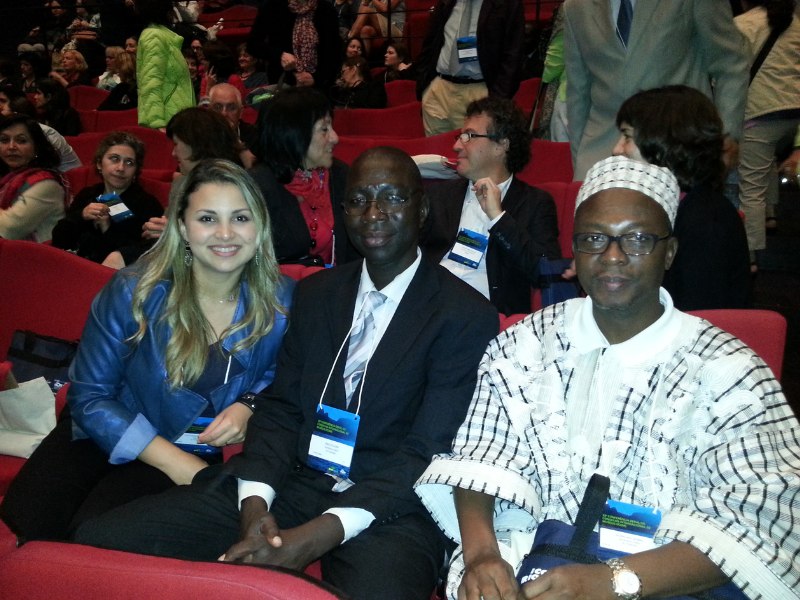
I've been reorganizing the collection for three years now, and I've invested all my knowledge in this task. It's not just about listing, but about registering each item within a system that allows it to be found by other people after me.
It's still partly manual labor, but interspersed with a lot of research. And it's at that intersection that things start to emerge.
Initially, my knowledge of the Museum was very basic. Nothing beyond the fact that it was housed in the two-story building where the Republican Convention of Itu took place in 1873, and that this meeting was the starting point of the republican campaign and the Paulista Republican Party.
It was the essential knowledge learned in school. But, when you start consulting the collection, that initial outline quickly dissolves and other layers emerge. In this process, for example, we discover a series of information that helps the users, the curators, and the entire Museum team. To give you an idea, when the booklet "Gallery of Portraits of the Convention Officers of 1873" was launched in 2018, this process had not yet begun, and the photograph of Elias Lobo was not included because the material was not organized and we had no knowledge of it.
So this is just one example of how our work serves as a basis for research, since it is in our work that information is gathered, organized, and supported so that others can later follow from there.
As soon as I started at the Republican Museum, I was met with two surprises.
The first is the connection between it and the Ipiranga Museum, which together form the Paulista Museum. The second is the discovery that both were administered by the University of São Paulo.
Later, I recovered the memory of the first time I was at the Ipiranga Museum. It was a full day, on a school trip: we also went to Ibirapuera Park, we walked through Independence Park. But what remained was that feeling of not being able to grasp everything at once and, above all, the curiosity about the people who worked there.
One thought kept running through my head:
“"Wow, it must be amazing to work here!".
“"What do I need to study to work in a museum?"”
In the end, I studied electrical engineering – a field I never practiced professionally – while I was actually getting closer to images and cataloging, which ended up occupying a different place in my career path.
I am very proud of what I have learned over these years, because I see a body of knowledge built little by little, with effort, and which encompasses both the conservation and organization of the collection. I think the memory of the impression I had on that first visit to the Ipiranga Museum has accompanied me, in some way, throughout my career, because even today I am surprised when I realize that, in the end, I also work for this institution.
Therefore, whenever I can, I like to reinforce this relationship and say with great satisfaction: I work for the Republican Museum of Itu, for the Paulista Museum, and for USP (University of São Paulo). For almost 20 years I have worked in a public institution, directly involved with the documentation, organization, and preservation of historical collections.
This is where I recognize myself today: participating in the construction of history, memory, and access to knowledge.