
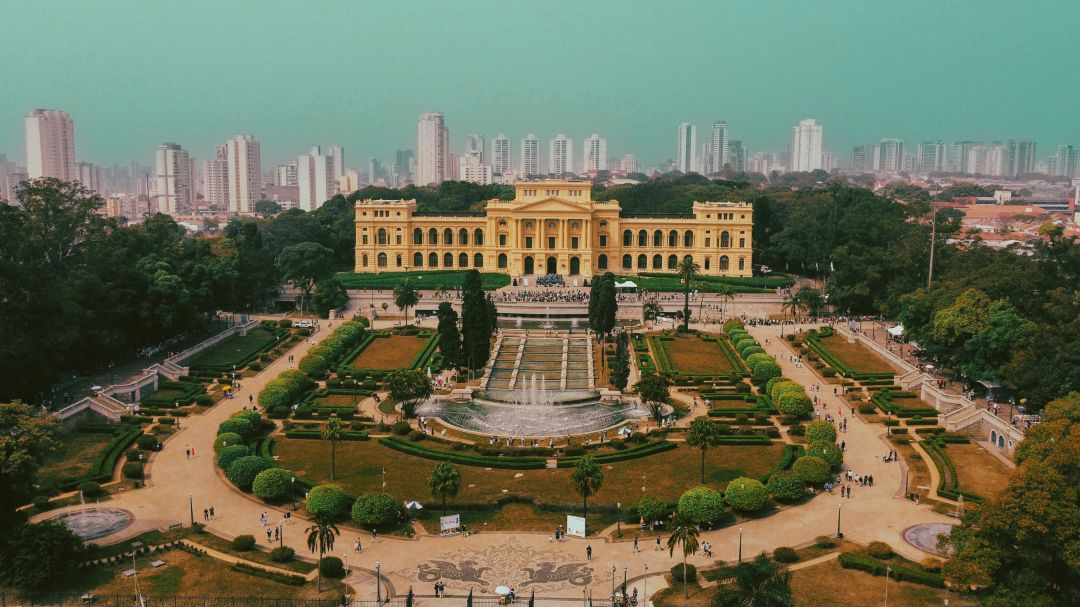
The Ipiranga Museum is offering 5 special student positions in the elective courses “Afrodiasporic Material Culture in History Museums and Cultural Policies” and “Duty of Memory: Museums and Heritage in Addressing Difficult Histories.”the University of São Paulo.
The opportunity is intended for undergraduate and graduate students not affiliated with USP. Classes will be in person, in Classroom 1 of the Ipiranga Museum. Upon completion of participation, students will receive a certificate.
Registration is open until July 25th.
Interested parties should request registration by email acadmp@usp.br.
Afro-Diasporic Material Culture in History Museums
The discipline proposes reflection on the representation of the Afro-diasporic experience in history museums, analyzing how these institutions address themes such as slavery, post-abolition, and Black agency.
Through case studies of traditional museums and those dedicated to Black history and culture, this research seeks to understand the role of museums in constructing historical narratives, discuss their self-critical processes, and highlight anti-racist and decolonial initiatives in curation and exhibitions.
The syllabus, in turn, analyzes the historiographical production and curatorial practices of history museums, focusing on the representation of the Afro-diasporic experience.
By comparing traditional museums with institutions dedicated to Black history and culture, this study aims to discuss the narratives constructed about the Black population in Brazil, their continuities, ruptures, and the contemporary challenges for more inclusive and critical curatorial practices.
Presenter: Professor Dr. Aline Montenegro Magalhães
Classes start August 12, 2026
Time: Wednesdays, from 2 PM to 6 PM
Cultural Policies and the Duty to Remember: Museums and Heritage in Addressing Difficult Histories
The course discusses the role of museums and cultural heritage policies in addressing difficult histories and traumatic memories, focusing on the valorization of narratives from marginalized groups. It also analyzes the social function of these institutions in promoting citizenship, human rights, and memory.
In addition to addressing the evolution of museums and cultural heritage policies, from the construction of national memories and imperialism to contemporary debates on heritage, human rights, and social justice.
With an emphasis on the post-1988 Brazilian context, analyze initiatives focused on the memories of colonization, slavery, indigenous peoples, and human rights violations during the civil-military dictatorship.
Presenter: Prof. Dr. David William Aparecido Ribeiro
Classes start August 7, 2026
Time: Fridays, from 9 AM to 1 PM