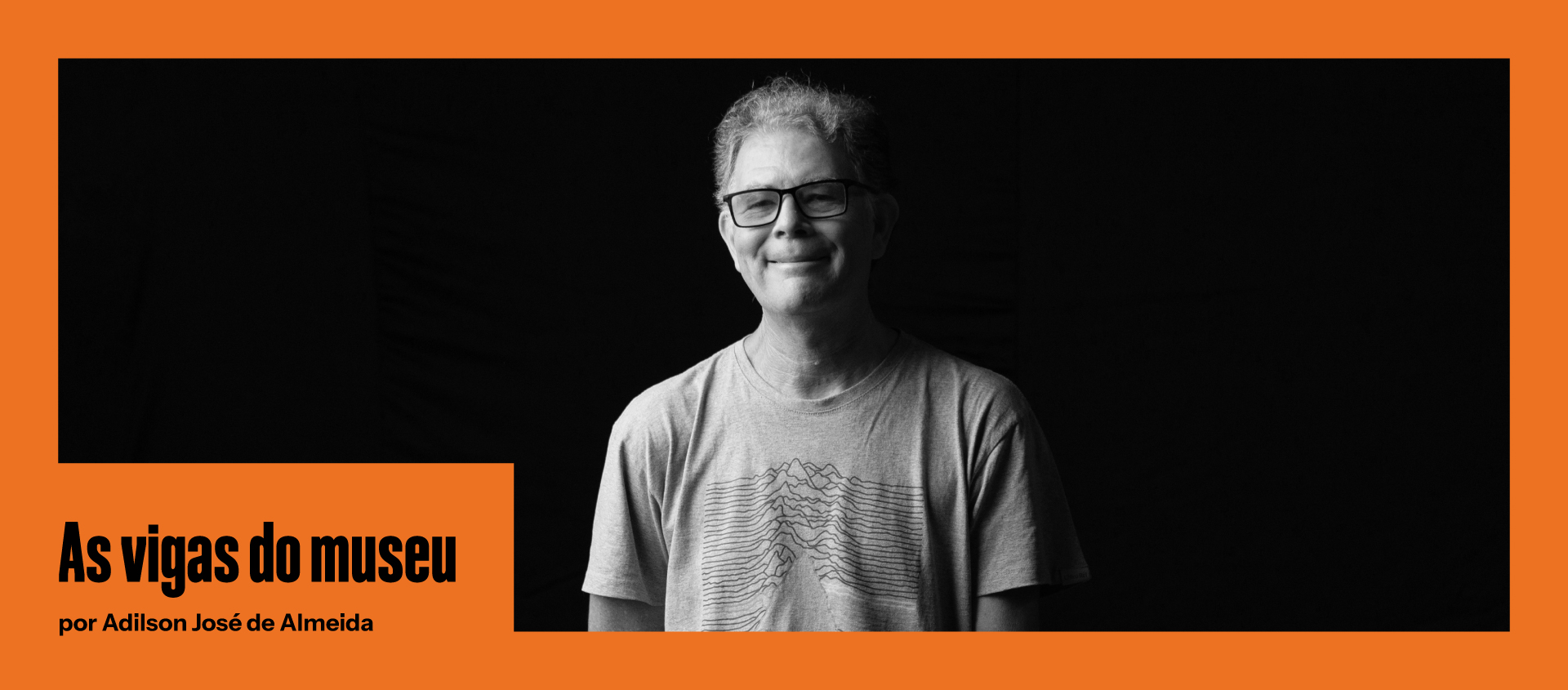
I live facing a silent mountain range, with that typical calm of the countryside. It's an exuberant green landscape, but common on the border between São Paulo and Minas Gerais. My wife and I chose Joanópolis because the city was close to a region we had been traveling to our whole lives, and our plan was to move there much earlier.
We built our house and calculated everything so we could retire at the same time, but just as our plans were about to happen, the Ipiranga Museum closed, and the discussion turned to the changes needed for its renovation. We all wanted to see the institution functioning again, and I decided I wouldn't leave without participating in that process. It would be my last major project within the Museum, and it would only end with the reopening.
It was nine years of work, from 2013 to 2022.
Before, I had already participated in two important moments of transformation.
The first, in the early 1990s, was when Professor Ulpiano Bezerra de Meneses took over as director, and we – from the then technical-scientific teams – developed the Master Plan. In it, we defined that our specialty would be the History of Brazil and Material Culture, with research lines on Daily Life and Society, the World of Work, and the History of the Imaginary. What this meant, in practice, was that we had the role of understanding society through its objects, images, and written documents. However, before reaching that understanding, there were countless discussions, with equally basic and complex questions about what it meant to be a history museum, what our mission would be, and how we would achieve it.
Then, in 1997, we updated everything that had been developed. I remember we were in a lively debate, with several different drafts circulating among departments, and I took the initiative to bring all the points together in a single document, and I think that organization was essential for us to move forward.
There was a time when we discussed everything collectively. And one episode that really marked me during that period had nothing to do with academic or administrative issues, but rather with a strike. The University of São Paulo units, which is the institution that administers Ipiranga, were demanding labor improvements and, since the demands were not being met, we decided that the Museum should close its doors.
It turns out that the board of directors of Ipiranga and the university's rectorate did not respect this choice and sent security guards into action to stop us. I was in favor, but regardless of my position, I believed that the will of the majority should be respected. I then remember running to the entrance door, placing a bench in front of it, and saying that I would not leave. In the end, they were forced to give in, perhaps because they realized they would only remove us by force, if they pulled us by the neck or by the foot.
We had a series of conflicts, but also moments that showed great unity, and it's that memory that remains when I think about everything I went through at the Museum.
I lived my life in the rooms and hallways of that building, and from my first day on the job, still as an intern, I knew that everything I wanted for my career was there.
I initially joined to stay for a year, and as soon as that period ended, I started hatching elaborate plans to remain. I even looked for a night job, thinking that with my bills covered, I could continue volunteering at Ipiranga during the day. Fortunately for me, a position opened up two months after my contract ended, and I was selected.
I started working with Professor Miyoko Makino on a data research project to gather information about lithics – which are objects made of rocks and minerals. The interesting thing is that during this research, I was able to locate a piece that had been missing for years. It was at the institution, but no one knew where.
It was Gumercindo Saraiva Stone, ...who was one of the commanders of the rebel troops during the Federalist Revolution in Southern Brazil, and it had been listed in the collection because it was a sort of tombstone or marker linked to this political leader. However, at some point, someone stuck a label on it to identify the screen. São Paulo Foundation. The stone was placed beneath the painting and came to be seen as a kind of monumental caption for Oscar Pereira da Silva's work. All I know is that, while going through the exhibits with extra attention to anything made of stone, I caught sight of it and saw it was a listed piece, precisely the one that had been missing for almost three decades. Situations like this can occur in institutions, but careful management of collections always corrects them.
Throughout my time at the Museum, I've focused on historical research. Both during my master's and doctoral studies, I sought to explore aspects of the institution that were being neglected. We have a very rich collection of porcelain, but there were already enough researchers dedicated to it. For our collection of military uniforms, on the other hand, no one was looking. And the same was true for the collection of weapons, which total around 500 items.
My master's thesis, therefore, was about the uniforms of the National Guard from 1831 to 1852, with the aim of understanding how clothing interferes with the organization and functioning of an armed association. In my doctoral thesis, I addressed a slightly broader period, studying the operational methods of the Brazilian Army during the Empire, between 1842 and 1870. The focus wasn't specifically on weapons, but I was able to include important data regarding them. I noticed that, over time, they transformed into machines, with increasingly rapid firing. And aesthetics, as incredible as it may seem, also began to become increasingly present, with a series of ornaments that started to accompany the weaponry.
This idea is very powerful: an object loaded with violence, made to harm, that gains social acceptance because of its beauty.
I never had any affinity for military uniforms or weapons. On the contrary, I grew up during the dictatorship, and talking about that subject was considered horrific because it was linked to all the violence we suffered. What I felt, however, was that I was facing important material in our collection and that it was not being properly studied. I had a theoretical objective and an institutional responsibility to develop research on the objects that were part of the collection, as a way of thinking about history.
My main concern was to build a career path that wouldn't be redundant within the Museum. I started in a mid-level technical position and then moved to a senior technical role, but I chose not to go into teaching. Teaching is a time-consuming activity, and I certainly wouldn't be able to dedicate as much time as I did to what has always been my focus: the collection.
During the period when Ipiranga was closed, my work followed the same direction, because to get to exhibitions that present critical thinking, the collections need to be well-documented.
I wanted to contribute to the Museum promoting reflections based on a structured database with information. I also knew that the institution had a series of extremely qualified professionals who were focused on exhibitions, and I thought it would be more valuable if I could ensure they had access to historiographical research materials.
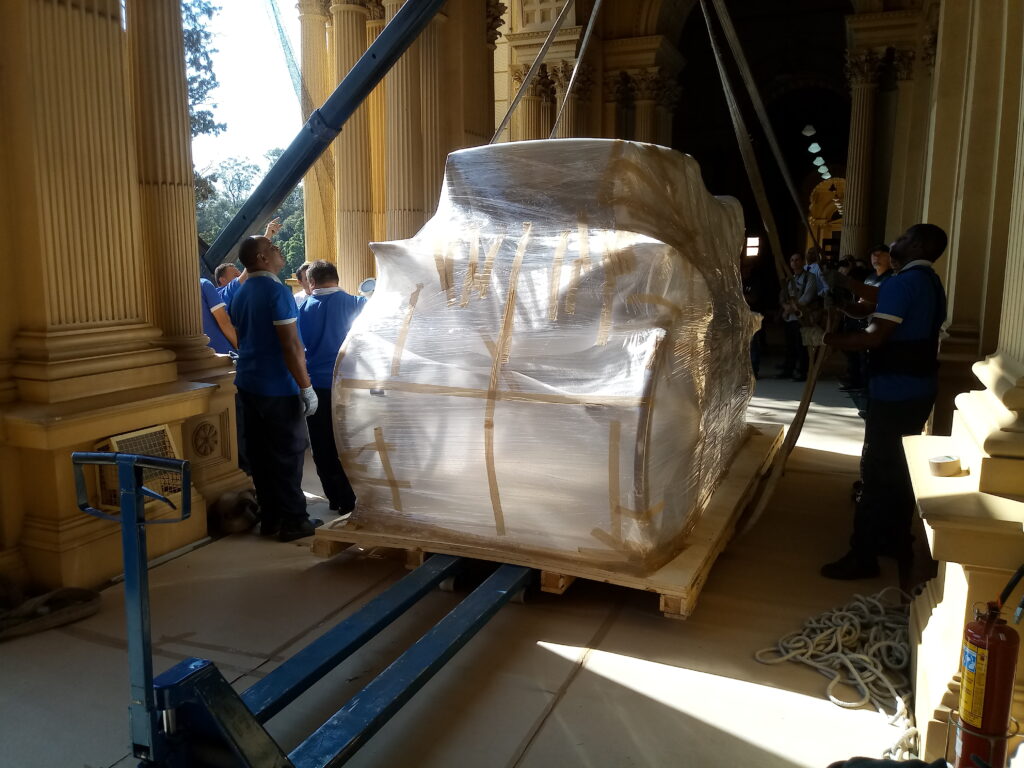
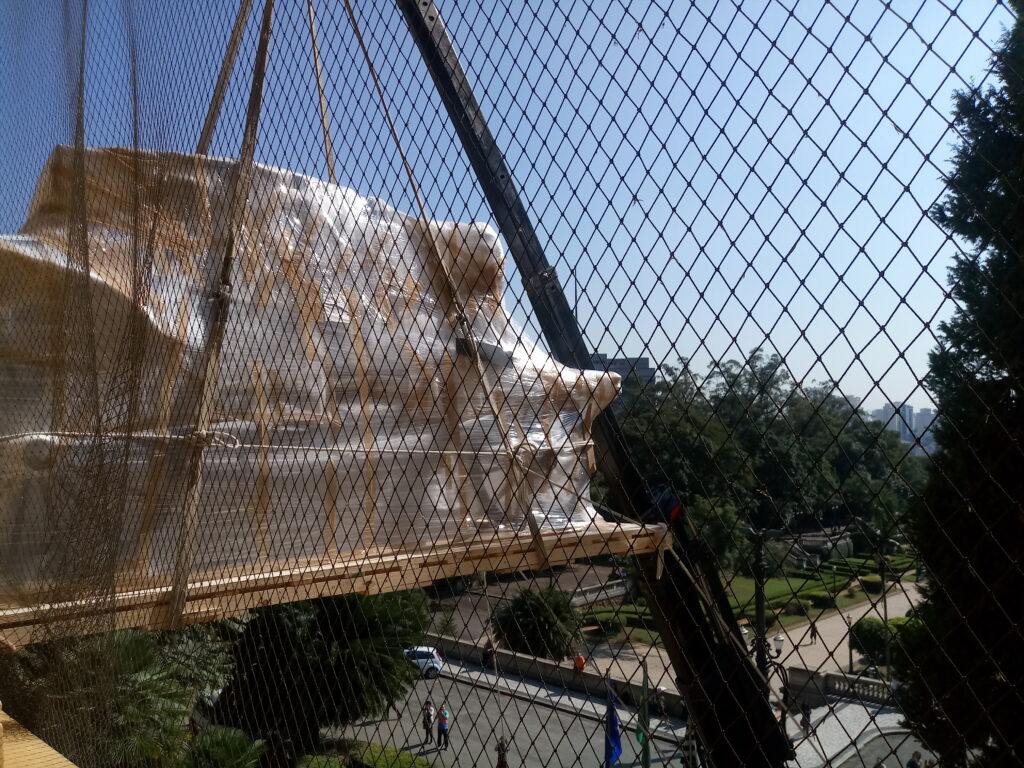
I focused on the incomplete data. Ipiranga has a huge stone bathtub, which must weigh approximately 200 kilos, but no one knew anything about it. In the research process, I discovered that during the Empire, when the monarch visited cities, families used to accommodate him with great distinction, and this was an object made to receive him, with the idea of making his reception more special.
It is information that makes sense of certain political and social practices of a given era, but which can only be worked with if you have knowledge of it.
When we talk about a museum, we're referring to a tripod made up of its collection, its public, and knowledge. Therefore, it's impossible to understand it without reflecting on what objects it possesses, what kind of public visits it, and what knowledge we want this public to encounter. Anyone who works in an institution like this, whether they are educators, technicians, or senior staff, needs to keep this trio in mind.
It's as if before tackling the exhibitions and content that visitors will see, we need to prepare the backstage – a kind of padding for the mattress, or beams for a building.
It was precisely in this task that I sought to involve myself for all these years, creating a solid base of information so that teachers and attendees could access and critically think about the country's history.
I know this choice delayed my retirement, but the few times I visit the city and see what the Ipiranga Museum has become, I feel proud of how I contributed, putting my knowledge at the service of society. I feel that after so many years, I can finally follow my desire to live in the countryside and contemplate, firsthand, the nature that the paintings always seek to portray.