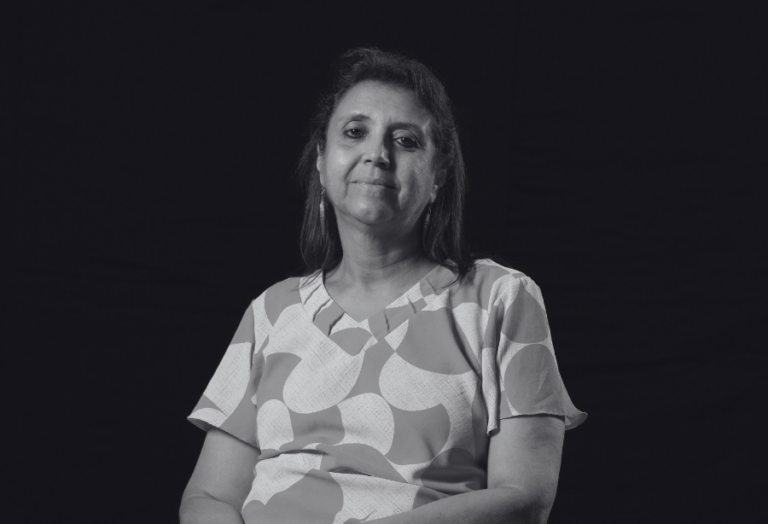
When I was a History student and didn't have much of an idea about the field I would work in, I made a list of places where I could try to get an internship and included on it... Museum from Ipiranga.
I already knew about Museum from her school days, and she had been completely captivated by the building, she just didn't know exactly what kind of role she could play in it.
Even so, I organized my resume and went, in the old-fashioned way, to deliver it in person. Luckily, the Human Resources employee informed me that there would be an internal competition in a few days and asked if I was interested.
I don't even know how many people were competing, but I passed.
I started on September 11, 2001, the same day as the attack on the Twin Towers in New York, a date that, for anyone who lived through that moment, would forever remain in their memory.
It wasn't a typical reception, of course. No one could talk about anything else without believing the death toll and the images circulating of the attack. Therefore, it wasn't until two or three days later, when the shock had subsided, that I understood what my tasks would be and processed what it meant to work in a museum.
I was there to assist the public. We would receive the researchers, discuss each one's line of research, and sort the material.
I'll never forget when one of the clients asked to see Father Anchieta's letter. It's a document from 1579 that was only found in 1926 due to an auction in London. To give you an idea, the writer Mário de Andrade and other modernists launched a campaign and managed to raise 200 pounds (the equivalent of 30 sacks of coffee at the time) to buy the letter and bring it to Brazil.
Because of its preciousness, the correspondence was kept in a safe and could only be accessed in the presence of at least two people. I never imagined that the Museum could have something like that, so much older than Independence, but when I saw the original signature and all the historical weight it carried, it was an indescribable emotion.
I became so involved with the researchers' requests that I began to realize the need to better organize the collections to meet their demands. I couldn't stay still in just one area, so I ended up migrating quickly to cataloging. From there, I went through curation, administration, and ended up assisting the director, which is where I am now.
Early in this journey, one of the most memorable moments was when I worked with Professor Paulo César Marins on the exhibition "Images Recreate History." It was the first time, within the Museum, that I collaborated on a project from beginning to end: from the funding request to preparing the guest list and the opening buffet.
While participating in the curatorial process and discussing aspects ranging from research to visual communication, she was also involved in the operational side, handling accounts and making payments.
He followed every decision: he gave his opinion on the color palette of the prints, the arrangement of the display cases, and aspects related to the cleaning of the works and the need for restoration. When you put together an exhibition, you are not only aware of which items from the collection will be on display, but you also become fully informed. of the steps involved in keeping the museum running. And that led me to focus my interest on the administrative side.
This experience, in some way, also transported me back to my father's work, who was a toolmaker at Ford. He spent his days on the assembly line, manufacturing and adjusting the parts for the machines that assembled the cars.
It was the time of the explosion of the labor movement, with the metalworkers of ABC Paulista, and within the company, my father actively participated in the Factory Committee, which is what the associations created by the workers themselves are called. I grew up seeing how he positioned himself, organizing struggles and demands for the improvement of the conditions that everyone faced. And I think that, in my case, the flow of production appeared in an even broader way, making me see the role of each worker within the Ipiranga machine.
At the same time, at school, I had a teacher who taught me immensely, and in her classes, I learned what power relations were and how it was necessary to confront them in order to change the course of events. Through the way she contextualized Brazilian history, for example, I understood that Dom Pedro I didn't proclaim Independence because he had good intentions. I saw that there was much more behind that act, and what was hidden in the background were the people who had fought for it to happen.
What is told in books, through the eyes of a few protagonists, is what is actually created through the actions of many.
Inside the museum, I noticed that my motivation wasn't in research – which is probably why I never wanted to do a master's or doctorate. In the exhibitions I participated in, as soon as I started reading the references, my mind was already focused on what needed to be done within the proposed framework. I didn't want to be discussing theoretical issues when I had a concrete leak problem to solve.
My desire was to create tools that could improve the present lives of people within the institution. And, in administration, I realized that it was possible.
It was as if I was suddenly able to connect with different areas, since administrative and financial issues permeate them all – and I was dealing with environments as diverse as the warehouse and the carpentry shop.
Because of this involvement, I ended up being invited to take on the role of assistant director. It was a position with no extra benefits, a role that was being created at that moment in exchange for, I don't know, any prayer or positive thought.
I had been at Ipiranga for ten years. There was no more room for growth, and at the same time, I wanted to take on new challenges, whatever they might be.
All I know is that, suddenly, I found myself representing the Ipiranga management in endless meetings that included members of the University, the construction company, and other companies managing the renovation and restoration of the Museum building, which began in 2019. And this happened in the middle of the pandemic, with everyone online, discussing the number of micropiles that should be placed during the excavation process.
Alongside architects and other professionals, I participated in discussions on topics outside my field, but what I said at each meeting was that my contribution lay in the experience I had gained within the institution.
Whether there would be five or ten micropiles, it wouldn't be up to me to decide, but I was the only one present who knew why a slab should be in a certain place to meet a public need. Or why the windows would need protective screens to prevent pigeons from entering.
It was an immense amount of work. And to this day I joke: cursed be the day I said yes.
But I don't regret it for a minute.
Before the reopening, when the internal team paid a visit to inaugurate the newly installed escalator, I cried from beginning to end.
I was overcome by the same feeling I had as a little girl in fourth grade when I visited the Museum for the first time and felt like I was inside a castle.
The Museum has grown to a scale I could never have imagined, but the work, contrary to what everyone thinks, didn't end with the reopening. When the work was completed, we made a list with more than 300 outstanding issues, from problems with the sewage connection to missing paving stones.
With the pandemic, prices have been rising, the cost of renovations has increased, and we haven't been able to afford to buy the interior furniture for the administrative area. Of course, we would have liked to open with all the common areas furnished, but we haven't been able to.
Meanwhile, we were still figuring out what it meant to manage a museum of that magnitude, as we weren't used to something so grand and needed to relearn how everything worked.
Initially, we had a huge demand for events from sponsors. At the opening, the dry ice used in the venue triggered the fire detector, and the entire building started beeping. At another ceremony, the menu with fried food increased the temperature and caused the alarm to go off again. That's when we realized the need to create a document with all the guidelines on what can and cannot be done in the building.
Every two weeks, we have a plenary session to discuss matters of interest to the Ipiranga Museum building, which is when we bring together those involved in each area. I say it's our condominium meeting, with all the craziness that a condominium meeting involves when bringing together in the same environment those who love and hate dogs.
At first, I had a lot of difficulty participating because I felt responsible and took the complaints as if they were directed at me.
“"They don't understand that I can't do everything," she thought.
Then I stopped worrying about all the problems that still haven't been solved and understood that, however complicated relationships between people can be, we would need a spirit of collaboration for the Museum to function in the best way.
Despite the Ipiranga Museum being packed, and all visitors being impressed with what the building has become, I feel that the project is not fully completed and that I cannot give up until I manage to tick off all the items that are still missing – around 280 currently.
It's clear that the Museum is a living organism and there will always be something to improve, but I understand that I need to finish everything that was promised during the renovation.
I can't climb onto the roof to fix leaks or manufacture and transport furniture by myself. But I can prepare bids, point out flaws in reports, and push for everything in the original proposal to be delivered. I also don't intend to stop anytime soon, and since mandatory retirement is at 75, I have at least 27 years left.
I am aware that I am not in a union movement, but I feel that the work functions in a similar way: the advances are the result of a shared effort, and the achievements benefit both those inside the Museum and those who visit it.
When I came to Ipiranga, without even knowing exactly what role I would occupy, I could never have imagined that I would be one of the people responsible for such a great transformation and that I would find in my voice an instrument for collective demands.
It's a legacy that will endure, and I'm deeply proud to be a part of it.