
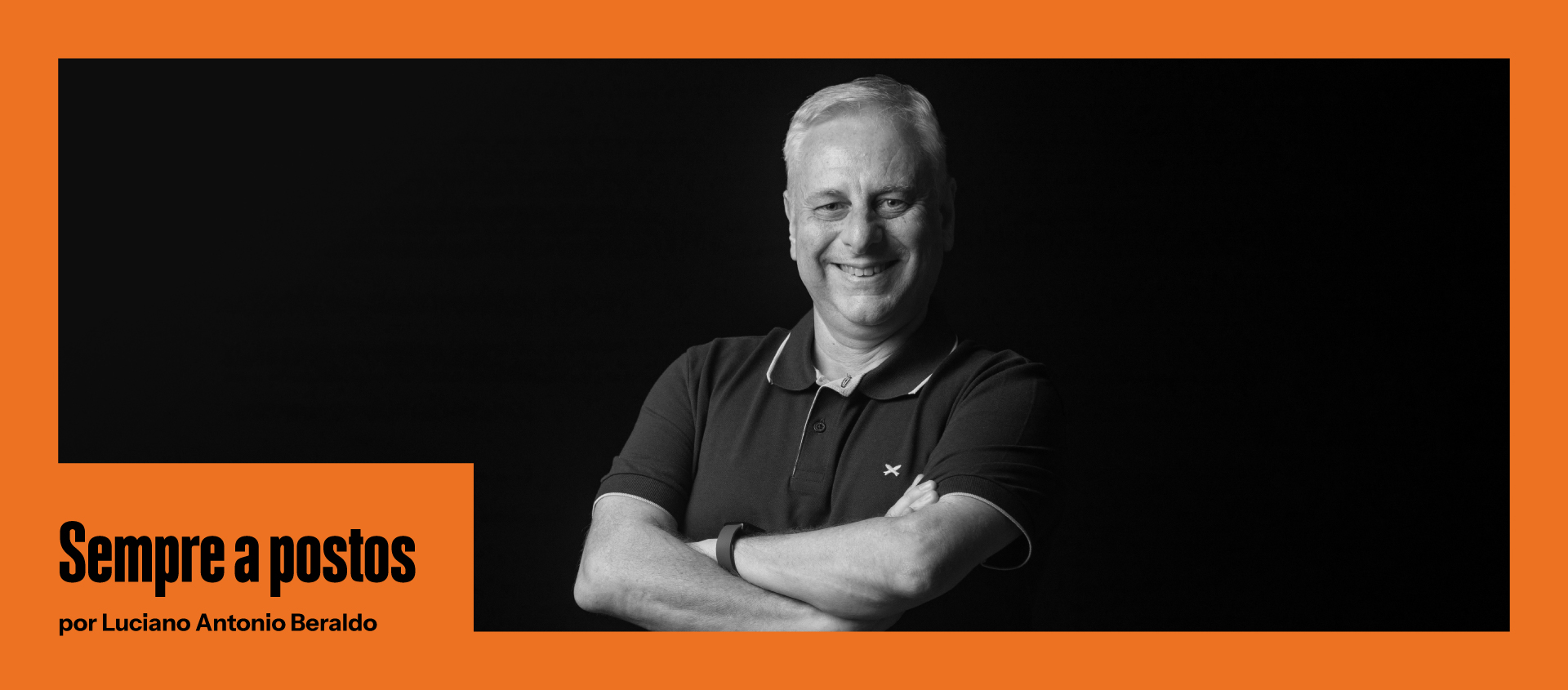
On Mondays — that day invisible to the public, when the Ipiranga Museum is closed — is when everything happens.
For some areas, it might even be a quiet day. In maintenance, however, we get into a frantic rush to take care of all the museum's infrastructure.
It's a day to check the functioning of restrooms, test the generators, verify the alarm and fire detection systems, check the lighting, multimedia, and security camera systems, and resolve an endless number of other demands.
And the most curious thing is that, on Tuesday, even with the feeling of a job well done, everything starts again. New problems appear, unexpected demands arise, and many services end up being pushed to the next Monday.
There are repairs that cannot be done while the museum is open to the public, and there isn't always enough time to fix everything in the few hours before or after closing.
During the rainy season, the most complicated thing is dealing with power outages. Although we have generators, we've already faced situations where they didn't start up.
Not to mention when children set off fire alarms because they find pressing buttons fun. In those situations, the fire department has to rush to check the incident, reassure the public, and turn off the siren.
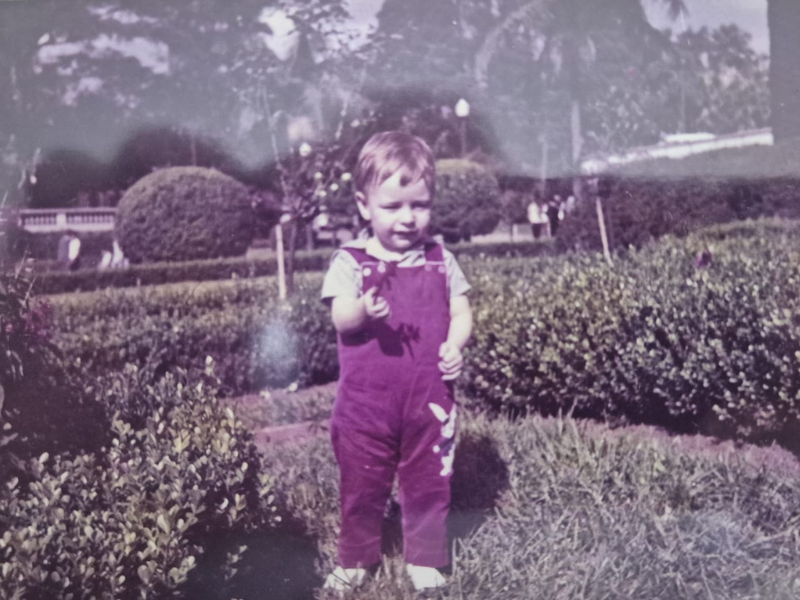
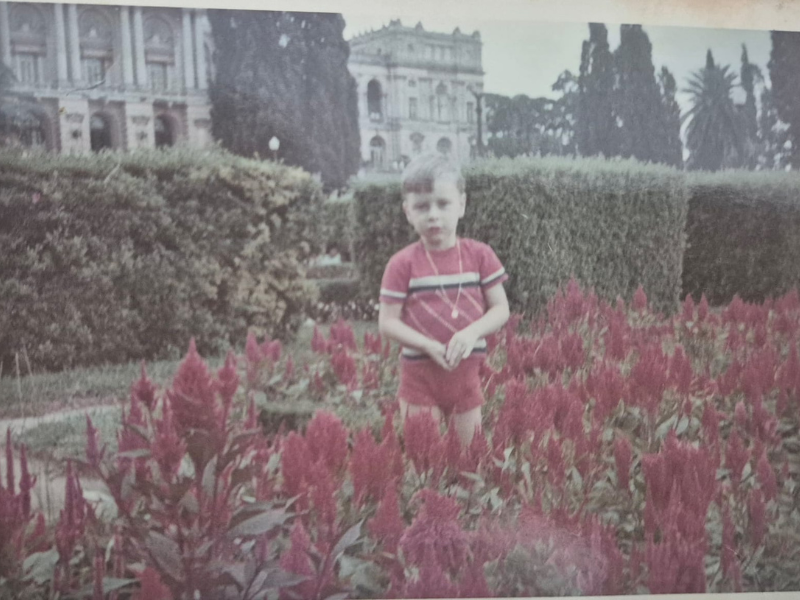
And to think, when I was nine or ten years old, my dream was to buy the Ipiranga Museum and turn it into my house. In my imagination, I would play in the halls while my butler attended to the guests.
I grew up flying kites and riding soapbox cars in Independence Park. My father, who was a tool and die maker, built me almost a little truck: a cart with a huge wheel.
I never forget the first day I used that toy. I arrived thinking I'd be awesome, until I realized that, precisely because of the wheel's size, it was much slower than the others.
I frequented the museum so much that it felt like I knew it inside and out. Even so, I never imagined I'd work there one day.
It was all by chance.
My father had two cars and was trying to sell one of them. A neighbor who was a museum employee offered an extra parking spot in the garage and, because of that connection, ended up coming up to my house. When he came in, he saw a computer in the middle of the living room—something very rare in the early 1990s.
I mentioned that I worked as a Systems Analyst, and he commented about an open competition at the Ipiranga Museum.
I signed up without high expectations. There were over a hundred candidates for a single position. Still, I ended up being approved.
Before that, I worked at a company that provided services for São Paulo's Traffic Engineering Company — and we were used to a super-structure, full of computers.
And so, it was a shock to arrive at the Museum and discover there was no practicemind no machine.
One of the big problems was access to the collections, which were only physically availablemind, which made any inquiry extrememind delayed. The idea was to create a database, and my hiring marked preciselymind the start of this process, beginning with the selection and acquisition of computers.
It wasn't easy.
I started in 1991, and back then, computers were very expensive. We managed to buy some equipment to serve everyone. You had to sign up for time to use them, there was no internal network, and to make matters worse, the machines broke down all the time.
Even so, we managed to create a pioneering database in São Paulo in the use of images—this between 1994 and 1995.
Today it seems like something simple, but back then it was practicalmind No one was talking about accessing images from a computer. We bought a scanner, digitized the collection, and did it because it didn't make sense to handle a physical collection using only texts.
It was a multi-year project, built with the collaboration of diverse teams. And even today, with the adoption of Tainacan—free software for digital repositories—many people at the Museum still resort to the old system when they need to search for information or generate reports on the collection.
It's interesting to realize how, throughout these changes, my own work within the Museum has also been transforming.
I left IT and ended up in janitorial services.
Many people don't understand how a Systems Analyst can work in this area, but the truth is that the Museum has become completelymind computerized.
Before the renovation, there was no air conditioning, modern fire suppression systems, or automation. All the switches were manual.
After the expansion, lighting, HVAC, fire detection and suppression systems, security camera system, and various other systems began to operate via computer. Today, practicemind Everything depends on technology.
I ended up getting into this field fairlymind for being one of the employees most familiar with automated equipment.
And it has been a huge challenge.
Even more so when I remember that the Museum even closed due to some identified risks. In a way, the stewardship failed at that moment.
Since then, I have carried with me the responsibility of ensuring that such a situation never happens again and that the building's maintenance is always as efficient as possible.
And these demands never stop.
They come all the time, every day. Often, even in the middle of the night. That's why I sleep with my phone on: if there's an emergency, I need to take the first steps and notify the Management.
The truth is, even in the computer age, my concern was never limited to my sector.
I never forget the day the rector of the University of São Paulo came to visit the Museum, and I had to run to the director's office to let them know a pipe had burst in the basement. I asked them to cancel the tour of that area so we could get everything sorted out in time.
I don't think I've ever been able to remain indifferent to anything involving the Museum.