
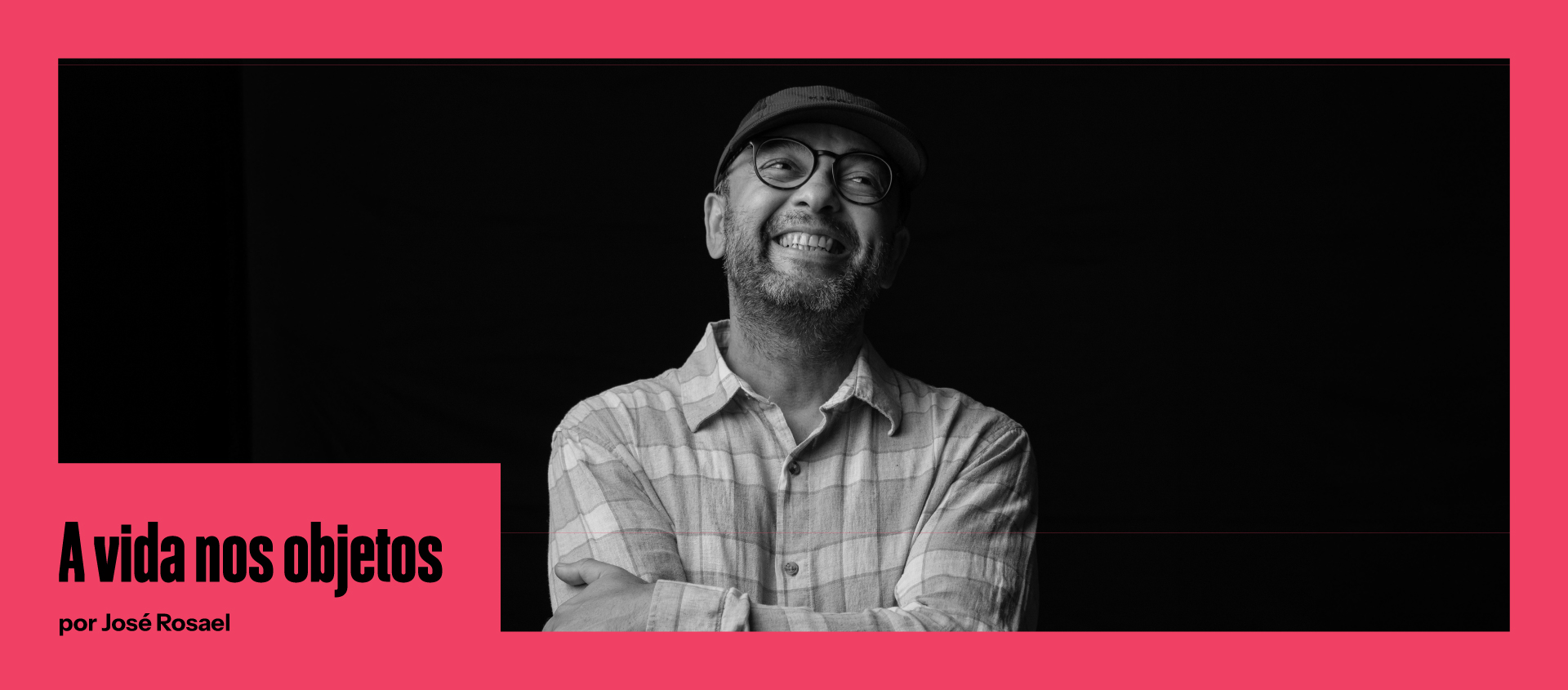
I've always been fascinated by images.
Since I was little, I would pick up books and magazines I found at home and spend hours observing those tiny ink dots – some larger, others smaller, some lighter, others darker. I remember bringing my face closer to and further away from the pages and never tiring of being surprised when, at a certain distance, I saw the dots transform into a woman's face, a soda can, or a landscape.
I lived in São Bernardo do Campo, a municipality in the São Paulo metropolitan region that became famous for its automotive industry. The city concentrated, for a long time, a series of car manufacturers and there was no shortage of technical courses for anyone who wanted to pursue the field.
It was a time with not much information about career opportunities. Thus, I ended up enrolling in both general mechanics at Mercedes-Benz and technical drawing, and the teachers were constantly suggesting great internship options to me, but I wasn't interested in any of them.
One day, walking the streets of the automaker, I saw a Japanese gentleman pacing back and forth with a tripod and camera in his hand. I had no idea photography could be a profession, but when I saw that scene, I knew it would be my path.
I knew I didn't have a knack for working on a car assembly line, but when I told my supervisors about this little old man, I found out I could do a photography internship there at Mercedes.
The job involved taking pictures of worn parts to assist with vehicle reports – obviously, nothing was more boring.
It was there, however, that I learned to handle the camera and began to develop a taste for photography.
In the 1980s, Kodak had just released a compendium in this field, with 18 volumes that taught about the functioning of the camera and film, in addition to several examples on how to explore the photographic language.
It was an expensive book, and I didn't have the originals, but I managed to get access to a summary and spent my days studying everything that was in it. With this, I ended up setting up a lab at home and, in a self-taught way, learned more and more.
It was during this same period that I began to discover what lay beyond São Bernardo. With my sister, who was a little older, I started going to São Paulo frequently, where we would visit art exhibitions whenever we could. I still remember to this day finding a Cartier-Bresson book at the São Paulo Cultural Center library.
Your photos, despite their spontaneity, have an impressive visual organization. The lines, shadows, and geometric shapes fit together so perfectly they seem planned. They are ordinary people in seemingly everyday situations, but captured in a very touching way.
I know many people cite him as a reference and say that, because of his work, they decided to become photographers.
I can't say if that's exactly what happened to me, because what I feel is that I've always had an inclination for art, but I didn't know what to do with it.
Since I was a child, I was good at drawing and loved doing observational portraits. When my mother slept, I took advantage of the fact that she would stay still for a good while and grabbed my ink pen to draw her. At my brother-in-law's small grocery store, where I worked for two or three years, I couldn't just put anything away haphazardly. If I had to organize matchboxes or rolls of toilet paper, I would always find a different way to arrange the items on the shelves, creating pyramids or other geometric shapes.
Of course, Cartier-Bresson, in that sense, was an inspiration, and even today, if I had to choose a name, I would say I consider him the greatest. But, with that book by Bresson, what changed was the perception that, through photography, it was possible to extract beauty from the most everyday situations, like a boy playing in the street or a lady having coffee.
Until I found my path, however, I went from place to place.
From an internship in an imaging lab, I moved to my brother's carpentry shop, then to a job as an illustrator where I drew automotive parts manuals, and finally ended up in a ceramics workshop as a designer, copying models from abroad and later developing my own product collections.
All I know is that when I arrived at Ipiranga, I had already been to so many places and stayed so little in each of them that I thought my time here would also be temporary. The record had been five years as an association photographer – nothing compared to my time at the Museum, where I've been for 30 years.
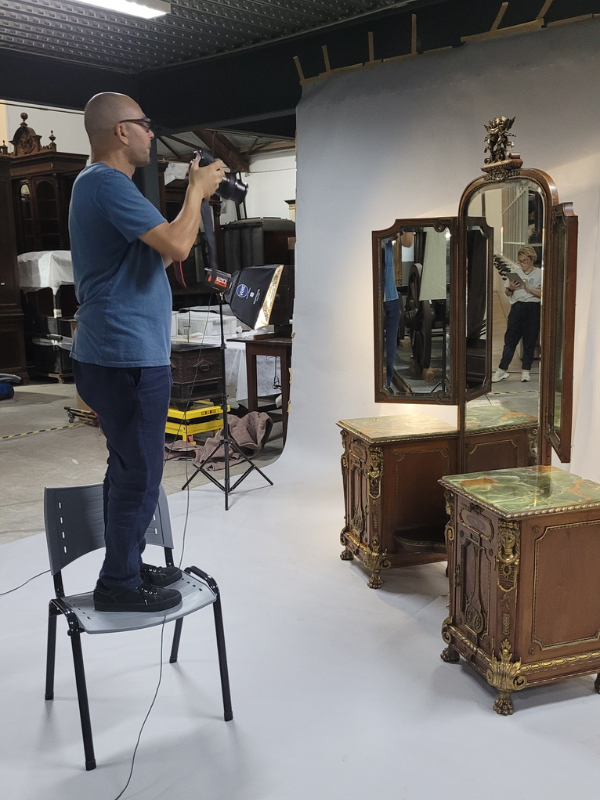
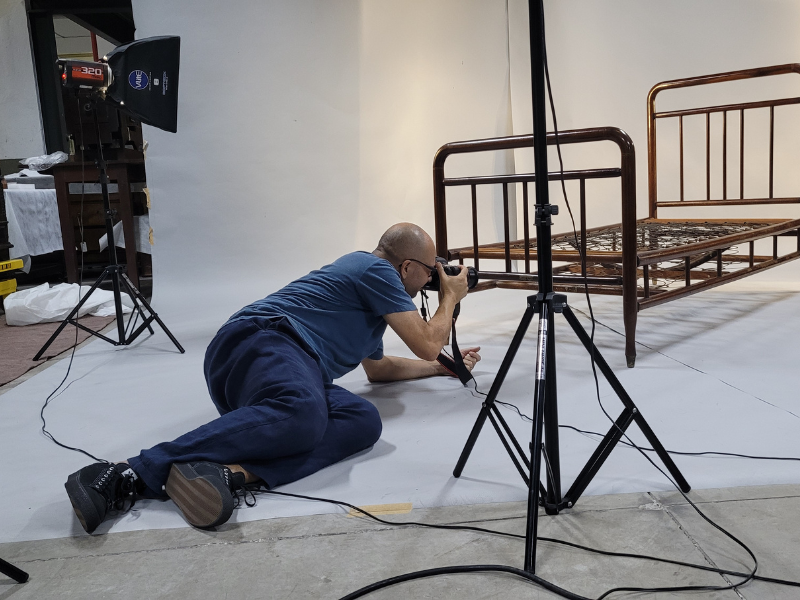
At first, my role was to photograph the objects in the collection, which is something that seems simple. You look at a screen, flat, stationary. It must be easy, right?
But no, because to get a good image of a two-dimensional painting, you need technical knowledge that few photographers have, and that I didn't have at the time either.
Until I was able to develop this skill, I had to do a lot of research and I learned what actually worked in practice. In this process, I discovered the importance of polarizing filters, which work almost like a Venetian blind – they only let a part of the light through, filtering out rays coming from other directions, and helping to reduce reflections.
And this is a big challenge for those who photograph objects, because the shinier they are, the more difficult it will be to capture them. The first time I photographed the porcelain collection, I had to come up with a real workaround. I found some rolls of tracing paper that had been forgotten in a room and built a sort of booth where I would place the pieces and thus manage to minimize reflected light.
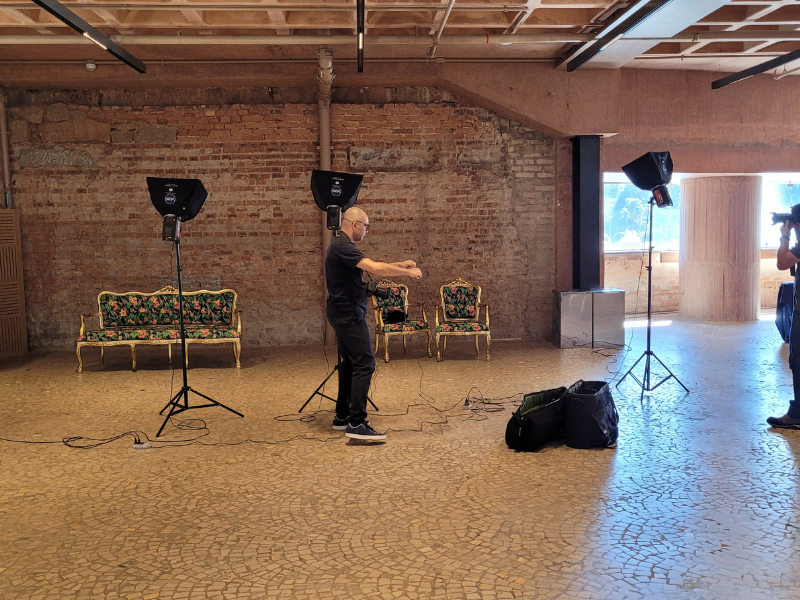
Another difficulty is the recoil needed to capture large pieces. When we are in a service area or some tight spot, we manage as best we can, but the ideal is to have space. Fortunately, in the Grand Hall, we had some room to work because the Independence or Death It is 4.15 meters high and 7.60 meters wide. There, to avoid distorting the image, we had to take the shot from scaffolding, also using a huge lighting setup and two 1200-watt generators.
The beauty of it all is to think that not even the painter or the sculptor will see the works that way. And this happens because the eye cannot capture colors so purely – it's impossible to look at a painting and have the lighting distributed equally. That's why people often say that photography is sharper than the thing itself.
And I won't lie and say I'm not very proud to see these images and to realize that it's through them that many people will have the opportunity to get to know the works – after all, not everyone is in São Paulo, nor are all the pieces on public display all the time.
I feel that, in this process, I've come to understand my profession better. When I started, there was a mythical idea of the artist as someone extraordinary, one who was both a genius and a madman.
And that scared me a lot because I didn't feel like a genius or crazy.
But, looking at my journey, I understand today that it's possible to work with art without necessarily being an artist, and that's what I do in my day-to-day at the Museum when I aim to take photos with technical excellence. And that's when artistic images emerge, which I consider beautiful, funny, and even moving.
In these 30 years, I also know that I had an opportunity that few people have, because, little by little, I got to know almost the entire collection of the Ipiranga Museum. The curious thing is that, despite this, I wouldn't be able to name an item for which I feel a special affection. And yet, I've spent a lot of time reflecting on this, trying to fit together the fragments of memory and find something that would make my heart beat faster.
“Help. Someone give me a heart. What's wrong with me?” I even thought.
But Cartier-Bresson himself said that, as photographers, we cannot have any kind of prejudice—and this also includes, on the other hand, predilections. And there's also a quote from Leonardo da Vinci about us being like mirrors that reflect everything and yet remain pure.
In a way, when I'm photographing, my involvement is objective – the focus is entirely directed toward what will ensure the best image, and if passion intervenes, the result would certainly be worse.
On the other hand, for many years, I was completely focused on the collection, with a super-technical view, but I felt limited in my freedom to create images that revealed my perception of what was being represented.
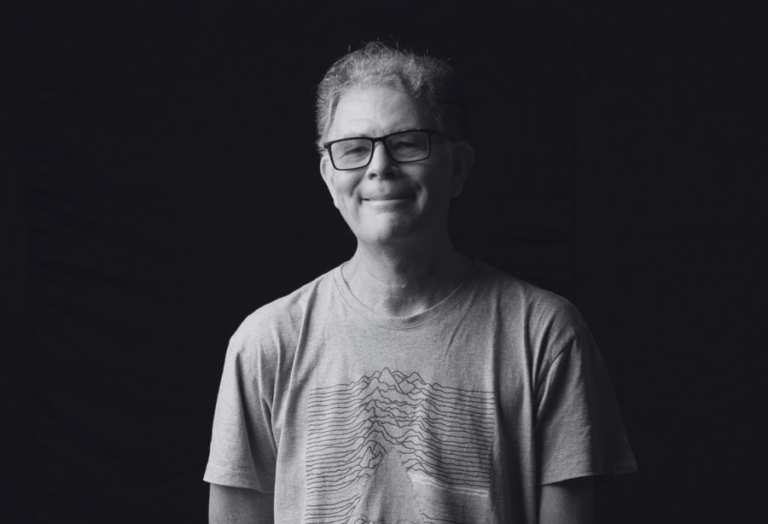
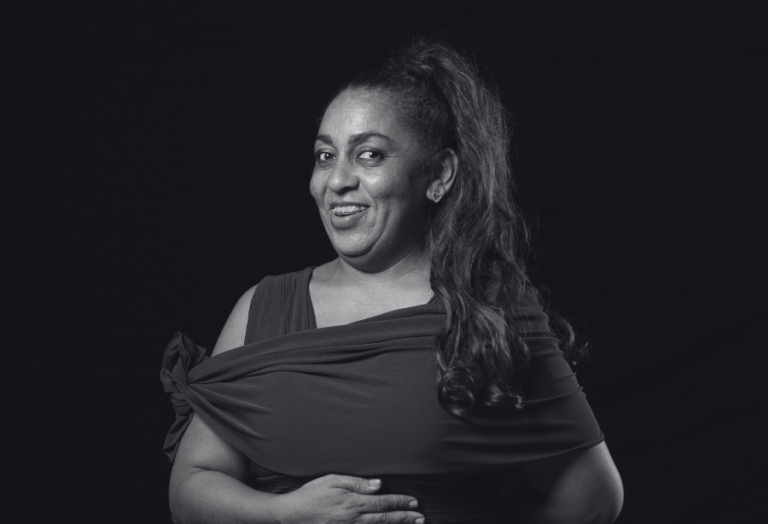
And I think I've recently managed to discover one of my main passions: portraiture. Arnold Newman, in this regard, is a reference for me. At a time when portraits were mainly made in studios, with neutral backgrounds and formal poses, he began to explore how people integrated into their environment.
Every day, then, I leave my house on Bom Pastor Street and walk to Nazaré Avenue, to the house next to the museum where I work every day, on a route that crosses Independence Park.
And even when I say I'm not going to record anything, I never manage to.
Every time I pass by the Museum, I notice my gaze drawn to the equation between what is static – the building – and what is in motion – the people. Because it is they, after all, who give life to spaces, it is they who gave life to everything in our collection and is today stored and conditioned.
Maybe that's it, after all.
It's not that there's something wrong with my heart, it's that I can't decide on my favorite item from the collection, because I can only see all the charm of the objects when they are handled, in everyday life, in the routine, by a hand full of intentions and life.