
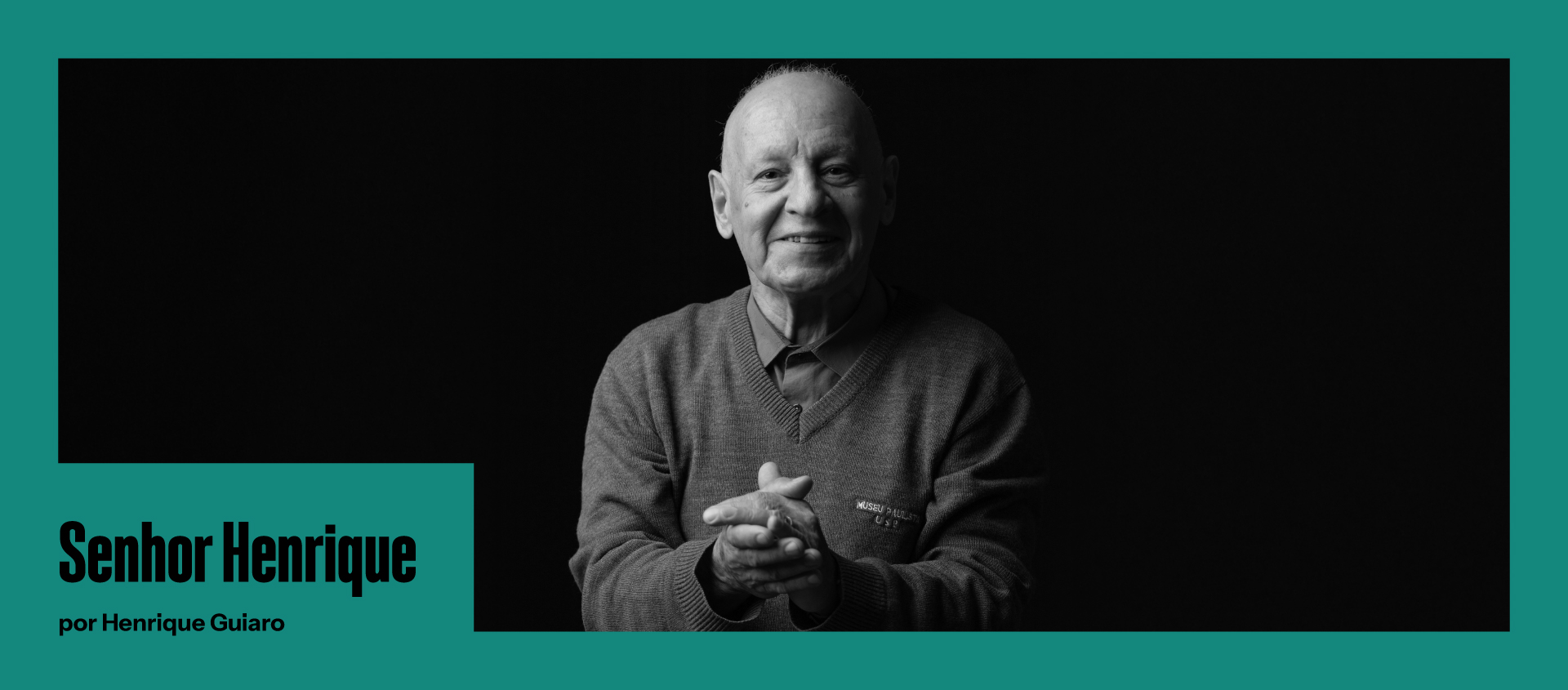
As soon as I started working at the Ipiranga Museum, I became Mr. Henrique.
Me, a day laborer, was amazed by so much consideration.
Mr. Henrique over here.
Mr. Henrique over there.
Before that, I worked for myself, providing painting, masonry, and plumbing services.
I learned everything on my own after a period of “hitting the can,” as taxi drivers say when they drive around the city without passengers. I started at home, and I spilled a lot of paint until I understood that each surface requires different care: wood is wood, walls are walls, and windowpanes are windowpanes.
I've been working since I was 13. I got my minor's work permit as soon as I could and for a long time, I was an office boy at a construction company. I was that kid who walked around the city with a briefcase, paying bills, running errands, and doing everything on foot to save the bus fare I received.
The responsibility was not small. And even today I don't believe it when I remember that the bosses would give me sealed envelopes, full of money, for me to deliver to the construction workers myself. A kid, paying everyone.
As a boy, I don't know why, I had an enormous desire to wear a uniform. I tried to join the Navy, the Civil Guard, and I even spent some time in the Fire Department, but I really disliked the militarism, with that “yes, sir; no, sir” thing. I'm also 5'4", I'm short, and in that environment, if you don't have the height, don't even bother deluding yourself.
But I'm a short guy with a big heart.
And when I left the Fire Department, I felt the drama because the State is good at collecting, but it's also good at paying. And after the first and second month with nothing, I had no choice but to pick up the brush and the roller.
Since I had no knowledge in the area, I learned by watching people work. I just stayed observing to learn the techniques and not run the risk of someone wanting to charge me for the teaching. By watching, I got the hang of it, and then they started calling me to do a small job here, another one there.
In the beginning, I worked alone, and, you know, one swallow doesn't make a summer.
There was always someone promising service: a cousin who wanted painting done, an uncle planning home improvements. Without a crew, however, the only way was to take one job at a time, and the end and start dates didn't always line up. Besides, as the holiday season approached, everyone canceled renovation plans and only thought about celebrating. I was left there, helping out, borrowing money.
One day, I met a person who told me they worked at the Museum.
“If there's an opening, call me,” I said, just to say it.
And he called.
The painter who was working at Ipiranga was leaving and The opportunity arose. I thought I should try, but I didn't think I'd be chosen because I only had a high school education, and I knew that the University of São Paulo valued those with higher degrees. I was sure I would be left behind. Luckily, there were only two other applicants.
In 2000, when the selection process took place, the pay was only R$ 500—it just wasn’t worth it. I only accepted because my mother and my wife convinced me. They both thought it was important to have a steady income, and thank God I listened to them. Over time, with the benefits of food vouchers, meal vouchers, health insurance, and the 5% raise every five years, things kept getting better.
At first, it was difficult to keep up the pace I had in other jobs. I would spend hours paying attention to the tools that were on display. And I would get emotional finding in the showcases the pliers, the brace and bits, and the pipe wrenches that I saw my father handling when I was a boy.
It seems that everything I found at the museum impressed me. If I looked at a painting by Benedito Calixto, like the Carmo Floodplain, my memory already brought back memories of downtown São Paulo, and I automatically started comparing the scenes. With the model of São Paulo in 1840, the mechanism was the same.
As things change, I couldn't stop thinking.
You pass a spot today, and workers are digging. When you return, you see them towing; and shortly thereafter, it's all ready. In two years, they erect a building.
Gradually, of course, I got used to working in a place that was built as a monument, and I became accustomed to the world of exhibitions. And then the demands increased. Beyond painting, I started helping in other areas.
I'm tired of fixing leaks and clogs.
A battalion of children would arrive from the schools, and it was always the same: problems with the toilet valves. The water tank had to be checked, the pump bled, refilled, until the tank was full and the museum could allow access to the restrooms.
And every time someone changed rooms, or someone new came to the boardroom, I was in charge of moving the furniture – carrying tables up, carrying tables down, up, and down.
I also used to fix outlets, pull wires, and do what I could to help with the electrical work. But if a fuse blew and the power went out, the USP technicians would take over. In this field, there's no room for error.
It's a shock, and poof. The heart explodes right then.
When the Museum closed its doors in 2013, we no longer received the public, but maintenance didn't stop. For a long time, I continued to check if everything was in order and went to the building frequently for one repair or another.
Then the construction company came to start the renovations, and I only thought:
“Oh dear, this is going to be a lot of work. I'll have to keep giving hints, explaining where this is, where that is.”.
Nothing. They surrounded the building with plywood. And they kept doing it, doing it, doing it.
They're on the inside, and we're on the outside.
And now, with the reopening, the museum has completely changed. There's a team with a plumber, electrician, and engineer. The plumbing is beautiful. They installed a modern water tank and there are even sprinklers, those fire safety devices that activate at any sign of heat.
Since then, I have been in one of the properties that were rented. In total, there are six houses that house the staff of the Support Foundation for the Paulista Museum and employees from the administration, technology, and digital areas, in addition to the Library and the collections of paintings, textiles, and furniture.
We have another structure, new addresses, but my area is the same. In the beginning, it was a never-ending task. Some spaces were in precarious conditions, and we needed to replace wiring, fix leaks, and modernize a series of things. Today, daily life consists of routine but continuous services. It's a clogged drain, a leaky valve, a jammed faucet – these various problems that happen due to overuse.
And there's always a shelf to install or a chair that needs fixing. Then people call and we rush over, tighten a screw, and help everyone get back to work.
A building doesn't go without maintenance.
And I feel important if I think I'm doing something beneficial for the institution to keep functioning.
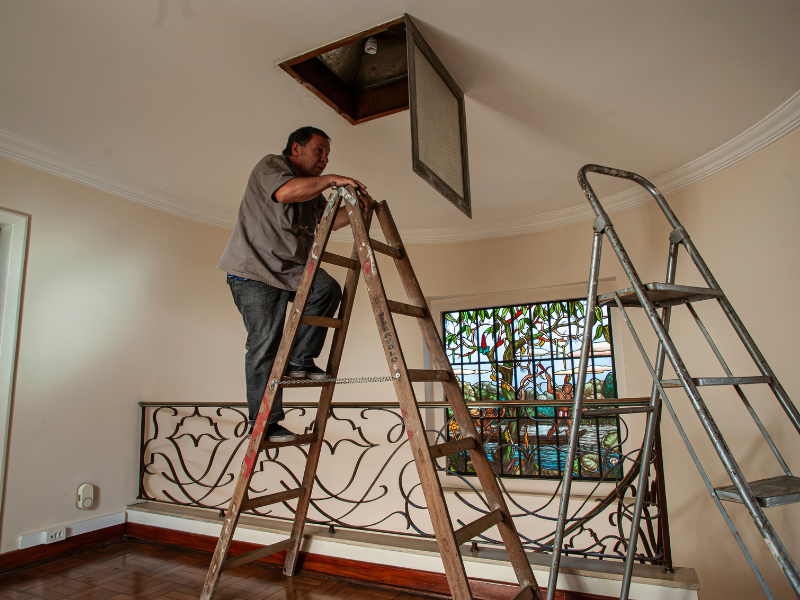
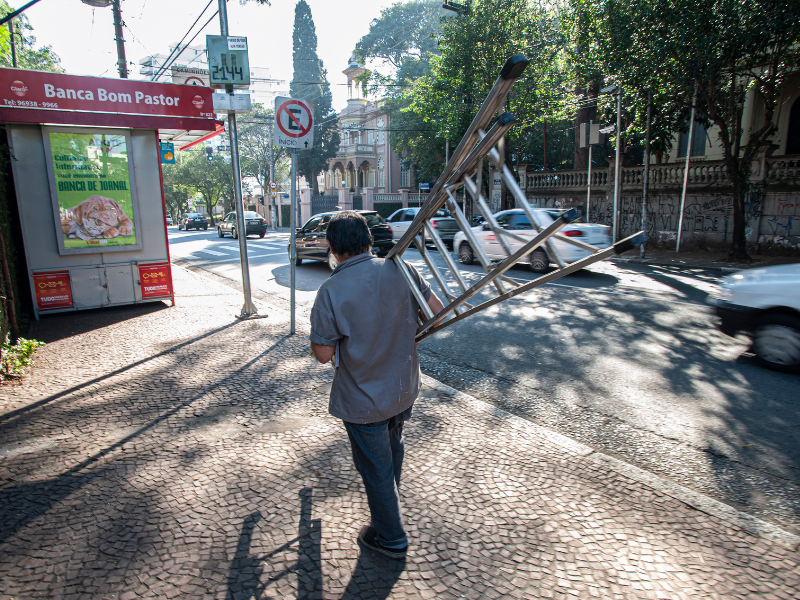
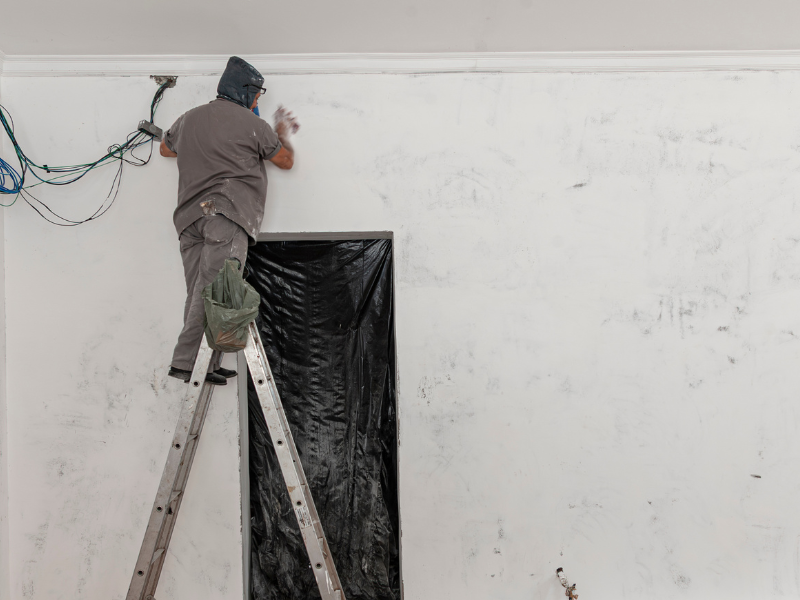
I believe my feeling is this: I'm in the real estate sector, but I'm part of the Ipiranga team. I'm an employee of the Paulista Museum and I'm here to answer any call.
Sometimes, when I go to a plenary session and listen to the teachers speak, the words are so difficult that I get lost. My vocabulary is simple, my knowledge is limited.
Therefore, seeing someone like Professor Paulo César Garcez Marins treat me with such esteem, and call me "Sir," is to be certain that my professional trajectory has been a success.
I'm about to retire, it's time. That's 51 years of contributions, 26 of them at the Museum alone.
Time flies, it's hard to believe. But, darn it, they saw something good in me.
I have completed my journey.