In 2022, during one of the first sponsor event spaces, we were already dismantling and everything was going fine until a pipe burst. On the facade! It was around 2 or 3 AM.
I think it was my first experience covering an external event. I was alone, trying to cover the entire dismantling, which took up the entire reception area and the outdoor area of the museum, when someone from one of the supplier companies arrived, saying there was a leak problem on the facade.
Given the calmness with which he spoke, I thought it was something small, but as soon as I left the building, I was startled: the volume of water was so great it looked like they had installed a new fountain in front of the museum.
I had no idea where the shut-off valve was. The renovation had just happened, and everyone was still getting acquainted with the building. Luís, a night-shift janitor, and I were scrambling around for ages with that “river” flowing, looking for the darn valve in the middle of the night. Finally, I gave up trying to fix it myself and called Professor Rosaria Ono, who was the director at the time, and it was necessary Urgent action is required by the company responsible for the construction work.
The incident happened because we had allowed the installation of lighting on the facade, and from that moment on, we realized it was urgent to review what could or could not be permitted in space rental events. Interventions on the facade? Never again!
I've been through several difficult situations in these four years at the Museum, but this one, for sure, is in the Top 3.
It was an intense moment, but also very important for my history at the Museum, because, from that day on, I felt I had truly earned the team's trust.
And that's saying something, because trust is a hard thing to earn in this Museum, you know!
I think one of the biggest challenges I've encountered since starting to work here has been precisely a certain distrust of those who are “outsiders.”.
So, it was as if I had to prove that I was there for the good of the Museum and that I would also take care of this heritage. It wasn't easy.
I needed to fix a leak so they would look at me differently and say:
“She can do it, she is reliable.
It was a turning point.
Before I started working at the museum, I was one of those people who thought museums were places of old things, that belonged exclusively to the past.
Perhaps because I grew up in Brasília, a place where the main attraction is the city itself. I had little knowledge of the importance of museum institutions. What I knew about the Ipiranga Museum was that it housed the painting Independence or death.
So much so that when I saw there was an opening in cultural production at the Museum, I sent in my resume without even believing I had a chance.
I was so honest that I didn't think I'd even get the job. In my cover email, I made it very clear that I had never worked with museums.
“Sincericide” What do they call?
Of course I was interested in the position. I had moved to São Paulo less than a year ago specifically looking for opportunities to expand my work in cultural production, but due to my lack of museum experience, I never thought I would be selected. Then the team got back to me, saying they loved my resume.
I couldn't believe it from so much happiness!
In Brasília, I was already working as a cultural producer for events related to popular manifestations, such as Bumba Meu Boi, Tambor de Crioula, capoeira, and Candomblé. And in the interview for the position, I realized that the idea was precisely to consolidate a cultural actions area, carrying out activities and events with proposals similar to the projects I had already done.
I loved it!
I started working at the Museum in May 2022, to be directly involved in the reopening, which would be on September 7th.
In my first few months, all I saw was a massive construction site. The entrance area had holes, trucks, and bulldozers, as well as hoarding everywhere. So it was a bit difficult to appreciate the monumentality of the building, which we admire so much today.
I gradually came to understand the museum's importance and relevance. I discovered its connection to the neighborhood, to the people who pass by. Even with the building closed, the neighborhood residents continued to follow everything that was happening. As soon as the reopening was announced, I realized they wanted a certain exclusivity of access, they wanted to see it firsthand. There was an almost possessive relationship, as if this historical piece of the neighborhood belonged to them.
The months went by, and I remember looking at the clock with the countdown, thinking: "Will there be enough time?"
It worked!
To this day, for me, entering the Ipiranga Museum is an experience. I got used to staying in the technical area, and I rarely go to the exhibitions. So, every time I go up the escalators to enter the exhibition area, I have a feeling of awe.
The first time I saw the painting Independence or Death, also, it felt like meeting a celebrity. It was like seeing someone live that you've only seen in pictures and suddenly realizing they're real.
But I have to say, they're ambiguous feelings. In the entrance hall of the historic building, there are those gigantic, glorified bandeirantes. I have indigenous ancestry – although the original roots were lost in colonization – and everyone knows what they represented for indigenous peoples. On the other hand, we have Van Emelen's canvases, which portray Black people in the 1930s and 1940s full of humanity.
You leave a space where you feel bad, in an experience almost claustrophobic, and finds another where there is belonging.
And I think my accomplishment at the Museum lies in the possibility of proposing these counterpoints in cultural programming. For example, at the Museum in Celebration, which is the biggest event of the year, commemorating September 7th, we use the opportunity to introduce provocations and dialogues by bringing in groups that don't normally feel represented at the Ipiranga Museum.
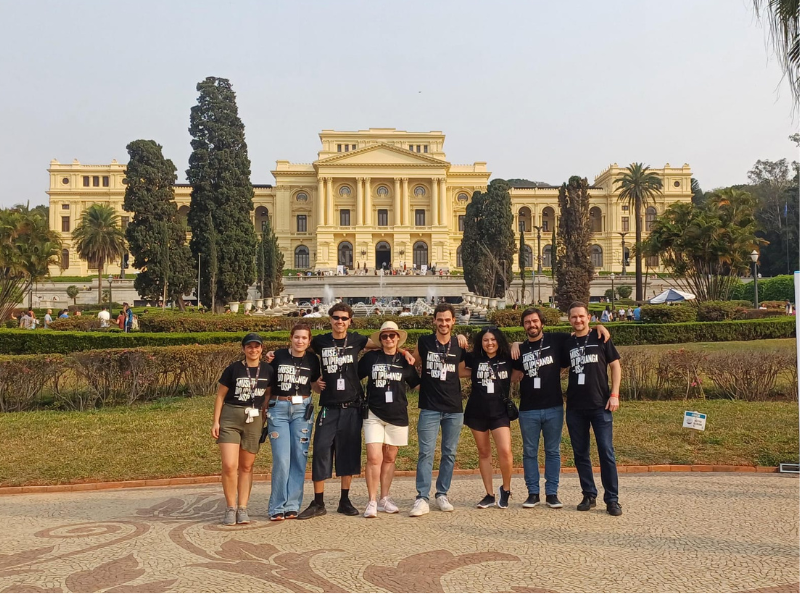
In 2025, which marked the institution's 130th anniversary, we were able to bring in Funmilayo Afrobeat, an orchestra made up entirely of Black women and non-binary individuals. It was incredible to see the group performing in front of the Museum of Ipiranga's facade. Whether we want to admit it or not, the Museum tells a painful part of Brazil's history, and what we want is for it to also be a stage for celebration. It's a way of saying that we value these people.
All the time we talk about the inclusion of minority groups and I take pride when we move beyond words and turn diversity into practice.
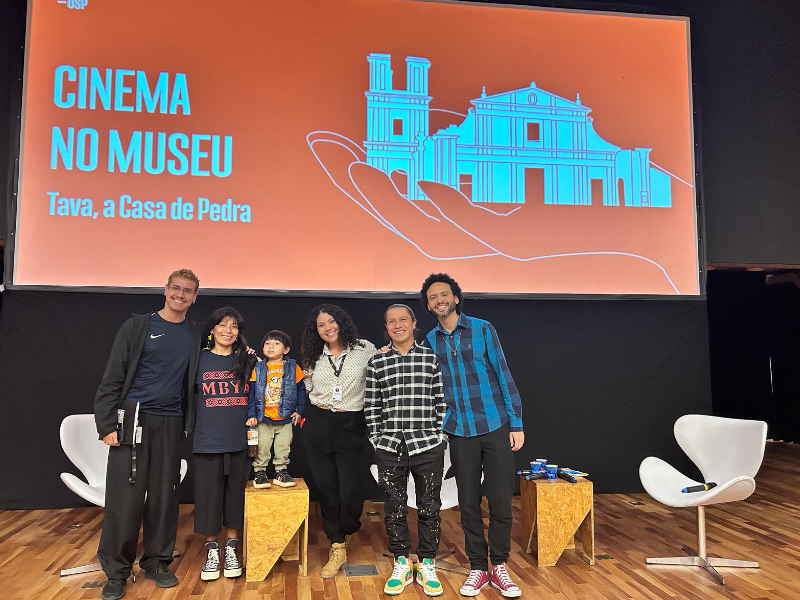
I like to think that despite the challenges and difficult days—which are part of everyday life—when I'm very old and look back, I'll be satisfied with my journey and what I've helped to build. I'm having the opportunity to collaborate in the creation of this cultural identity for the Ipiranga Museum.
Another thing: it's always impressive to remember that it was right there nearby that D. Pedro I proclaimed Brazil's Independence! It's as if we were reliving those texts we read in history books.
Ah, and what a privilege it is to work in this building, with this big backyard and this view! Some people spend their entire day in offices, closed buildings; I, when I want to take a break, can stroll through the exhibitions, or spend some time at the Observation Deck, or sit for a breath of fresh air in the French Garden.
How lucky, right?!