In my first days at the Ipiranga Museum, people would come to introduce themselves, and I, out of curiosity, would immediately ask which department they worked in and how long they had been at the institution. The answers were ten, fifteen, twenty years.
It seemed absurd. At 19, I didn't understand how someone could stay in the same place for so long.
Today marks over thirty-five years that I've been doing the same job.
I studied at college while being a museum employee.
I had three children while I was an employee of the Museum.
I went through two weddings while working at the Museum.
I am from Ipiranga, I was born and raised in this neighborhood. I lived on a street right next to the Ipiranga Museum, and it was in Independence Park that my brother and I would spend our days. Among the French-style gardens, with their geometric flowerbeds, we used to play hide-and-seek.
I had no idea that the monument building, constructed in the 19th century to commemorate the Proclamation of Independence, housed a collection. I looked at that neoclassical-style building and only saw a mansion.
When I first walked into it, and got to behold the carriage and chaise lounge on display, I kept thinking the space had been the dwelling of an emperor. In my girlish naivety, it was the house where I dreamed of one day living with My parents and family.
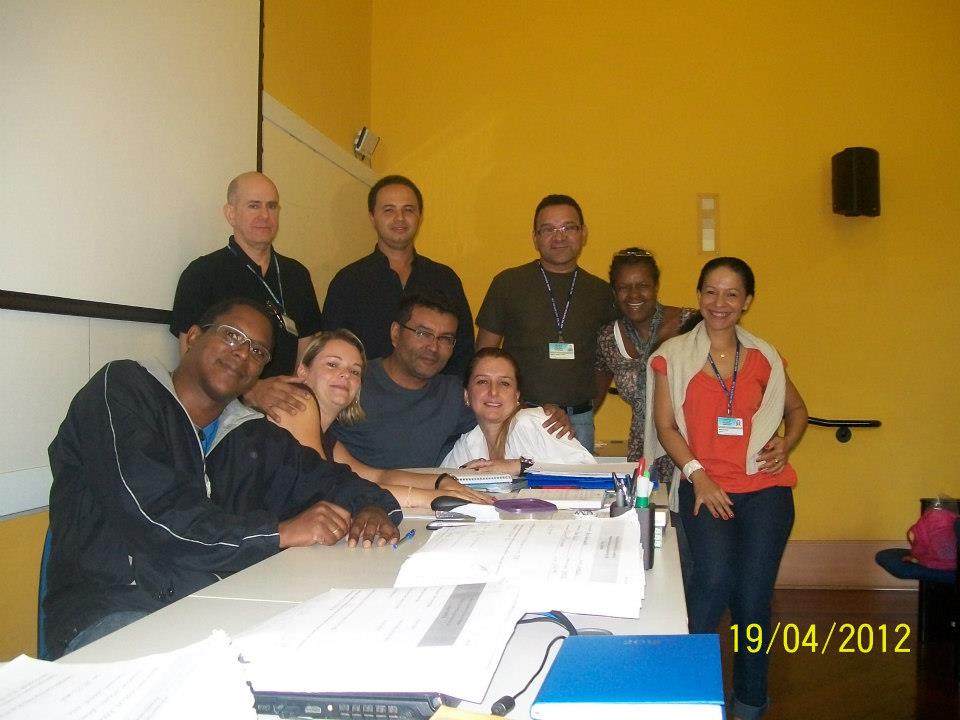
The curious thing is that the people I worked with became like a big family.
I found out about the competition because of Dona Mercedes, who was my neighbor and in charge of the Museum shop; her daughter was a librarian. Due to our closeness, I considered both of them like an aunt and a cousin. And, in my daily life, it was as if I developed familial relationships with everyone around me there.
At the time, most departments shared the same space, and I really remember that feeling of camaraderie. During lunchtime, nobody went home, and the lounge turned into practically a game room: cards, checkers, chess, and even ping pong. And don't think the furniture was bought or provided by the institution. It was the carpentry team that built everything, from side tables for the board games to the ping pong tables.
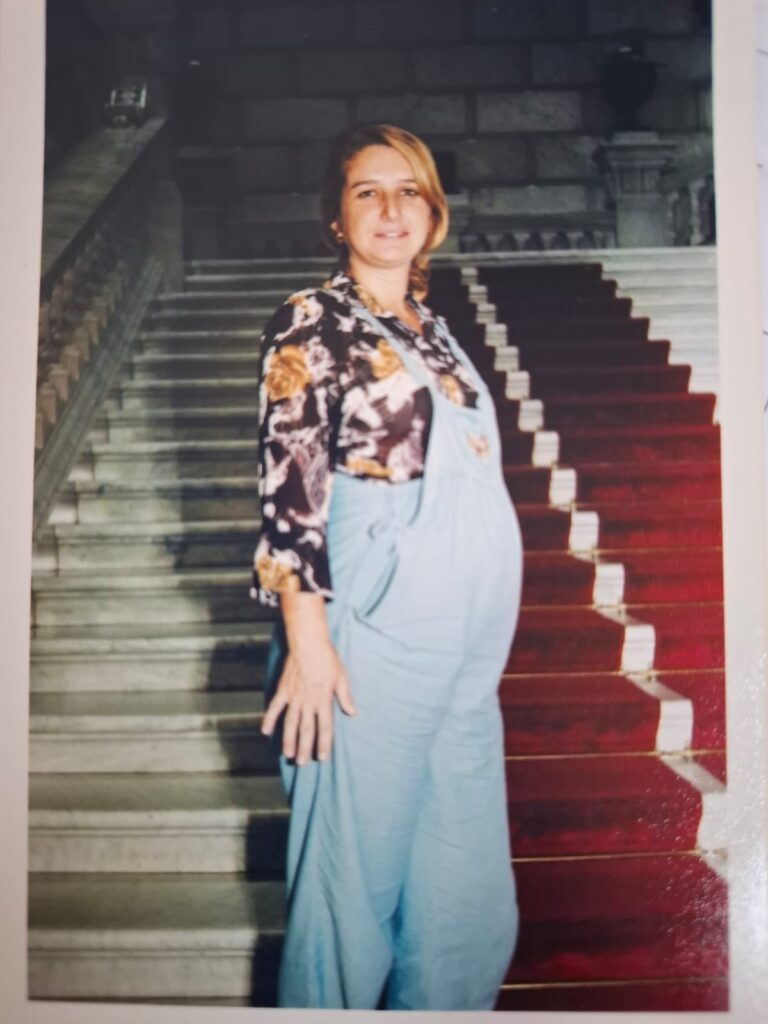
For many years, we held June Festivals and the employees dressed up in character. In one of them, the museum's staircase actually became a stage for the wedding, and the director, who at the time was José Sebastião Witter, showed up with a toy shotgun to play the part of the jealous father. We organized games based on Brazilian states, with tasks involving performances and typical dances like maracatu. Someone established the rules, we divided into teams, and the teachers turned into judges. There were costumes, awards, and everything you could imagine.
As soon as I started, in 1990, the sector I was part of was publications, and every year we released the *Annals of the Paulista Museum* and the *Review of the Paulista Museum*. I remember important articles came out concerning the collection and museological practices, with studies on Militão de Azevedo's photographs and on the ways institutions can define and reinforce identities. My role, however, was more practical: sending countless copies by mail that were distributed all over the world.
Over time, obviously, that demand became obsolete. The publications became digital, and during that period, Professor Miyoko Makino decided to reorganize each of our responsibilities. The department was given the name Research, Teaching, Culture, and Extension Support Division, and it basically covered everything.
It was teacher assistance, outreach courses, professional development courses, internships, events... And my involvement was so great that I never left that field.
When I look back and see all the years, I can't believe it.
At the Ipiranga Museum, we have very long-serving employees, with decades of tenure, but I think I'm the only one who has stayed, for over three decades, in the same role. What I like is being with people. I'm friendly, I talk a lot, and I'm never still.
My father's family is of Italian origin; my grandmother came from Naples. She was very lively, and this trait of her personality passed on to both her son and her granddaughter. My house was always full of people, music, and dancing, and perhaps that's why my greatest pleasure at the Ipiranga Museum is seeing my events packed.
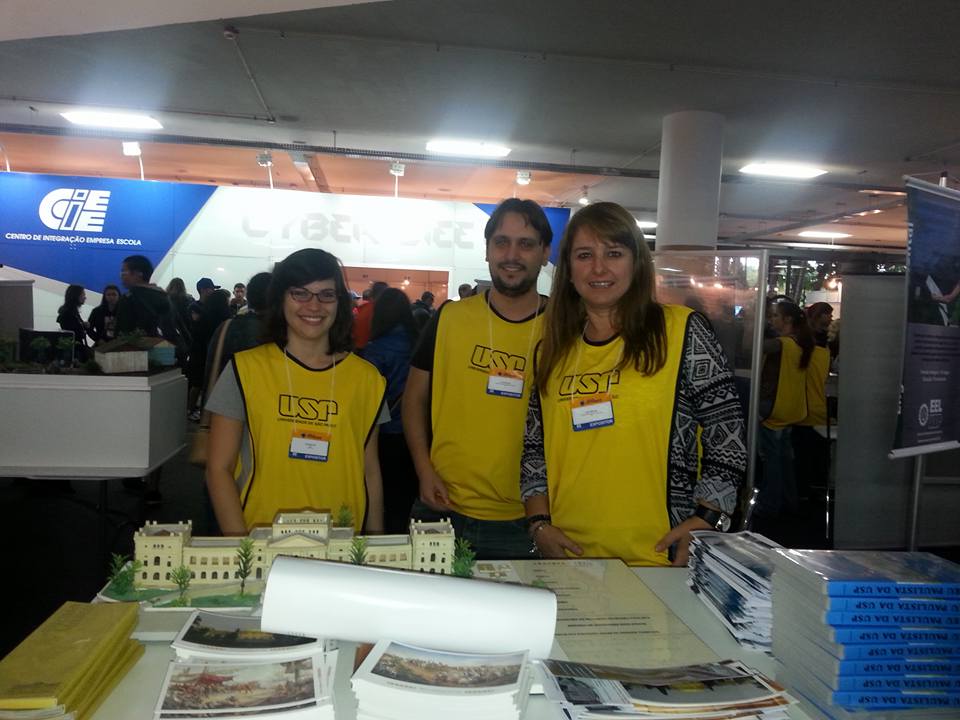
My work has always been close to students, from those in scientific initiation to postdoctoral researchers, and I'm in direct contact with professors, following the development of research and thinking about ways to bring this knowledge to society. As soon as historian Frederico de Oliveira Toscano told me he was finishing his postdoctoral research on the history of cans in Brazil's food supply, for example, I didn't hesitate to suggest he give a lecture for the “Encounter with Research” program, which we started in 2025.
I think I've come to the right place, I've done everything I've always wanted, and that's why I've never even considered leaving.
In the beginning, the structure left a lot to be desired. people fought for space, equipment was scarce, the team was small, and often there were extra tables and other equipment to carry, but I didn't mind taking on extra duties or working late hours. For example, if they asked me to be on set for recordings in the early morning, I didn't care if filming lasted until three or four in the morning, and then the next day, I'd still come to work early. I can't explain it, I didn't earn anything extra for it, and I loved it.
The museum is part of my life.
And it was this feeling that helped me not to stop when it closed for renovation, which happened in 2013. At the time, we went to work on a house on Nazaré Avenue, and when we saw the room that today houses the Foundation for Support of the Paulista Museum, FAAMP, we already envisioned the possibility of transforming it into an auditorium. We set up chairs, a screen, a projector, and held a lot of activities.
Thus, we were able to conceptualize the series “Encontro com Acervos” (Encounter with Archives), with the participation of researchers who were conducting studies at the institution itself. On one of these days, historian José Rogério Beier explained to the audience what an astrolabe was, a 19th-century instrument used for purposes as diverse as aiding navigation or calculating the height of stars and buildings.
The guests spoke for pleasure, to a small group of participants, because the room couldn't fit more than forty people. What consoled me, however, was continuing to see the lectures applauded and everyone discussing afterwards what they had learned. My greatest satisfaction is passing on to others what we know how to do so well within the institution and hearing, at the end of each event, the best question of all:
“What is the date of the next one?.
It was in that house in Nazaré, too, that we enabled several virtual courses that addressed the new exhibitions while they were still being planned.
While the professors discussed topics such as the country's history and visual representations of Brazil's past, they presented what would be on display in the Noble Hall and the issues surrounding the exhibition “Imagined Pasts,” to name just two examples.
But even though I attended the classes, I was completely lost with the scale the Ipiranga Museum gained after the expansion project. Before, I knew every inch of that building and I think I would even be able to tell if any wall had marks. That's why I'll never forget the day I went to accompany a recording and couldn't find the room the team wanted to go to.
Thirty-five years at the museum and not knowing where a room is?
How difficult.
In the end, they taught me and I completed my task, but not without frustration. What I really liked was the old Museum, which is where I lived and grew up. But of it only the staircase, the main hall, and the Noble Hall remained, the few places that stayed the same and where I still feel oriented. The rest is new and I'm still getting used to its immensity.
The viewpoint, which can be accessed by elevators, used to have restricted entry, and I was often the one who took visitors to see it via a wooden staircase, with few steps, in a passage where taller people had to duck to complete the journey. It was all improvised, and now, of course, every time I visit the space, and contemplate that 360-degree viewo, I can't help but put my years at the museum behind me.
The people who work here today, and who joined recently, have no idea what those who have been here longer lived through. What we went through together, no one will ever go through again.
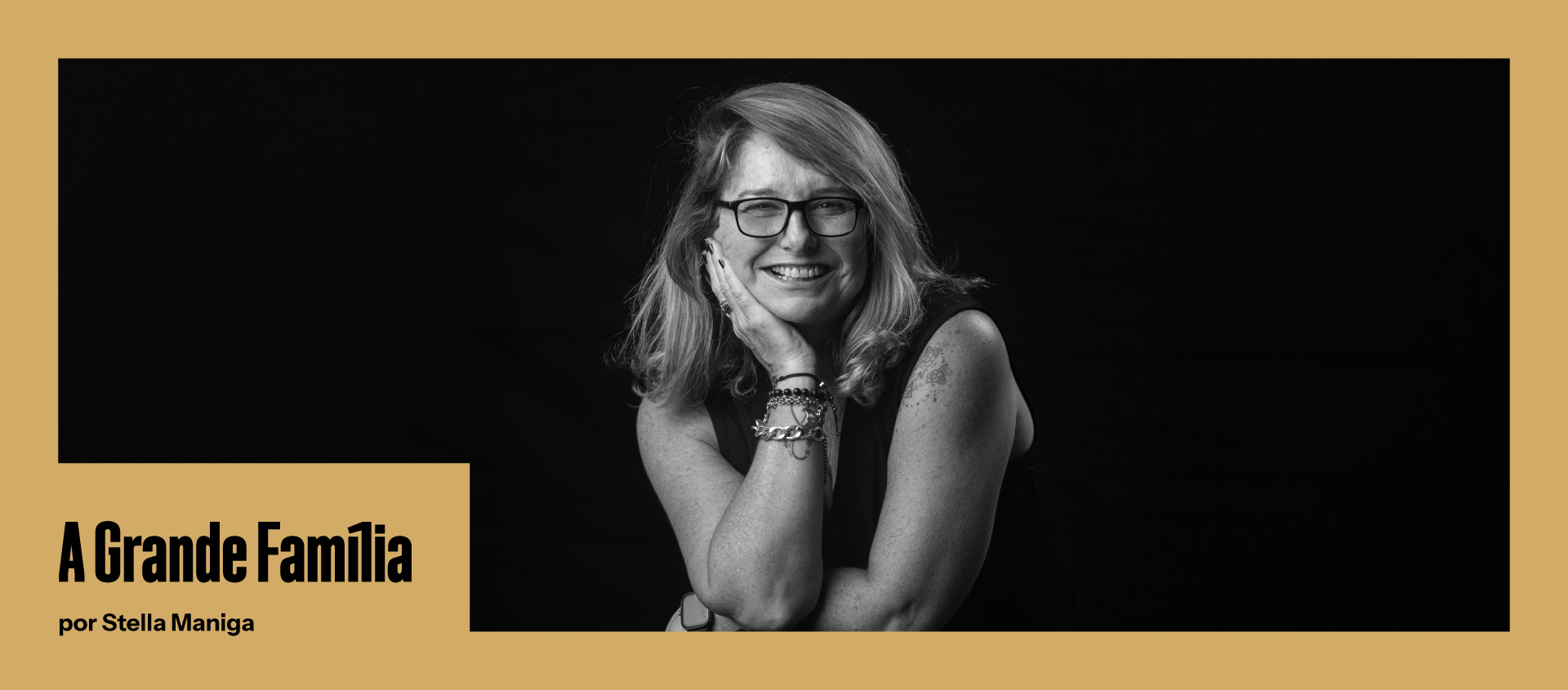
Even though I'm over 50, with thirty-five years at the Museum, I've never stopped being Stellinha. And that's why I get emotional when I think about everything we've built to get where we are now, and I have fun remembering every match we've had, from card games to ping pong competitions. And let me tell you, I played a lot!