

Museumdigital
Ipiranga Museum is online
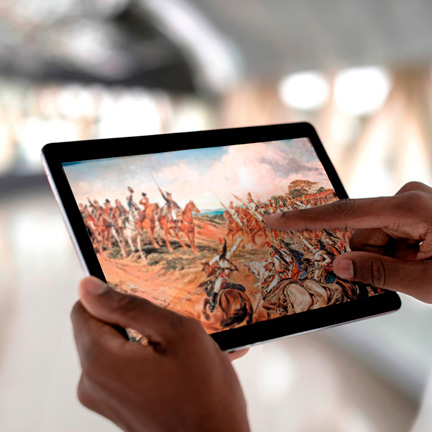
The Ipiranga Museum has been online since 1999, when it launched its first website. Currently, it has a variety of pages, applications, and web content, including profiles on social networks such as... Facebook, Twitter, YouTube, LinkedIn and the Instagram, In addition to filters for interaction with the collection, remixes and sharing. In 2011, the institution published its first online repository of images from the collection, with open access to all audiences. This gallery was made possible thanks to the computerization and digitization process, initiated in the 1990s, which implemented electronic management of the collection and intensified the museum's engagement with digital culture.
It was in 2017 that the Museum committed to building the next generation of digital research by joining the Initiative. Wikipedia of the Paulista Museum, In partnership with the Wiki Movimento Brasil User Group, among other actions related to Wikimedia projects, the team was responsible for updating the Museum's Wikipedia entry and the GLAM project for the Museu Paulista. This process included the development of a digital book and six interactive curation applications, aimed at expanding access to the Museum's collection. The use of the Tainacan plugin allowed for the migration of the collection to the website and the creation of digital repositories, interactive exhibitions, and educational products.
Starting in 2020, several modules of the 3D virtual environment were developed, a space that allows virtual visits to the monument-building and its garden, as well as to the exhibition rooms and interaction with the digitally modeled collection. Virtual Ipiranga Museum app The museum also launched itself into the world of games with the electronic game MID – Museu do Ipiranga em Defesa! (Ipiranga Museum in Defense!) and puzzle minigames, results of the “Gamers do Ipiranga” (Ipiranga Gamers) project. The Museum also developed a 360º virtual tour of the historic building of its annex, the Museu Republicano de Itu (Republican Museum of Itu), and is present on the Google Arts & Culture website, which offers virtual tours of important institutions spread across various countries.
The involvement of the Museum's teams, partners, and sponsors in building its digital presence has fostered advancements, research, products, and materials based on a wide variety of digital media, allowing for the consolidation of the institution's digital culture and a broad repertoire, most notably the Ecos do Ipiranga podcast, which achieved great success in terms of listeners during its first season.