
Our
collections
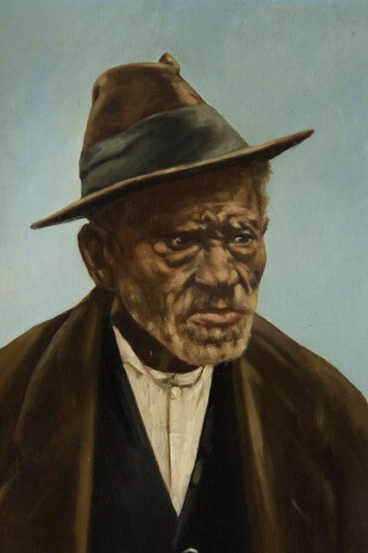
Canvas by Adrien van Emelen, 1940
Collections of iconographic documents
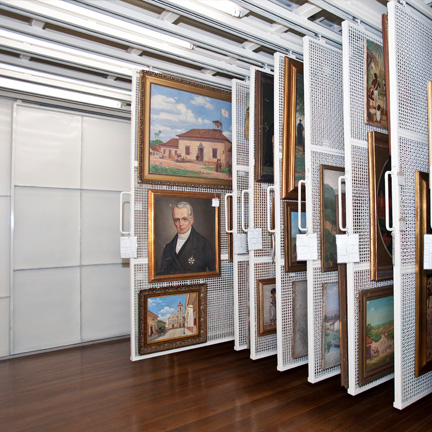
The collection of paintings and drawings comprises works in oil, watercolor, gouache, murals, pastels, charcoal, and graphite in the genres of portraiture, landscape, still life, historical painting, and religious art. Works by painters such as Benedito Calixto, Oscar Pereira da Silva, Antonio Ferrigno, Antonio Parreiras, Pedro Américo, and Almeida Jr. include views of the city of São Paulo, the villages of the Paraíba Valley, the western and southern coast of São Paulo state, scenes of daily life, human types, 19th-century São Paulo farms, scenes of the Tietê River, and mining. The print collection is predominantly lithographs, but also includes woodcuts and etchings, especially portraits, particularly of Brazilian political figures.
The photographic collections encompass techniques and formats from the 19th and mid-20th centuries: daguerreotypes, ferrotypes, albumen prints, glass and acetate negatives, stereoscopic images, as well as photogravures, phototypes, and charcoal photographs. The predominant genre is portraiture, mainly in the visiting card and cabinet formats, popular in the 19th century. The collection also includes a significant collection of postcards depicting Brazilian cities, especially those in the state of São Paulo. Among the photographers featured are Militão Augusto de Azevedo, Guilherme Gaensly, Werner Haberkorn, Theodor Preising, and Valério Vieira.
The cartographic collection includes plans and maps relating to the city and state of São Paulo, an important source for the study of urban evolution. Among the printed material, ephemeral papers circulating daily stand out, such as posters, illustrated brochures, manuals for manufactured products, ornamentation manuals, sticker albums, packaging, and labels.
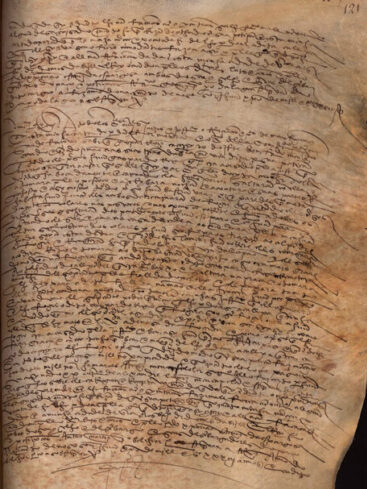
Charter of the Captaincy of São Vicente, 1534
Collections of textual documents
The Museum possesses over one hundred collections and public and private archival holdings, among them the Museum's Permanent Archive, which inventories documents generated by the institution itself between 1893 and 1963, when the Museum was incorporated into the University of São Paulo. Different aspects of the political, institutional, and domestic life of segments of Brazilian society, especially in São Paulo, can be covered. These include official letters and correspondence from politicians linked to the country's Independence Movement; letters and documents about domestic and personal life (invitations, menus, certificates, declarations, diplomas, contracts, notes, guides, powers of attorney, requests, etc.) from private collections; documents relating to the construction of the building that houses the Museum; bulletins, official letters, telegrams, and field diaries relating to the Constitutionalist Revolution of 1932. This collection also includes a newspaper archive with over three hundred titles from the 19th and 20th centuries.
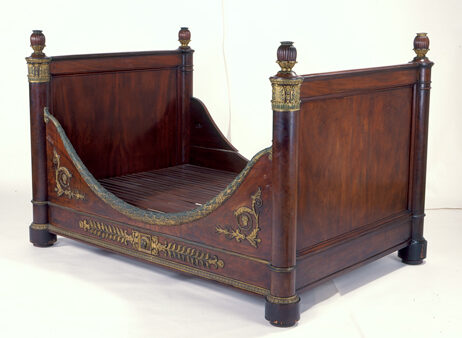
Bed that belonged to the Marchioness of Santos
Collections of three-dimensional documents
The collections of objects bring together a huge variety of types of objects produced between the 16th and 20th centuries. The numismatic, medal, and philatelic collections are the most numerous. The collections related to the domestic space include porcelain dinner, tea, and coffee services, toys, furniture, civilian and military clothing, decorative objects, personal items, and electrical and manual equipment and instruments related to food processing. The collections related to the world of work and public spaces include means of transport such as carriages, sedan chairs, fire engines and sanitary service vehicles, tools and equipment for urban trades such as printing, tailoring, decorative painting, carpentry, and shoemaking.