
Target audience: Undergraduate students who are not enrolled at USP.
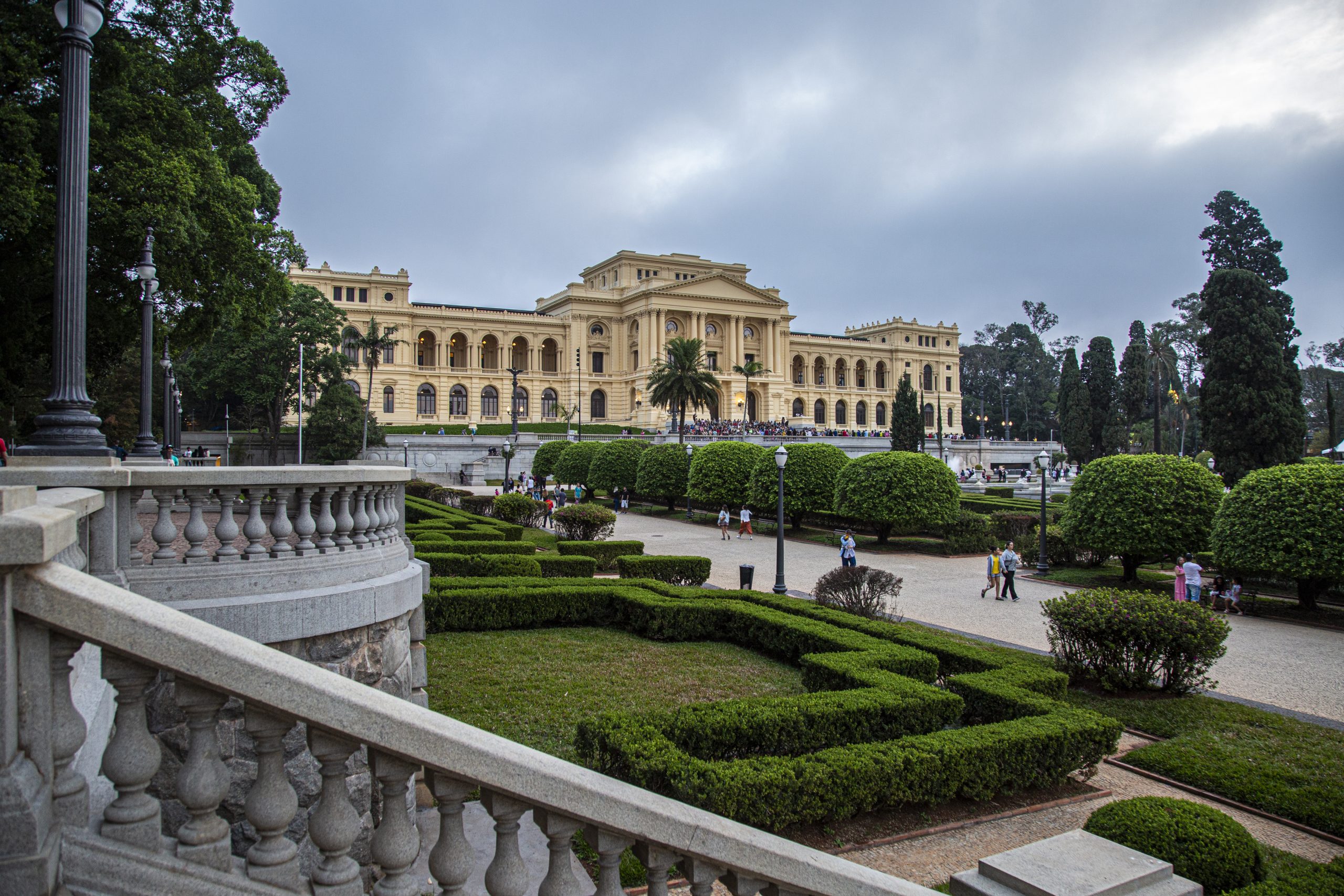
Location: Classroom at the Ipiranga Museum
Registration: Deadline: July 25th. Send your registration request to the email address provided. apoioacadmp@usp.br
Images and Accounts: Travelers and the Construction of Narratives
Starting from the premise of the shift in understanding of the world from the Enlightenment (18th century) and the strong commitment to cataloging animate and inanimate beings, this discipline focuses on some of the accounts and images produced by foreign artist-scientist-travelers who explored part of the province/state of São Paulo throughout the 19th century. It will contrast this with representations produced by some local members and how these same elements are interpreted, how such images and texts were appropriated for a specific historical construction, especially by Afonso d'Escragnolle Taunay, when he was director of the Museu Paulista (1917-1945).
Presenter: Professor Ana Paula Nascimento
Class schedule: 07/08 to 11/12
Full menu: click here
Cultural Policies and the Duty to Remember: Museums and Heritage in Addressing Difficult Histories
The course program will begin with a reflection on the uses and functions of museums in the Western context, especially regarding national memories, moving on to the role played by museums and major exhibitions within the framework of imperialism at the turn of the 19th to the 20th century. Secondly, the course will address the post-war context, with the creation of institutions such as UNESCO and ICOM, emphasizing the formulation of policies for the protection of cultural and natural heritage and the impact of social and political movements on scientific and cultural endeavors. In the third and final part, the discussion will focus on the period after the promulgation of the 1988 Constitution, highlighting initiatives in the field of museums and heritage in Brazil, particularly those concerning the history of the impacts of colonization on indigenous peoples; slavery; and human rights violations in the context of the 1964-1985 civil-military dictatorship.
Presenter: David William Aparecido Ribeiro
Class schedule: 08/08 to 12/12
Full menu: click here
Afro-Diasporic Material Culture in History Museums
This course analyzes the historiographical production in history museums, such as the Museu Paulista and the Museu Histórico Nacional, whose proposals aim at constructing a national identity, seeking to identify the presence/absence and approaches to the Afro-diasporic experience. We are interested in identifying the curatorial practices inherent in the historiographical production of these museums, which consist of the acquisition of objects, preservation of collections, museological documentation, and their different forms of dissemination, such as exhibitions, scientific journals, catalogs, and, more recently, websites. Subsequently, we will contrast this with the curatorial processes of three specific museums: the Museu Afrobrasil, the Instituto dos Pretos Novos, and the Museu do Negro, in Rio de Janeiro. At the end of the course, we should ask ourselves: what stories about the Afro-diasporic experience in Brazil are these museums telling? What continuities and ruptures can be identified? What are the current challenges?
Presenter: Aline Montenegro Magalhães
Class schedule: 06/08 to 10/12
Full menu: click here