
The guided tour Representations of women in the Paulista Museum The exhibition invites the public to observe how women appear, or how they do not appear, in the narratives of Brazilian history presented in the collection of the Ipiranga Museum. The tour proposes reflecting on the social roles attributed to women throughout time and on the choices made by those who organized the museum's exhibitions in the past.
The visit begins at the exhibition. To Understand the Museum, with the analysis of images such as the photograph of the washerwoman in the Ipiranga stream and the painting School party in Ipiranga (1912), by the Spanish painter Agustín Salinas y Teruel. Based on these works, we discuss who is represented, who is left out, and how gender and race influenced access to education and public spaces in the 19th and 20th centuries.
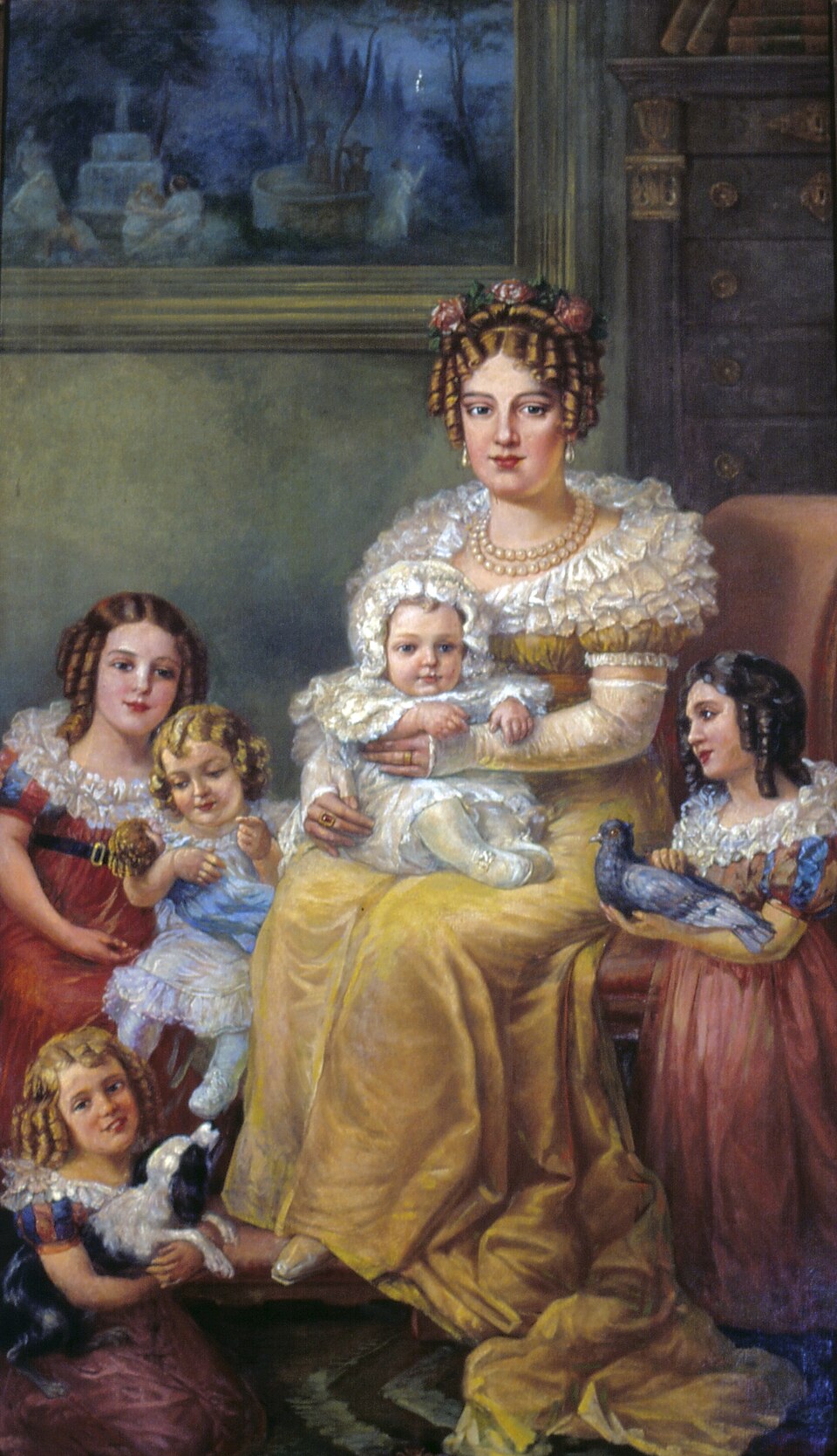
In the exhibition A History of Brazil, We observed the decorative project conceived by Afonso Taunay for the Centenary of Independence in 1922. In this space, we reflected on the absence of figures like Bartira and the presence of characters such as Joana Angélica, Maria Quitéria, and Dona Leopoldina. The visit discusses how these women were portrayed and which aspects of their lives were highlighted or silenced.
Throughout the journey, we also engage with recent historical research. These studies show, for example, that Joana Angélica and Maria Quitéria were mistresses of enslaved people, information revealed by manumission letters preserved in public archives. These discoveries broaden our understanding of these figures and invite us to look at history with greater complexity.
In the exhibition Imagined Pasts, We analyzed historical paintings produced in the late 19th and early 20th centuries. Works such as Landing of Pedro Álvares Cabral (1900), by Oscar Pereira da Silva, are placed in dialogue with contemporary productions, such as Yuiré (2021), by indigenous artist Moara Tupinambá, and Acotireno de Água Lucrecia Dandara (2020), by Marcelo D'Salete. This comparison helps to understand how different eras construct different ways of telling the past.
The visit also features Black and Indigenous female leaders, such as Dandara dos Palmares, Maria Felipa, and Hipólita Jacinta. In 2023 and 2025, the official recognition of Hipólita Jacinta in the Pantheon of the Inconfidência Mineira and in the Book of Heroes and Heroines of the Nation reinforces how historiography is constantly being updated.
In the end, the visit poses a central question: who told the story we see on the walls of the Museum? By recognizing presences and absences, the public is invited to understand the collection not as a neutral portrait of the past, but as a set of choices made in its time.
- Guided tours
- Dates and Times:
- Portuguese: March 1st, 8th, 15th, 22nd and 29th | 2 PM
Meeting point (Portuguese): Lobby, next to the Staircase.
Tickets available for pickup at 1:50 PM. - Sign Language: March 1st, 15th and 29th | 2:30 PM
Meeting point: Reception, next to the ticket office.
Ticket collection at 2:20 PM.
- Portuguese: March 1st, 8th, 15th, 22nd and 29th | 2 PM
- Duration: 1 hour
- Job openings: 20 people per edition
- Free activity, by obtaining a ticket for access to the Museum.